
US Space Force Unveils Aircraft It’s Been Using In Secret—Both A Rocket & Plane
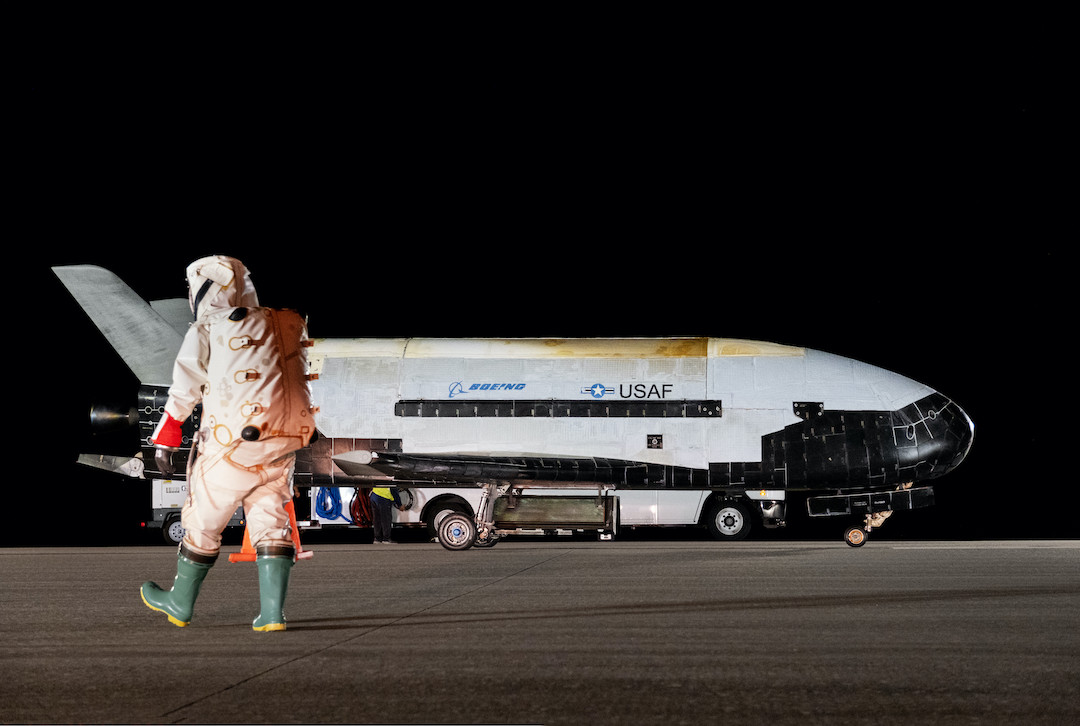
On November 12, the US Space Force landed its mysterious spacecraft, X-37B Orbital Test Vehicle-6 (OTV-6), after a record-breaking time in 908 days.
The orbiter—built by Boeing to be reusable—arrived at NASA’s Kennedy Space Center in Florida after a two-and-a-half-year stint, though the team has yet to disclose its entire mission. This is the sixth flight it has taken in the cosmos and its longest after its previous record of 780 days.
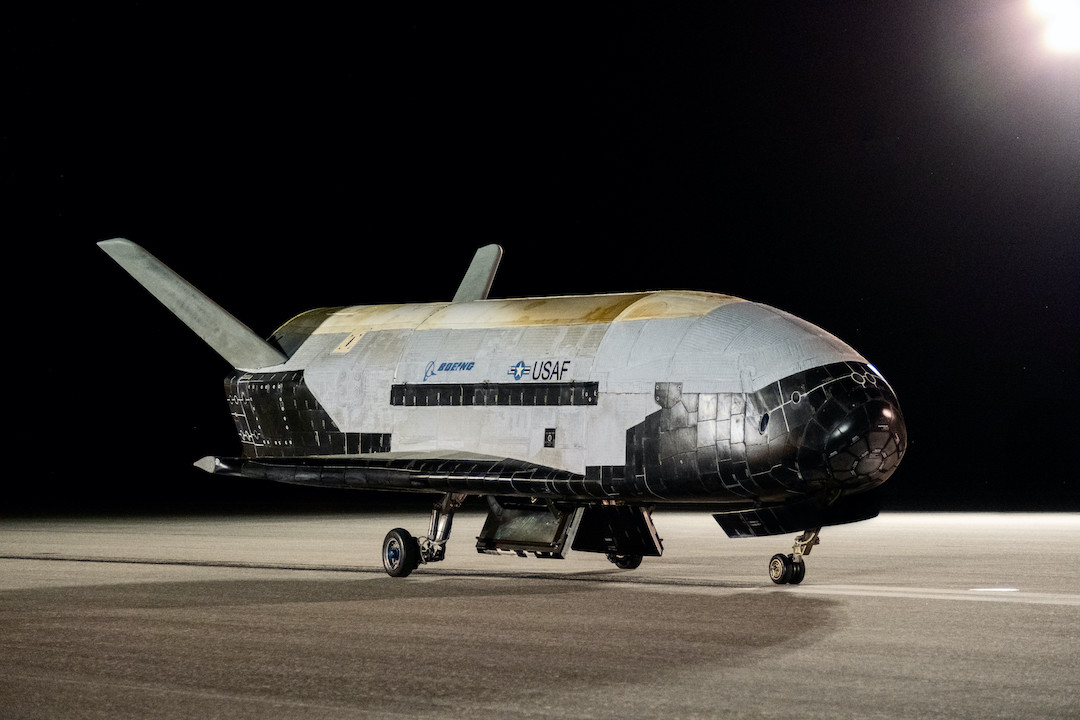
The vehicle was carried into the atmosphere on a United Launch Alliance Atlas V rocket in May 2020, and departed from Cape Canaveral Space Force Station. From there, it launched into space, rocketed around, and carried on with its mission.
However, most interestingly, the vessel was designed as an airplane-spacecraft hybrid. Upon returning to Earth, it could fly through our skies and land horizontally like a traditional airplane.
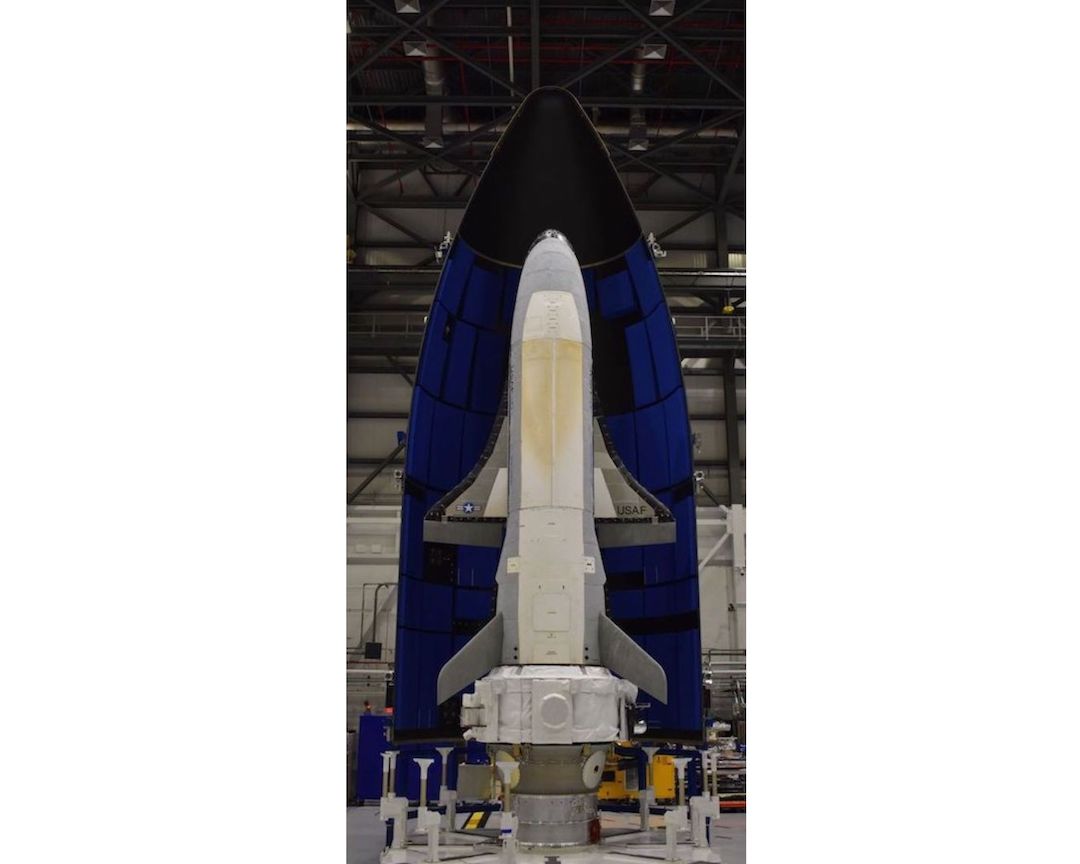
While its activities in the galaxy remain an enigma, it’s been revealed that the vessel carried a solar energy experiment designed by the Naval Research Lab, which it used to create solar energy.
NASA also placed some of its experiments on the orbiter, which included Materials Exposure and Technology Innovation in Space (METIS-2) that was used to examine the effects of space exposure on different materials.
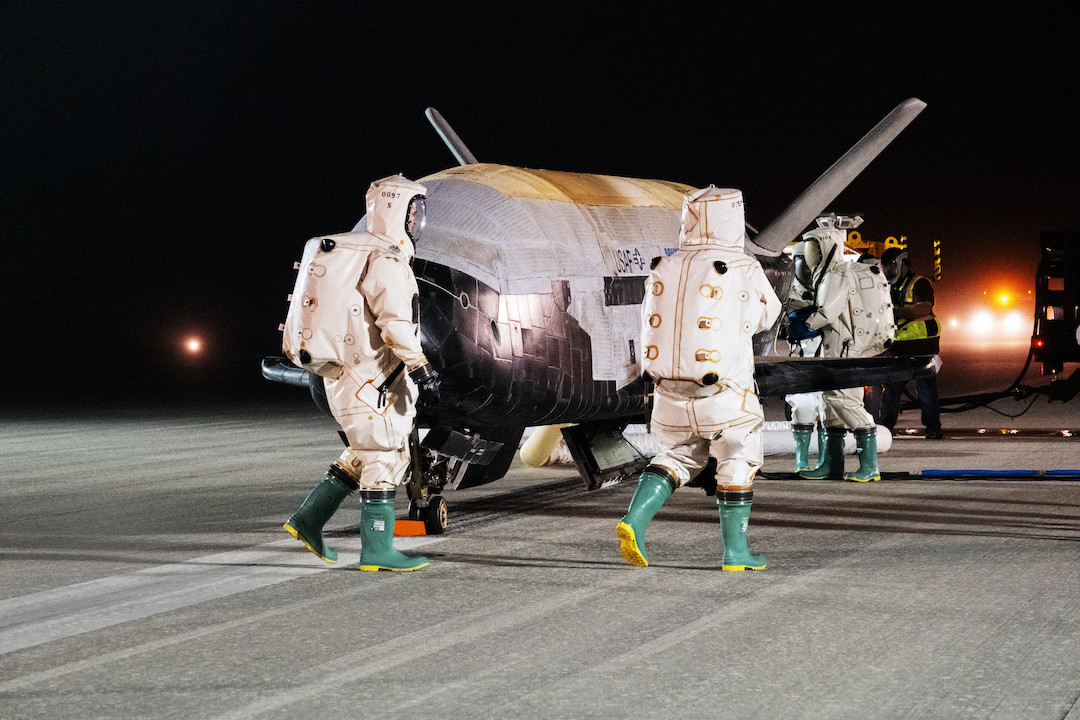
General Chance Saltzman, chief of Space Operations, says in a statement: “This mission highlights the Space Force’s focus on collaboration in space exploration and expanding low-cost access to space for our partners, within and outside of the Department of the Air Force (DAF).”
[via Gizmodo and NPR, images via US Space Force]


