
IBM Rolls Out Its Most Powerful Quantum Computer To Date, The ‘Osprey’
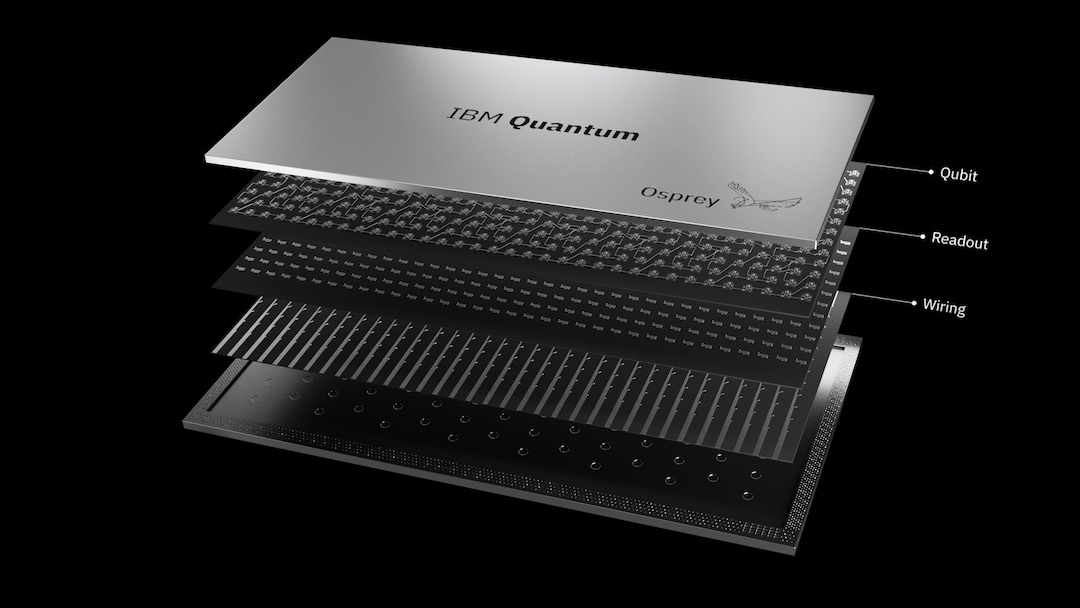
IBM is upping the ante with the release of its latest and most powerful supercomputer, the ‘Osprey’.
This newest addition to its suite of quantum computers holds an impressive 433 quantum bits (qubits), a leap above its previous version, Eagle, which only had 127 qubits.
For those who are unsure of how traditional and quantum computers differ, it all comes down to their coding. Classic computers can store and process data in binary bits like zeroes and ones. In comparison, qubits can be zero, one, or both. This allows the devices to calculate complicated math equations and linear algebra.
For IBM to pack more qubits into the Osprey, it used a single layer of qubits on top of several layers of control wiring. This not only allowed a greater amount of data to be stored but also reduced the error rate.
Most of us are no strangers to our laptops and desktops heating up and kicking off their fans to cool them down, which sometimes sound like jet engines ready for takeoff. Now imagine that on a device that can calculate quantum physics. So, to keep it cool and reduce the noise, a special fridge must be used, and an integrated filtering system helps keep it quiet.
Its updated software has improved error correction, and users can choose between increased speed or precision.
However, as impressive as all of this sounds, Osprey is soon to be knocked out of its nest as IBM plans to introduce the ‘Condor’ next year, and this version will house 1,121 qubits instead.
Moreover, this is all part of IBM’s incoming modular framework that will contain a quantum system of computers that will be able to host 4,000 qubits by 2025.
[via Popular Science and New Atlas, cover image via IBM]


