
This Spray Shoots Out Virus-Filled Microbeads To Help Sanitize Food
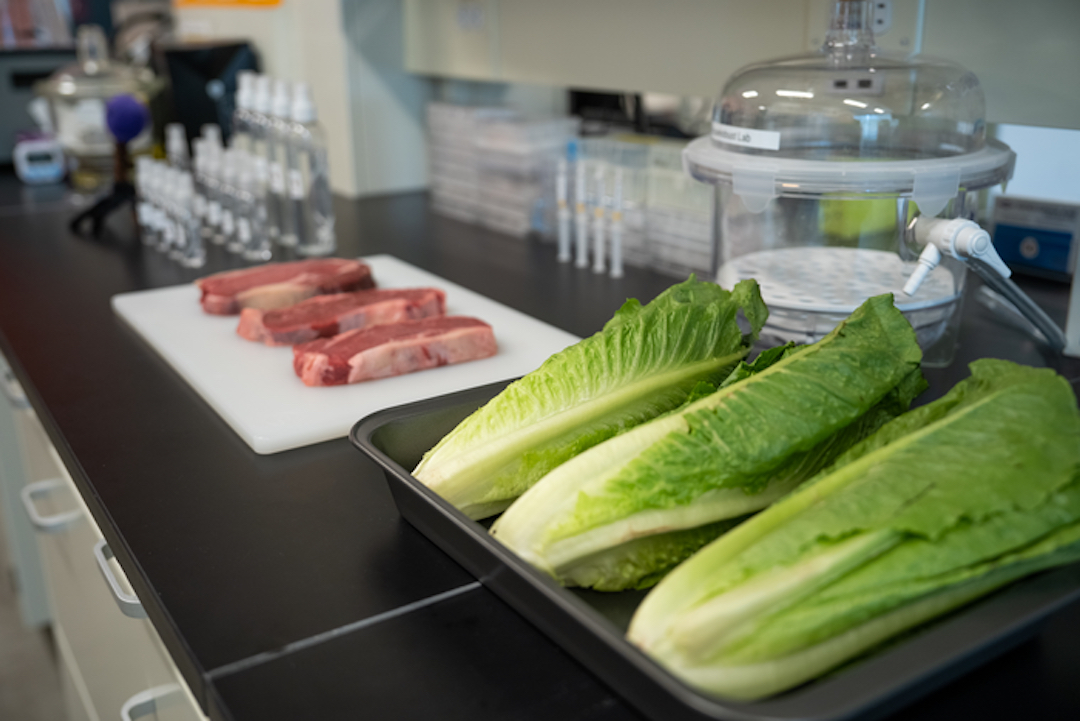
In the wake of the pandemic, most of us have become more cautious when it comes to sanitization and safety, and where else are such protocols more important than when dealing with the food we eat?
While dousing a burger in hand sanitizer certainly isn’t the way to go, what about a new food-safe spray that makes use of viruses housed within microgel beads that help eradicate any bacteria found on meals?
This new innovation, developed by scientists at Canada’s McMaster University, features viruses known as “bacteriophages” to kill and eat bacteria on food, while remaining generally harmless to humans.
More importantly, instead of getting rid of all types of bacteria—good and bad—certain strains of bacteriophages target particular types of bacteria, allowing researchers to make use of only those that kill harmful ones, leaving behind beneficial bacteria without killing the taste of the dish.
For the spray to work, the team worked on creating a way for these viruses to link together and form microscopic beads, which can then be safely applied to food and other materials to rid them of deadly bacteria, including E Coli.
“They link together like LEGO pieces. This organized natural structure makes them much more durable and easier to package, store, and use,” explained Zeinab Hosseinidoust, Canada Research Chair in Bacteriophage Bioengineering.
The research team feels the spray has “promising potential” to be used commercially, especially with it having already been granted approval by the US Food and Drug Administration to be used on food, having proven to effectively eliminate E Coli in lettuce and meat.
Going forward, the spray could be tweaked to target other common causes of food poisoning, including Salmonella and Listeria. Not only could it be applied to food processing or packaging, but the scientists envision it could even be used as a treatment for water irrigation.
[via New Atlas and McMaster University / EurekAlert, cover image via McMaster University / EurekAlert]


