
Scientists Demonstrate How Toilets Rocket Out Particles When Flushed
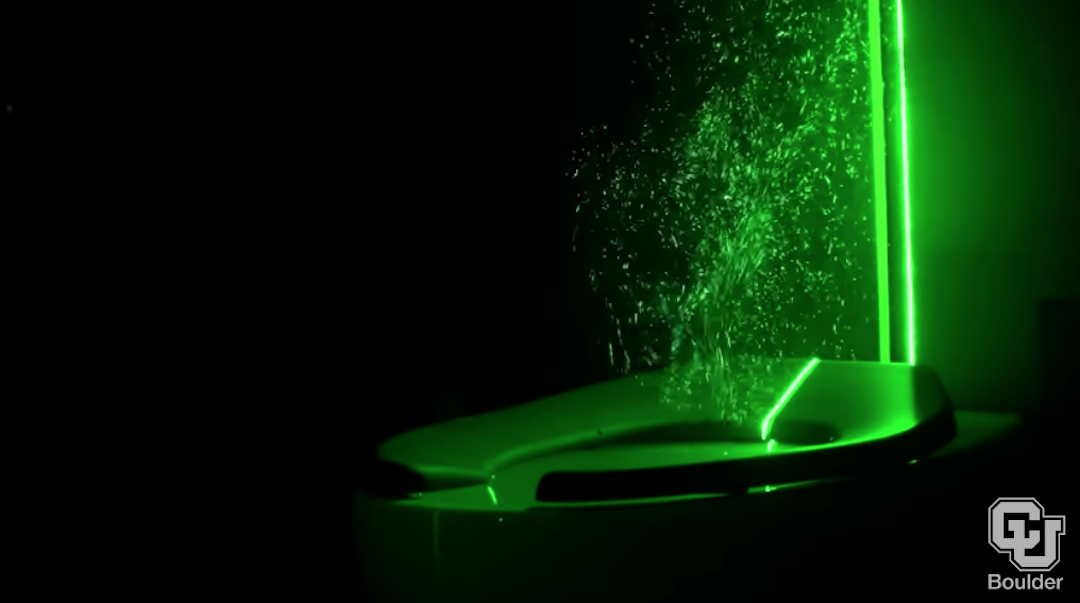
Flushing the toilet after it has been used ensures that its contents get cleared out instead of infesting in the bowl. Scarily enough, that same process can instead shoot waste and water particles out like a geyser.
Scientists at the University of Colorado Boulder have found a way to demonstrate just how far these aerosolized particles can reach and the effects they can have if you don’t routinely close the lid when you flush.
The team hooked up lasers and cameras to a standard North American toilet and, without any waste or toilet paper within it, flushed away. The result is a jet stream of particles shooting up into the sky and spreading into the air.

The team measured the actual height of the particles, which reached a whopping 4.9 feet per second within just eight seconds of being flushed.
If that doesn’t make you want to keep the lid closed at all times, nothing will.
Scientists are pushing the closed-toilet-lid agenda as particles can linger in the air, catching onto other hygienic products such as loofas and, most importantly, toothbrushes. With it, it can spread pathogens such as E. coli or noroviruses which can cause vomiting and diarrhea.
The study, published in Scientific Reports, is meant to bring to light how dangerous keeping the lid up can be, especially in public restrooms where these pathogens can infect multiple people. The team hopes this new demonstration will inspire manufacturers and other scientists to create more hygienic and sterile toilets.
[via CNET and University of Colorado Boulder, images via various sources]


