
Newton's Apple Tree, Location A Mystery, Apparently Spread Its Seeds Worldwide
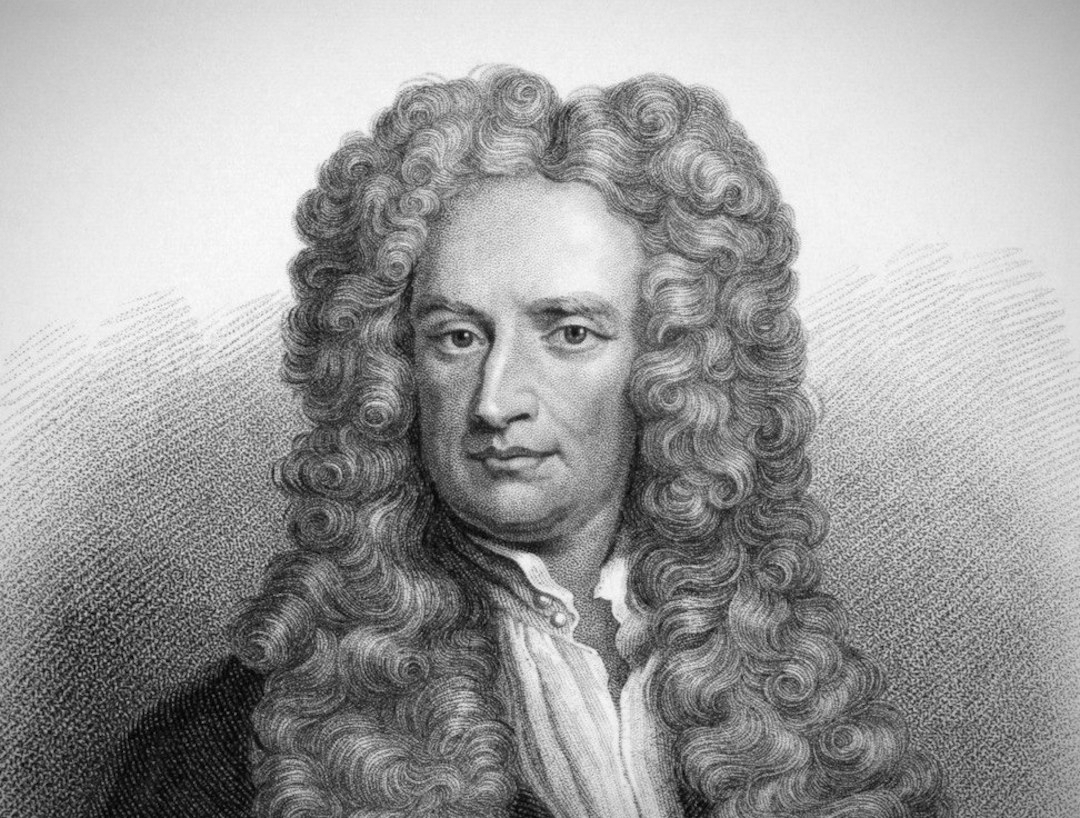
No story in scientific history has permeated culture as much as the story of how Sir Isaac Newton first discovered gravity.
The legend goes that Newton, 23 years old at the time, was quarantining in his grandparents’ ancestral home of Woolsthorpe Manor during the great plague of London when he took to sit under one of the apple trees known as the ‘Flower of Kent’. As he sat below it, an apple fell on him, which sparked a curiosity in him that would reshape the world forever.
The Flower of Kent has defined how we live, and many have to wonder what would have happened if he had been sat under a tree that bore no fruits.
That being said, those apples are not particularly delicous, if you were wondering. They are mainly used in cooking and… as Newton found out himself, proving gravity.
Unfortunately, that exact tree that inspired the theory was blown down in 1820 and might have been relocated to The King’s School nearby in Grantham or replanted in the precise spot.
Still, wherever it sprouted again, its descendants have made their journey worldwide. Atlas Obscura has curated a map of all its locations. And looking at the graphic, no matter where you are in the world, it seems you might be able to stand under one of its children.
Today, it can be found in different universities, botanical gardens, and scientific instituitions for people to visit a living link to Newton’s historic work.
For starters, the tree has several roots in England. One stands at the gates of Trinity College, Newton’s alma mater, right under the window of the room he once stayed in. Another is located in the Cambridge University Botanic Gardens. Several others are spread through several universities and centers around the country.
Next, we have the 14 descendants and clones that made it to the US. Incidentally this is the highest number of any other country. Big Think has a detailed list of places you can find one in the US.
Below is an image of one of the Flower of Kent descendants in Babson College, Massachusetts.
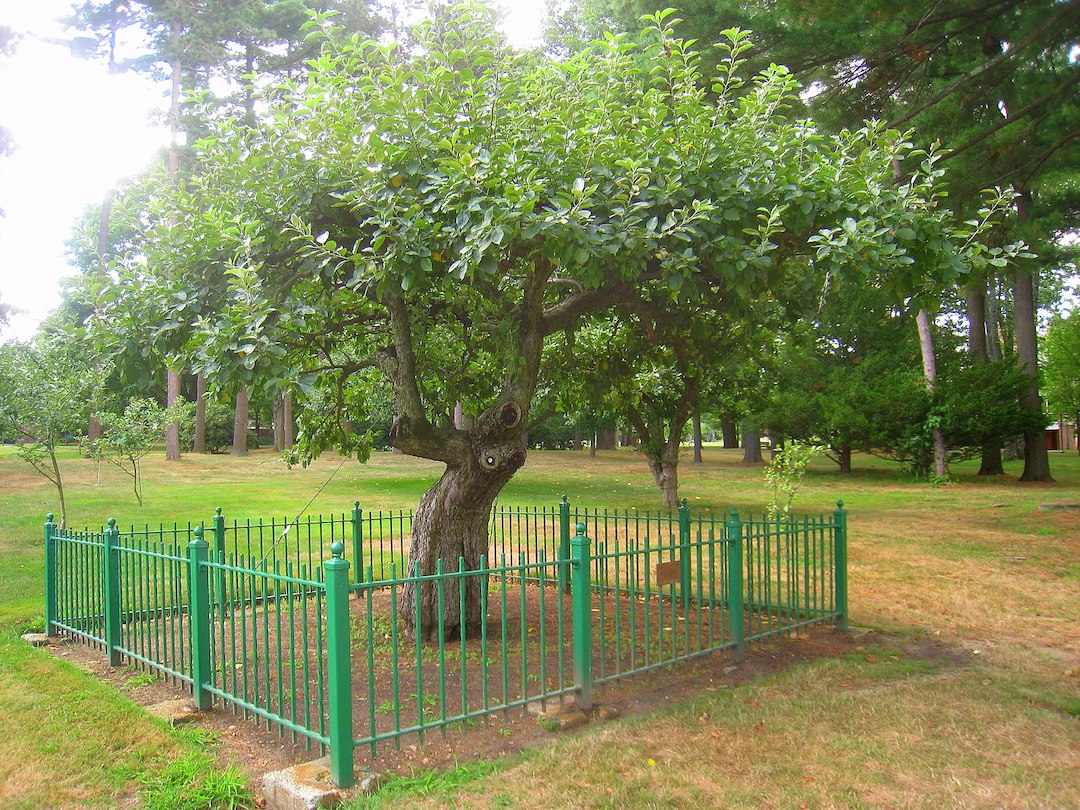
The tree also found its way to Canada, Australia, Japan, and South Korea. Atlas Obscura’s map details each specific location if you are keen to stand under one of the great monuments in science.
[via Boing Boing and Big Think, images via various sources]


