
Construction Blocks Made With CO2 Can Even Absorb A Hefty Amount Of It Daily
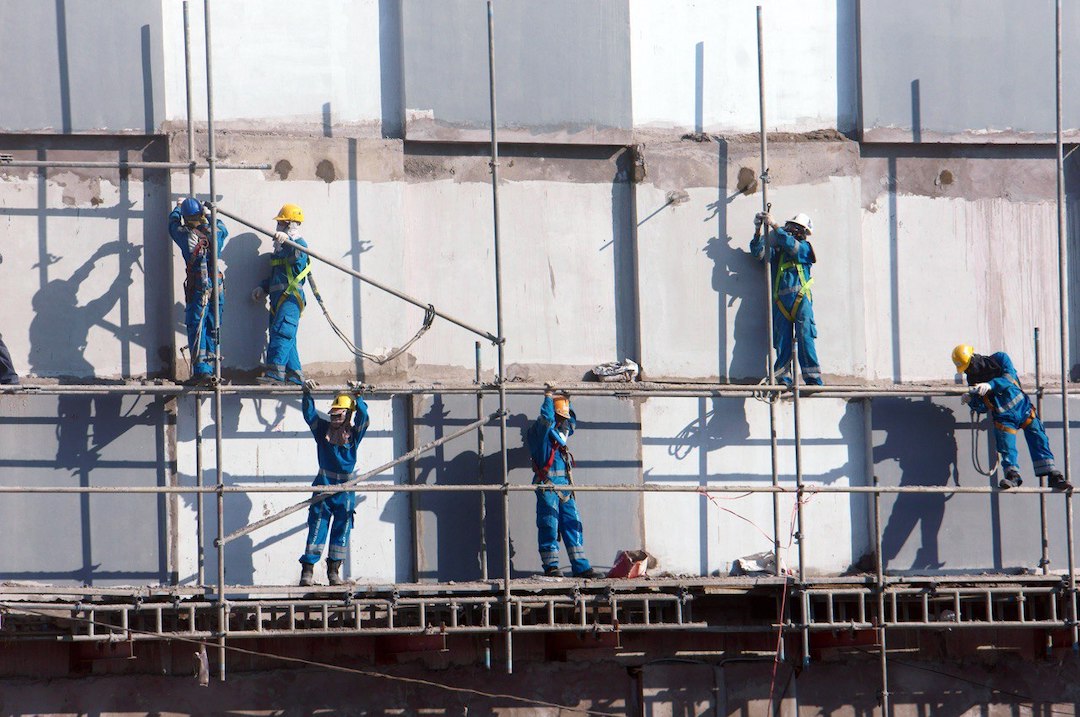
Construction blocks made out of traditional concrete, unfortunately, contribute to almost 8% of global CO2 emissions. This effectively makes building one of the activities that put our planet in danger.
One company in the Netherlands, Masterbloc, is looking to find a greener and more circular solution by creating blocks that could ingest carbon dioxide instead of producing it.
So how are these blocks made? According to a write-up in The Brussels Times, this new method is based on research done back in 2004 by a company called Orbix and its development manager Dirk Van Mechelen. Together they discovered that steel slag residue hardened after being exposed to CO2.
The study was further developed with the Flemish Institute for Technological Research (VITO), where the discovery resulted in a process now known as “Carbstone”.
Carbstone allows the metal slag to use CO2 to bind itself together, making for the total removal of cement from the process altogether.
Masterbloc even uses steel slag left over from the industry to keep them as eco-friendly as possible. In addition, the blocks ingest up to eight tonnes of CO2 a day during production, which means that annually, Masterbloc absorbs 15,000 tonnes of emissions.
According to Interesting Engineering, the blocks have the same quality as traditional ones, giving companies a sustainable option for construction while also cutting down on their carbon footprint.
[via Interesting Engineering and The Brussels Times, Photo 62477226 © Hoxuanhuong | Dreamstime.com]


