
Met Museum Sued By Heirs Of Jewish Art Collector Over Van Gogh Painting
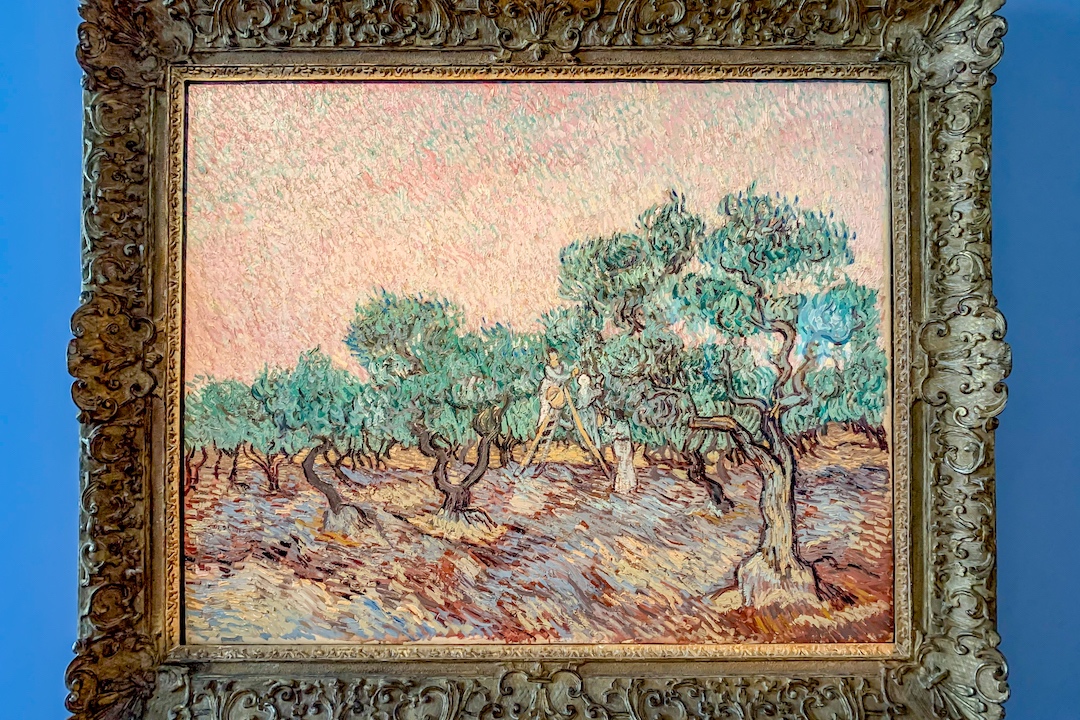
New York’s Metropolitan Museum of Art and the Basil and Elise Goulandris Foundation in Athens are being sued over Vincent van Gogh’s 1889 painting La cueillette des olives (Olive Picking) by heirs of a Jewish collector who have requested the institutions return the work, which they believe was looted.
The lawsuit, which was recently filed in the Northern District of California district court, alleges that the Met had secretly sold the painting in 1972 in an attempt to avoid returning it to Hedwig Stern, who was seeking the piece’s restitution.
According to Artnet News, the artwork is currently on display at the museum in Athens, which is run by the family foundation of late Greek shipping mogul Basil Goulandris and his wife, Elise Goulandris.
Courthouse News Service reports that Stern had lost the valuable painting—believed to be worth US$75,000—when it was confiscated by the Third Reich while she fled from Munich, Germany, to Berkeley, California, in order to escape Nazi persecution.
During her escape in December 1936, the Gestapo prevented Stern from exporting the artworks she owned, including the Van Gogh piece. Her former attorney, Kurt Mosbacher, was tasked to sell off her property and five artworks.
When Paul Roemer took over the Thannhauser Gallery from the former Jewish owner, Justin Thannhauser, he then sold the piece, along with another Pierre-Auguste Renior work, to Theodor Wener for 55,000 Reichsmarks. Stern never received compensation nor the painting.
Somehow, Olive Picking traveled all the way to New York, with the Met buying it from Vincent Astor in 1956. However, Stern’s heirs posit that then-Chief Curator Theodore Rousseau had known the painting was stolen by the Nazis, but still allowed the sale to go through.
Considering that Rousseau was one of the world’s leading experts on Nazi art theft, it isn’t a stretch to imagine that he would’ve known of the piece’s murky provenance, especially as the painting was a “highly prominent post-Impressionist” work that the Third Reich remarked was “degenerate.”
“The conduct of the defendants, as alleged herein, was wanton, fraudulent and malicious, and done consciously in disregard of the rights of Hedwig Stern and her heirs, thereby warranting the imposition of exemplary or punitive damages,” the plaintiffs claim in the complaint.
Unfortunately, Stern passed away in 1983 without ever seeing the return of her beloved art. Though, throughout her time in the United States, she spent a vast amount of time trying to recover the looted pieces.
For example, she had met with Lane Faison of the US Army Monuments, Fine Arts, and Archives Division, a department that worked to recover stolen cultural objects, in 1951. Intriguingly, Rousseau had been serving as part of the Monuments Men during that time.
When news of the secret sale broke in 1972, the New York Times called it an “unusual move” and reported that the buyer was “Italian industrialist” Gianni Agnielli. The Met told the publication it had deaccessioned the piece as part of efforts to raise funds for the organization.
The Met and the Foundation have yet to respond to queries from the press, though Stern’s heirs are hoping the lawsuit will finally see the return of the Van Gogh masterpiece, proceeds from the 1972 sale, and damages for the fair market value of the work.
[via Artnet News and Courthouse News Service, cover image via Tasos427 / Wikimedia Commons (CC BY-SA 4.0)]


