
Spain Crushes ‘Gender Bias’ In Toys With New Law On How They Should Be Designed
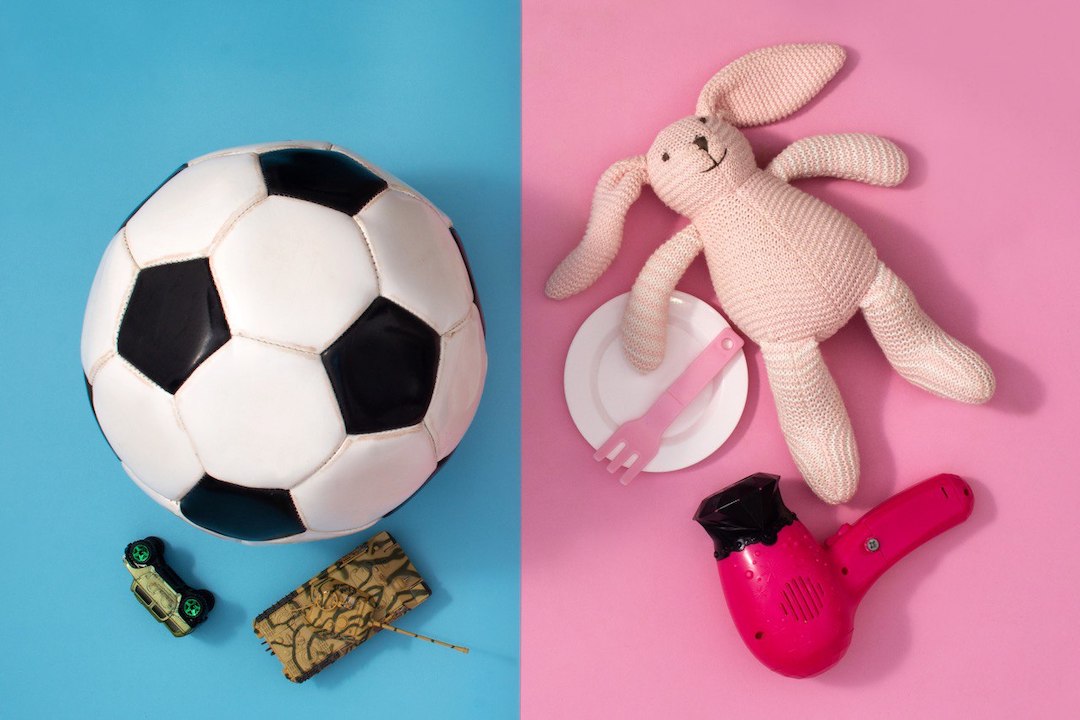
Pink only being for girls, and blue only being for boys may seem so arcane in today’s day and age, and rightfully so. Spain agrees, with its government moving to stop the toy industry from stereotyping types of toys according to gender.
Beginning December 1, a code of ethics was implemented to encourage toy manufacturers and retailers to “avoid gender bias” when marketing new items, according to new guidelines put forth by the Ministry of Consumer Affairs.
One company that’s already been practicing non-gendered toys for a decade is Toy Planet, a Spanish chain based near Valencia. In the catalog for its toys, the brand portrays a girl wearing a police vest and wielding a toy fun, while a boy is shown pushing a pram.
Director Ignacio Gaspar told AFP that toys “play a very important role” in the development of children into adults, and that his firm is taking care to ensure that prejudice isn’t created from an early age.
The change in direction for Toy Planet’s marketing team did not take place overnight. In fact, it all started because the label had come under fire in 2012 for its stereotypical portrayal of kids. Then, it decided to flip the switch on its head and depict children in typically opposite scenarios.
However, not everyone was on board with seeing girls using tool benches or boys playing with dolls. Gaspar revealed there were detractors who were afraid that non-gendered playtime would “make boys more effeminate or turn girls into tomboys.”
However, Prime Minister Pedro Sanchez is one person who isn’t listening to the noise. Considered a pioneering feminist in the country, he not only has enacted several schemes to help combat gender-based violence, but has also worked to advance women’s rights.
As such, under the nation’s new law for toy retailers, advertisements for products can no longer label a toy as for a particular gender. To keep things even more neutral, pink can’t be designated for girls and blue can’t be assigned to boys, in order not to reinforce outdated gender preferences.
The Spanish Association of Toy Manufacturers—which covers 90% of the industry—took a year to draw up the new rules, though its reach currently remains limited to commercials, not including packaging, street advertisements, or catalogs.
In addition, the publication noted there are no sanctions for businesses that don’t comply with the legislation, only running a “reputational risk” of being at the end of bad press. Major international brands are also not included in the ruling.
While Rafael Escudero, a spokesperson from the Consumer Affairs Ministry, admitted the scope of the plan isn’t wide enough yet, but the small step is “necessary if we want to move forwards.” Tania San Jose, a mother, and teacher from Pamplona, agreed, saying the current generation was “trying to change” the mindset of old.
[via AFP, cover image via David Cabrera Navarro | Dreamstime.com]


