
Black Bears Are Turning ‘Cinnamon’ As A Result Of A Mutation

Black bears (Ursus americanus) in the US may no longer live up to their names thanks to a gene that is turning these great creatures into cinnamon-colored bears instead.
This slow change of colors has been happening over the last 9,000 years after a study conducted by researchers in the US and Japan discovered this metamorphosis. The scientists collected 151 individual DNA samples from across the US and Canada.
The study, published in Current Biology, describes a mutation known as R153C in the tyrosinase-related protein 1 (TYRP1), which is the culprit behind these new shiny red coats.
TYPR1 is a pigmentation gene that can help produce eumelanin (black and brown pigments) or pheomelanin (red or yellow pigments). The mutation is causing a change in the amino-acid sequence of that.
Interestingly enough, this mutation is similar to the one in humans that causes light-colored hair and skin, which are two signs of albinism and can even cause poor eyesight in people. According to the study’s lead author, Emily Puckett, the researchers are not seeing any signs of failing vision in the animals.
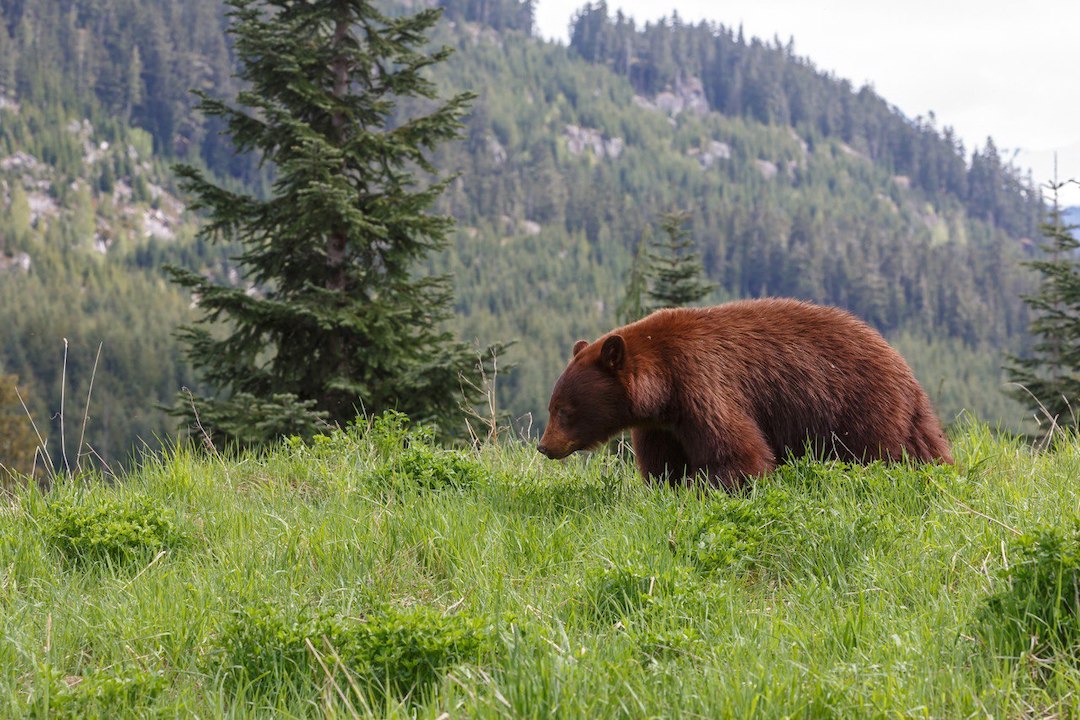
The variant itself is still pretty young—even if it’s been affecting them for 9,000 years—and has not yet spread through the entire population. So far, the mutation seems isolated to western states such as Nevada, Arizona, and Idaho. Bears on the East Coast, around the Great Lakes, and across the Canadian Prairies still retain their titular black coats.
These bears are not to be confused with brown bears, or grizzlies, as they are still part of the black bear species and are not as dangerous as grizzlies.
The researchers looked into whether temperature and region affected the gene but found that was not the case. That being said, they did learn that the gene is highly adaptive, though what exactly it is adapting to isnt’t clearx
So, the next time you’re out in the woods somewhere, keep an eye out for these cinnamon bears.
[via Live Science and The New York Times, images via various sources]


