
Lufthansa’s ‘Sharkskin’ Plane Film Awarded Approval, Saves Fuel & Reduces Drag
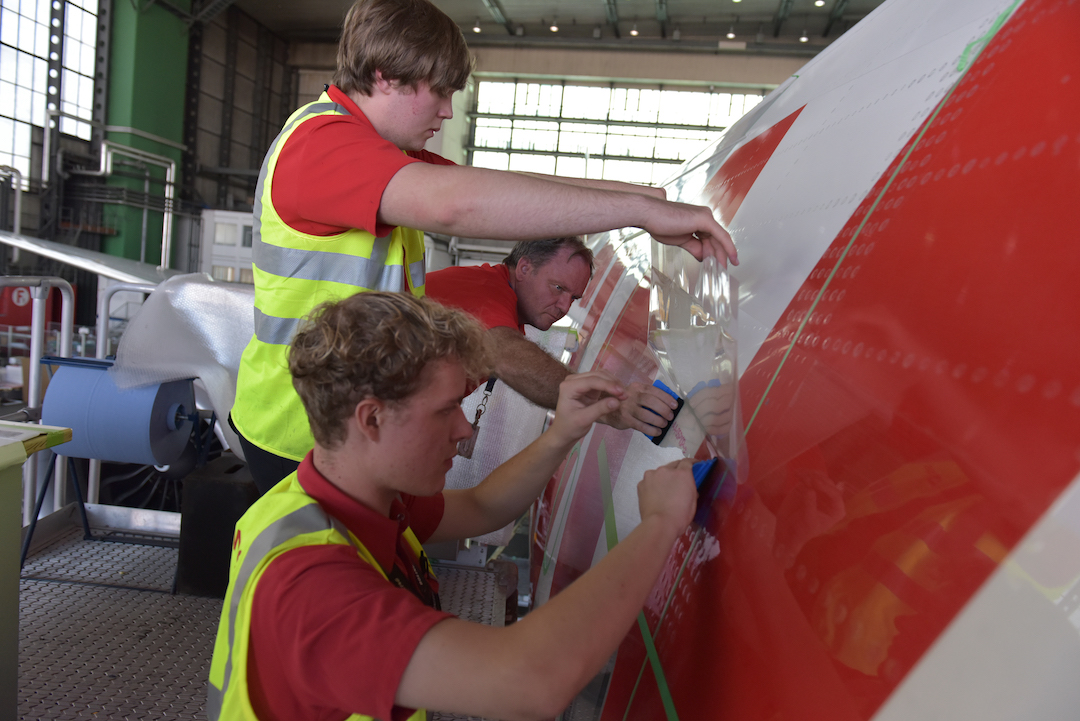
Lufthansa Technik recently announced that its AeroSHARK riblet films have been approved for use on select Boeing 777 airplanes, after the European Union Aviation Safety Agency (EASA) granted the innovation a Supplemental Type Certificate (STC).
Designed to resemble shark skin, the AeroSHARK riblets are placed onto the cover of an aircraft fuselage, helping to reduce drag in the air by letting air pass through it as smoothly as a shark moves in the water.
The layer, which will be applied as a modification to the typical aircraft skins, will allow planes to glide through the air with less resistance, allowing it to save energy and consume less fuel per flight as part of industry-wide efforts to make flying more eco-friendly.
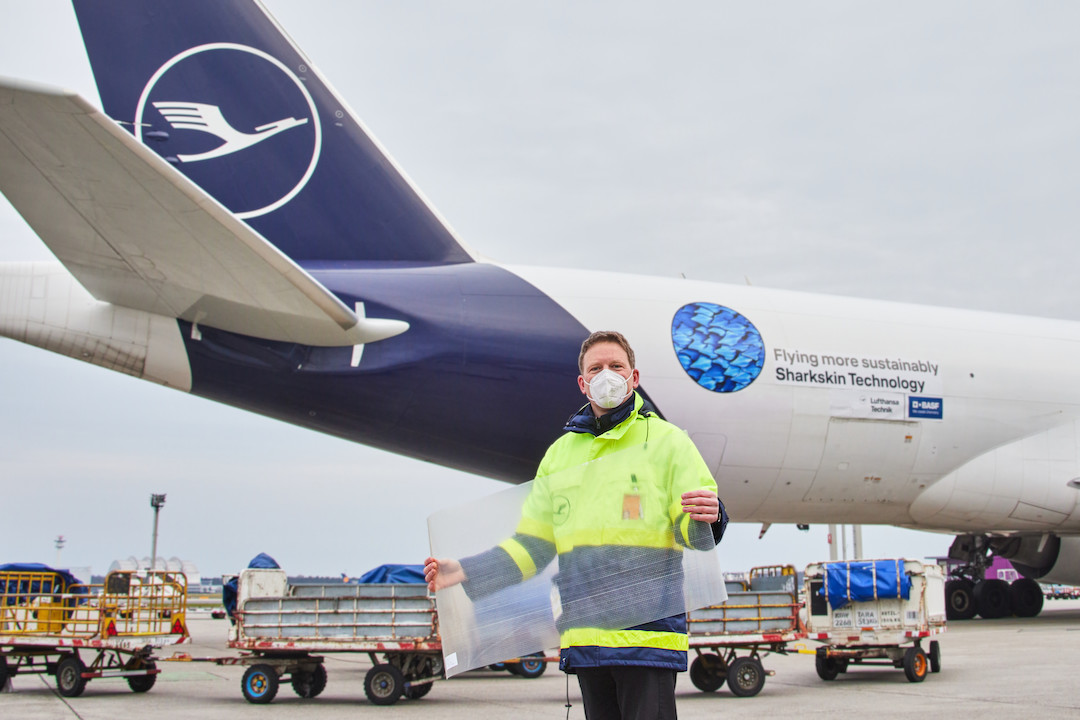
According to the airliner, the special surface minimizes fuel consumption and carbon emissions by an estimated 1%, which amounts to annual savings of 400 tons of kerosene and over 1,200 tons of carbon dioxide per airplane.
During test flights, Lufthansa had to prove that the modification didn’t result in any negative impact on the operational safety and handling of the aircraft, followed by several weeks of evaluation of the data collected.
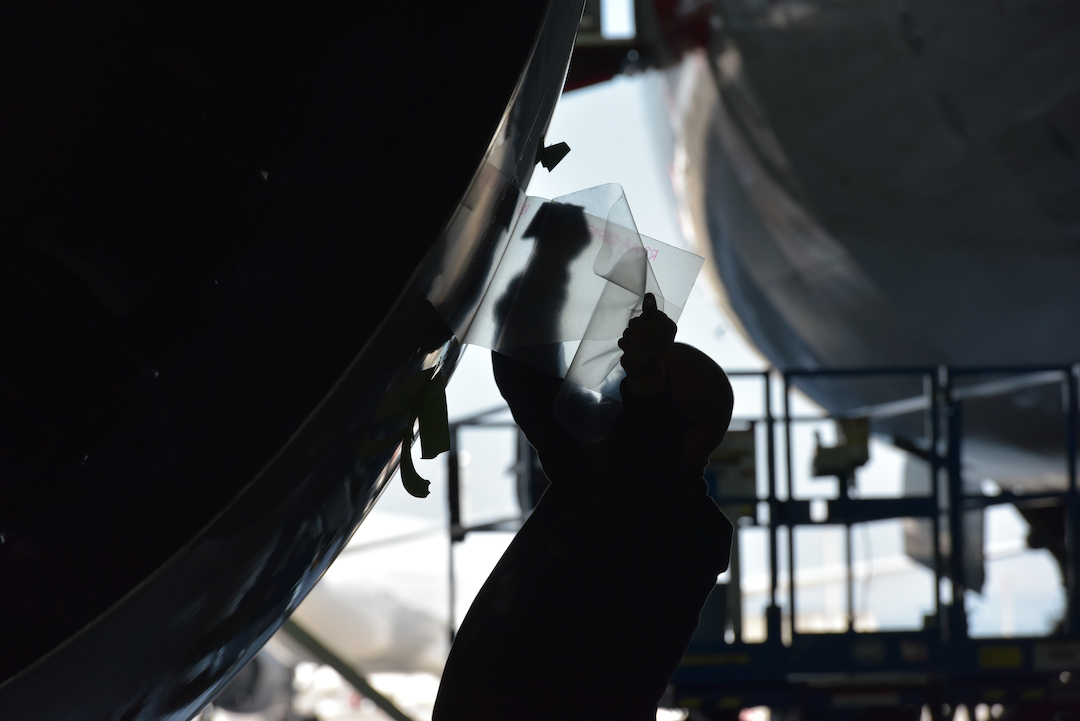
Currently, the first AeroSHARK-equipped Boeing 777 has already begun daily operations using a temporary ‘Permit-to-Fly’ from the Swiss Federal Office of Civil Aviation (FOCA), as the company moves to apply the riblet films to other aircraft of the same model.
“The approval of AeroSHARK for the Boeing 777 variants is an important step in the distribution of this new technology for more sustainability in air transport,” remarked Soeren Stark, Chief Executive Officer of Lufthansa Technik.
[via Simple Flying and Lufthansa Technik, images via various sources]


