
New Wearable Tech Can Help Treat PTSD While Patients Are At Triggering Places

Many veterans suffer from post-traumatic stress disorder (PTSD), a mental health condition that occurs after one witnesses or experiences a terrifying event. It can lead to intense flashbacks, nightmares, and severe anxiety.
Recently, researchers at the Medical University of South Carolina (MUSC) have come up with a wearable device that could help make prolonged exposure therapy—one of the main ways PTSD is treated—more effective for patients.
During exposure therapy, psychiatrists will often task patients with spending time in places where they’re physically safe, but make them uncomfortable, such as a noisy event with fireworks. However, clinicians aren’t able to accompany each individual to these places all the time.
That’s where Bio Ware, the medical device manufactured by the institution’s spinoff company Zeriscope, comes into play. The gadget is made up of a discreet button-shaped camera, Bluetooth earbud, and electronic module worn on the patient’s wrist.
While patients are in uncomfortable scenarios, the sensors within the device allow psychiatrists to monitor their heart rate, rate of respiration, and stress levels (via the skin) in real-time, as the data gets transmitted from an app on the wearer’s smartphone.
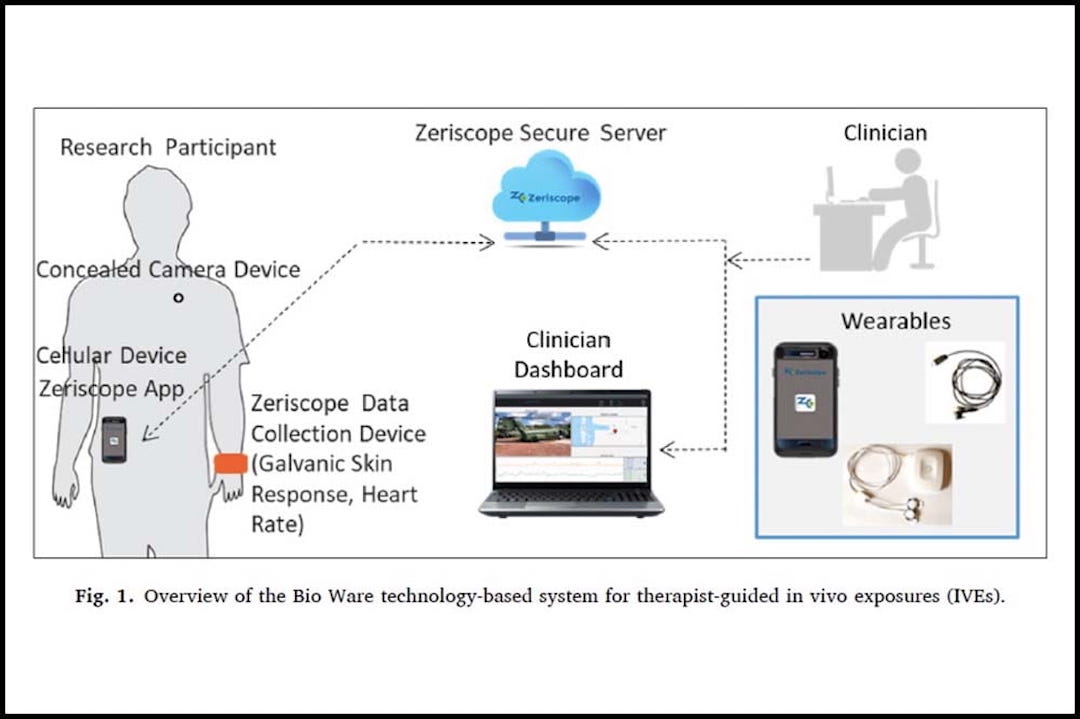
There’s even two-way communication available with Bio Ware, as doctors can give feedback or directions directly through the earbud or the application to ensure the treatment is going as it should.
In a study conducted by the university, 40 patients tried out the gadget during 10 to 12 prolonged exposure therapy sessions. Half of the subjects had a psychiatrist to guide them along, while the other half interpreted the data on their own.
The findings showed that both groups had experienced a significant improvement in PTSD symptoms, with the guided group doing even better. The school is now preparing for a larger-scale trial to take place in order to confirm the results.
Sudie Back, the principal investigator on the project, said that this was the first study that featured a system allowing the clinician to virtually go with the patient on exposure exercises, and have access to their physical metrics during the process.
“If I was guiding somebody, I could see what they were seeing. I could see their physiology. I could ask them about their subjective units of distress, or SUDS, in that moment, and also help them do things that are increasingly more difficult,” she explained.
[via New Atlas and Medical University of South Carolina, cover image via Motortion | Dreamstime.com]


