
NASA’s Curiosity Rover Discovered Opals On Mars That Could Be A Water Source
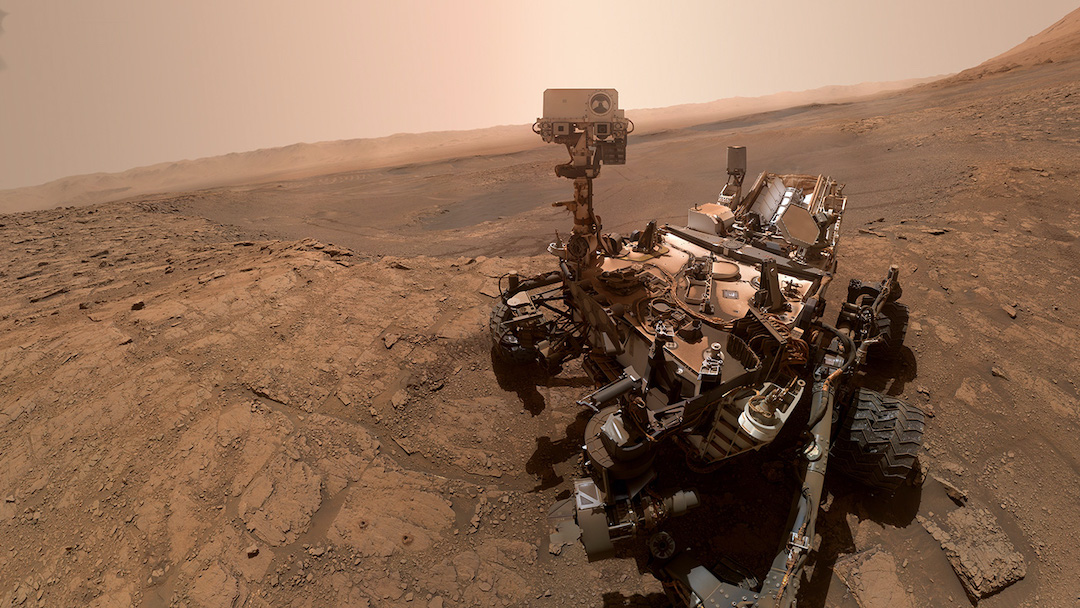
Opal is a beautiful gemstone of shimmering iridescent fractions cast against a cloudy background. This gem is the birthstone for October and a popular engagement ring choice for those looking for something other than classic diamonds. However, they aren’t just pretty shiny stones; they may also have pointed scientists toward a possible water source on Mars.
The gem is produced when water weathers silica-rich rocks, and a solution is formed when it settles into crevices and cracks in the rock. As time passes, the solution hardens and matures into an opal.
These dazzling rocks are not a new discovery; some of the first images of them date back to 2008. Arizona State University has been studying these images again and using new techniques to re-examine images captured by Curiosity that show lighter-colored rocks which form “halos” that crisscross on the surface of Mars. The research was published in the Journal of Geophysical Research: Planets.
Below is an image from back in 2008 on the discovery of the gem.
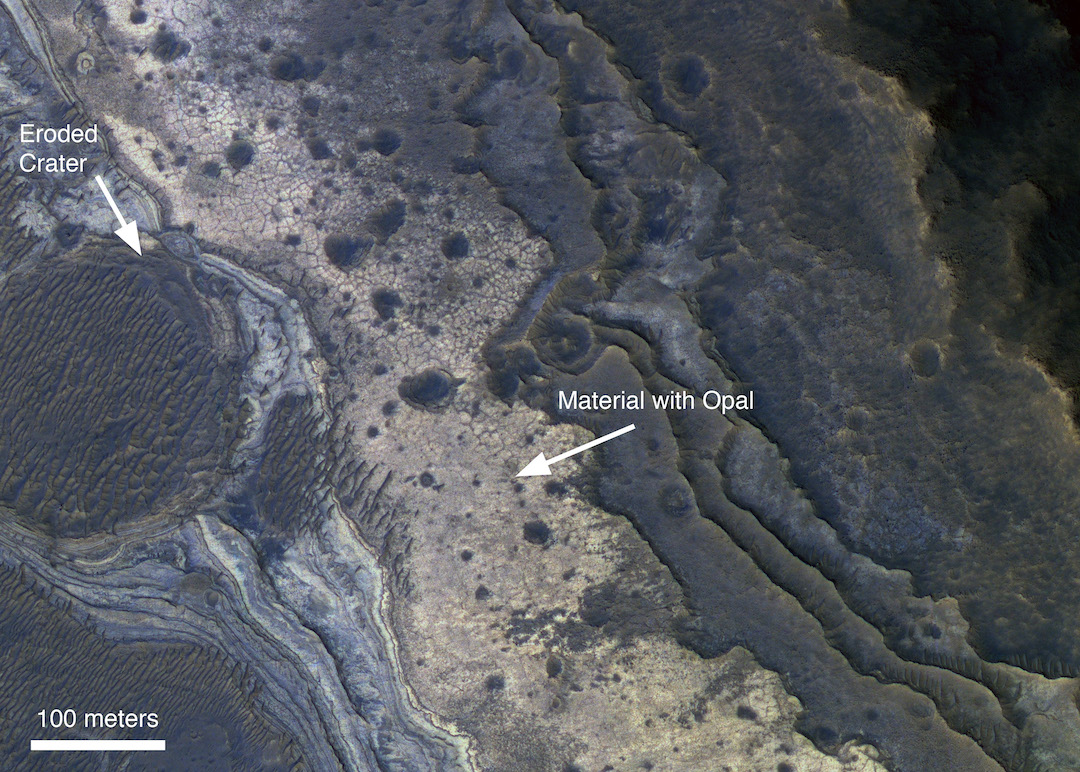
Judging by the fact that opals are grown from these veins on the Red Planet, it would seem that they are mainly made up of silica and water. The team estimated that a 3.3-foot-long halo could hold up to 1.5 gallons of H2O.
Travis Gabriel, the study’s co-lead author, says: “Our new analysis of archival data showed striking similarity between all of the fracture halos we’ve observed much later in the mission. Seeing that these fracture networks were so widespread and likely chock-full of opal was incredible.”
This could suggest that H2O was present on Mars much more recently than previously thought. While the top surface may have dried out and microbes could not survive, the layers beneath would have been able to hold out for much longer. This is a breakthrough for Curiosity and Perseverance, who are currently scouring the Jezero Crater for signs of life.
The university also suggests that opals could be a potential water source for humans travelling to the Red Planet. As the liquid is not tightly bound, it can be broken down through heating and grinding.
[via New Atlas and Arizona State University, images via various sources]


