
Hair Follicles May Be The Answer To Getting Rid Of Scars For Good
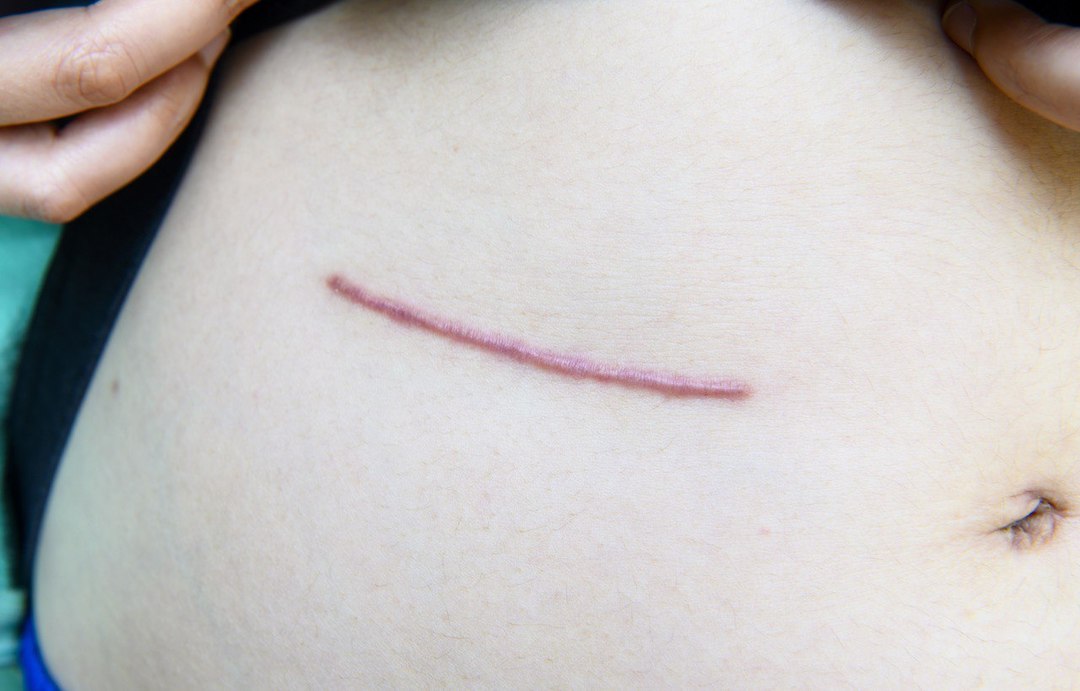
Scars often come with a story behind them. Perhaps they were attained from an accident during childhood or a traumatic fall. Wherever they came from, scars hold memories, painful or otherwise. And while some people can live with the wounds and the tales behind them, others would rather forget altogether.
Unfortunately, they are a part of the body that have recovered in such a way that they can never leave a person. The science behind this is that when a wound heals into a scar, it is void of any hair follicles, making it look so different from the rest of our skin.
So, what is the answer to getting rid of them? By transplanting new hair into the area of trauma, scientists at Imperial College London deduce.
Researchers are working on basing their findings on previous studies that have shown how wounds on areas of the body with more hair heal faster, and without a permanent blemish, than on smooth skin. This is because follicles promote the healing process.
As such, the team, with the help of Dr Francisco Jiménez from Spain’s Universidad Fernando Pessoa Canarias, is taking this knowledge and applying it to matured wounds.
The process looked at scars on the scalp of three volunteers. First, the researchers took a three-millimeter-thick sample before and after the procedure to examine the effects of the follicle transplant. The team then introduced new follicles into the region. Each participant’s scalp grew hair as usual, and the team found that the transplant “inspired profound architectural and genetic shifts in the scars towards a profile of healthy, uninjured skin.”
After the first four months, the number of blood vessels almost matched that of healthy skin. And after six months, the epidermis of the blemish had doubled in thickness to match that of intact skin.
The result is an important achievement in the study, as scars are notoriously made of thinner skin, which makes it more susceptible to repeated trauma.
In lieu of these findings, the team is now trying to understand what exactly causes the area to react in such a way when hair follicles are introduced.
As the study progresses, it will be interesting to see how this will help those who have been victims of their wounds and the emotional and mental trauma that is brought along with them.
The study was first published in the npj Regenerative Medicine journal.
[via New Atlas and Imperial College London, Photo 137924927 © Brostock | Dreamstime.com]


