
Drugs Can Now Skip Animal Testing And Move Straight To Human Trials
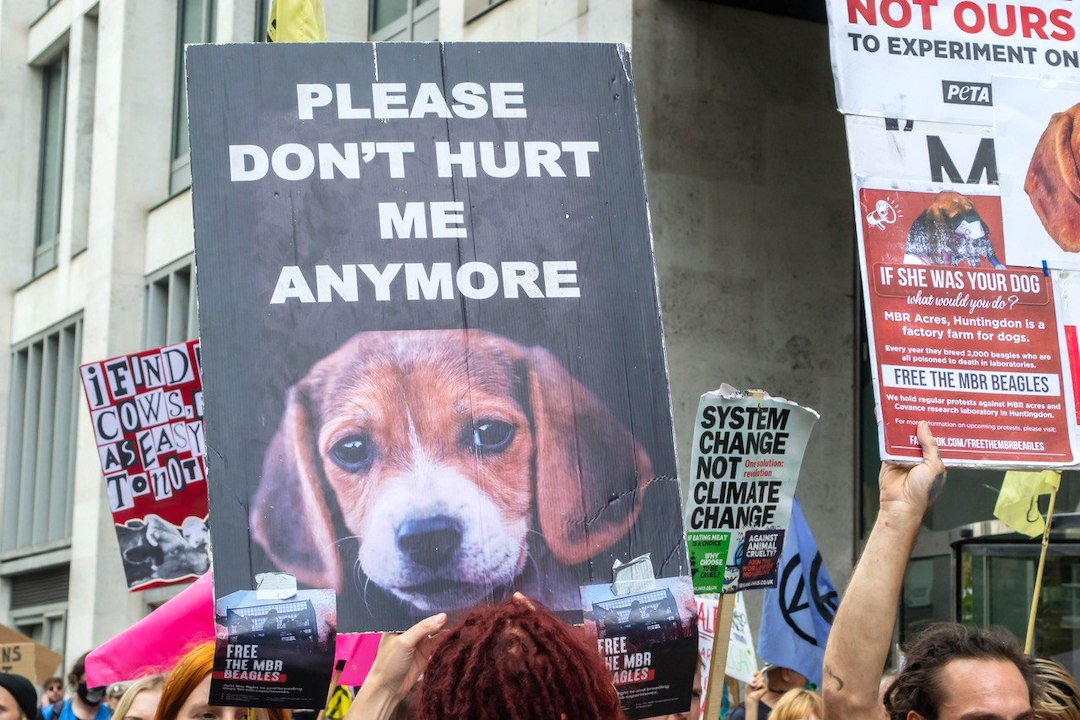
In a win for animal rights advocates across the United States, the Food and Drug Administration has announced a new law that eliminates the requirement for drugs to be tested on animals before being given the go-ahead to participate in human trials.
Senator Rand Paul, who sponsored the FDA Modernization Act 2.0, explained that the updated legislation will help put to a stop the “needless suffering and death of animal test subjects,” and will allow for “safer, more effective drugs” to get to market in a short span of time.
PETA, which championed the bill, said the implementation of the law “signals a radical shift” in the way drugs and treatments are developed in the country, bypassing deadly animal tests in favor of “superior, non-animal” methods.
Simply put, while the update doesn’t completely ban the testing of medication on animals, it lifts the requirement for pharmaceutical companies to conduct these tests before proceeding to clinical trials. Companies can still choose to test on animals if they wish to do so.
While this is certainly good news for the countless animals who suffer in laboratories daily, Professor Aliasger Salem from the University of Iowa told NPR that drug makers looking to use alternatives need to be aware of the methods’ limits.
To ensure the safety and efficacy of the treatments before testing them out on human subjects, it’s of utmost importance that manufacturers pay special attention to which toxicities can or cannot be identified by the technology used.
As such, an FDA spokesperson told the publication it will be spelling out “all applicable provisions” within the law, and will continue working with stakeholders in the industry “to encourage the development of alternative testing methods.”
President of Animal Wellness Action and the Center for a Humane Economy Wayne Pacelle is confident the bill will “eliminate an archaic and debilitating” rule regarding animal testing, and will “not only save public and private dollars… but save countless human and non-human lives.”
[via NPR and Senator Rand Paul, cover image via Jessica Girvan | Dreamstime.com]


