
Hundreds Of Well-Preserved Titanosaur Eggs Reveal More About Dinosaur Life
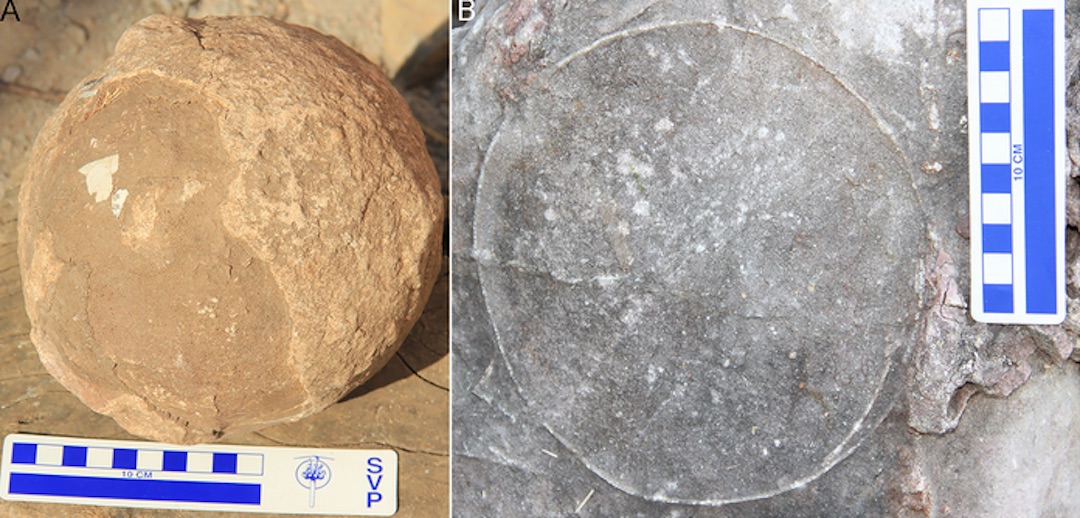
92 titanosaur nesting sites were uncovered in the Narmada Valley of India in 2012. Within those nests were 256 fossilized dinosaur eggs perfectly preserved in time. Over the years, researchers have taken to study the discoveries to better understand the titanosaur and how these creatures lived.
In its heyday, the dinosaur weighed over 28,000 pounds and stood at an average of 39 feet, while some of the taller ones could reach a whopping 85 feet. It was one of the largest species of dinosaurs then, and much could be learned about them from the findings, including nest preservation and reproductive strategies.
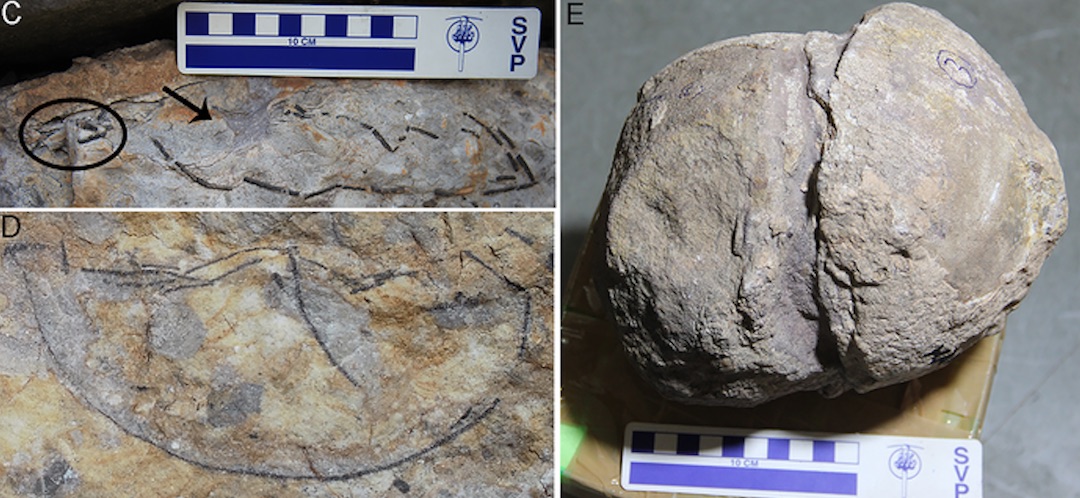
Scientists have just published their findings in PLOS after conducting a closer examination. Firstly, the creatures had laid their eggs close to a Cretaceous pond or lake, according to the sandstone which had preserved the specimens. They also came in many shapes and sizes. Some were completely intact, while others were smashed or deformed.
Interestingly enough, the researchers also found pathological eggs. This means that these specimens were of the abnormal variety due to the animals being stressed during pregnancy. The abnormalities found include multiple layers of shells or eggs forming inside of other eggs. Modern birds today experience such peculiarities as well.
The presence of pathological eggs has led academics to believe that the titanosaur laid them in sequence, the same way modern birds do.
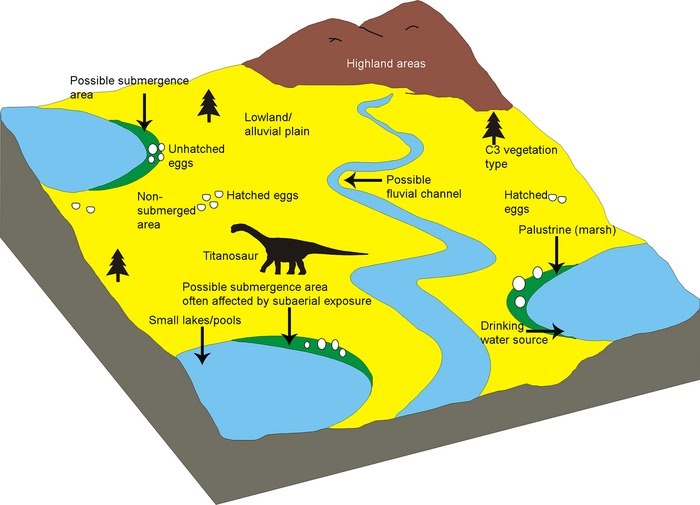
After everything, it should be noted that the nesting site did not hold any fossils of young or even older titanosaurs. According to Gizmodo, Guntupalli Prasad, a paleontologist at the University of Delhi in India, pointed out that the site could purely be for nesting and that no dinosaurs stayed in the area for long. Another theory is that the bones may not have been preserved in such conditions and, as such, were lost to time.
Ultimately, the findings provided great insight into dinosaur reproductive behaviors that scientists might not have known.
[via Gizmodo and CNN, images via Dhiman et al., 2023 / PLOS ONE (CC-BY 4.0)]


