
Self-Extinguishing Cotton Makes For More Resistant Clothes, Greener Furniture
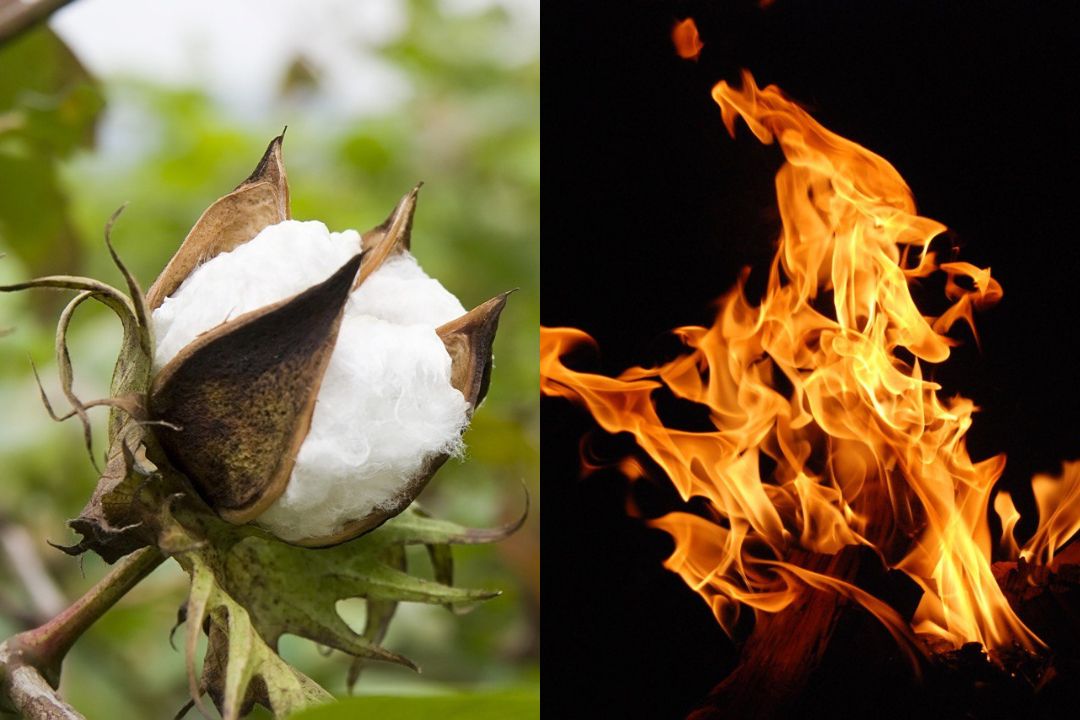
Flame retardants have long permeated the textile industry, having been applied to fabrics used to make apparel, furniture, mattresses, upholstery, and carpets to reduce a material’s ability to ignite, thus keeping wearers and occupants safer.
However, for the past several decades, flame-resistant materials have come at the expense of toxic chemicals. While many have been pulled from the market in the years since, these chemicals take ages to break down, and can even bioaccumulate in humans and animals.
To address the issue of creating safer textiles without harmful health effects, researchers at the US Department of Agriculture have engineered a new variety of cotton that not only doesn’t require chemicals, but can extinguish itself upon encountering flames.
The team, led by Gregory N Thyssen, came up with 10 strains of cotton using alleles from 10 different parent cultivates. After trialing the different versions through burn tests, it found that four of the samples could completely self-extinguish.
Interestingly, the flame retardant ability did not come from a single gene present among the samples, but rather, the scientists found that multiple genes created a phenotype for fibers with “significantly lower heat release capacities.”
Even better, the strains that showed promise as non-flammable material possessed the desired quality traits manufacturers often look for when purchasing cotton, making them suitable for commercial breeding and consumer use.
“Use of these lines to develop commercial cultivars creates an opportunity to improve the safety of cotton products while reducing the economic and environmental impact of chemical flame retardants,” explains senior author Brian Condon.
The next time you go shopping for textiles, furniture, or clothing, could flame-resistant cotton be one of the options alongside permanent press and wrinkle-free fabrics? Perhaps just a while longer.
[via Gizmodo and Department of Agriculture, cover image via Gan Hui | Dreamstime.com and Nishapl | Dreamstime.com]


