
‘Sticky’ Drone Bumps Into Surroundings To Pick Up DNA From Nature
Environmental DNA (eDNA) is frequently sought after by researchers in the field to support their work. Scientists usually seek out water and gas samples from regions where wildlife would typically thrive, this encompasses everywehre in nature except for up in the trees. Unfortunately, there’s a whole world living the treetops that scientist just can’t get to.
The ETH Zürich and Swiss Federal Institute’s Stefano Mintchev, along with his coworkers, have developed a method to collect all of those challenging data points. The solution is a “sticky” drone.
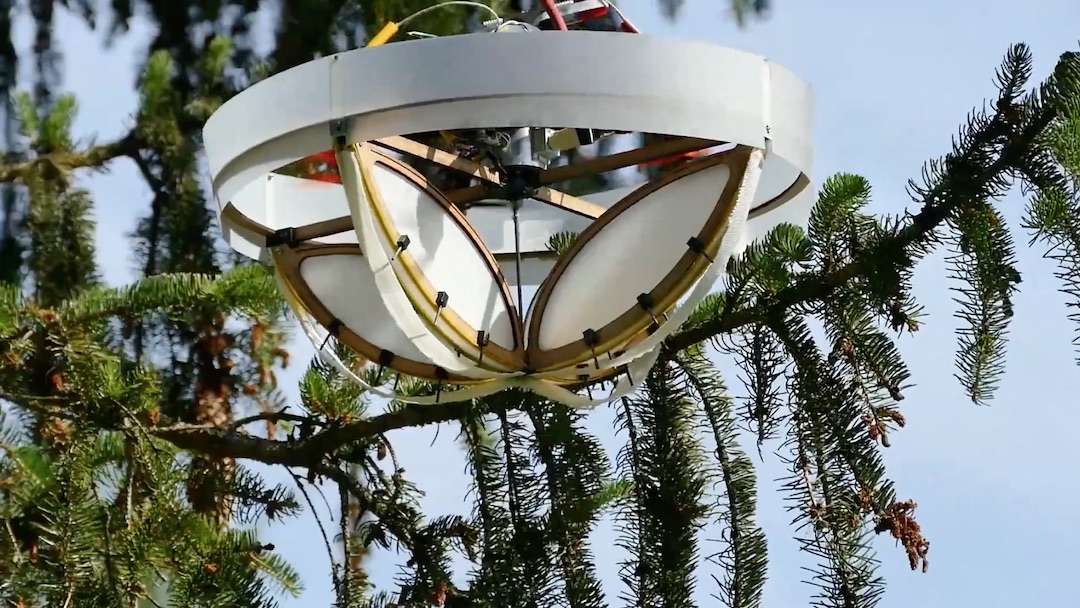
Unlike other non-sticky drones, this one comes equipped with adhesive pads so that it can pick up any lost cells, pollen, and anything else left behind by animals. In addition, the quadrocopter UAV is outfitted with a force sensor that can detect pressure from all directions. Finally, on its bottom is a fiberglass cage covered in either sticky tape or gauze that has been soaked in a sugar solution.
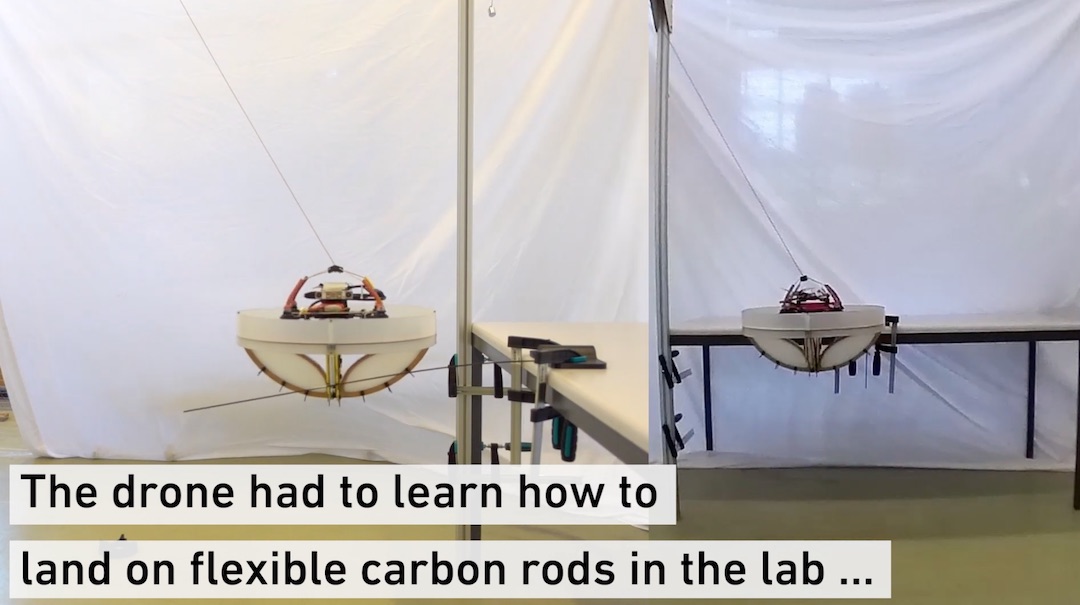
When flying their drones, most people would try to stop them from hitting things. This one, in particular, has been designed to bump into its surroundings to pick up data gently. Its force sensor allows it to hit a branch hard enough to collect important indexes. It trained to do so by landing on a carbon rod to ensure its movements were subtle enough that it would not damage the tree or itself.
The drone collected DNA samples from 21 different animals, including birds, mammals, and insects, and returned 14 samples from seven different tree types after an experiment that took place across the institute’s premises.
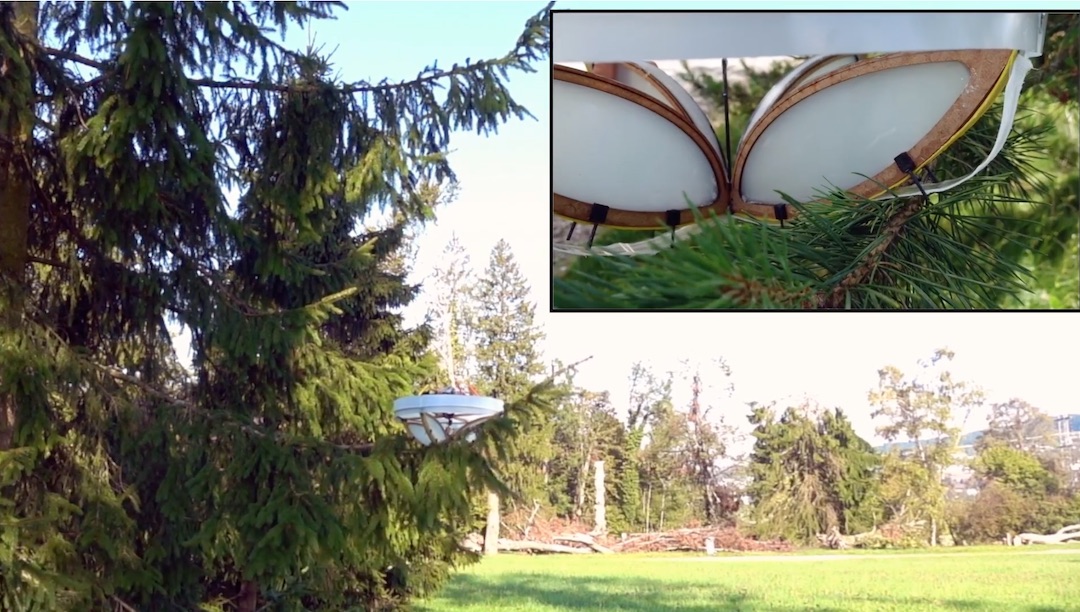
Despite being a hotspot for biodiversity, treetops are virtually untouched, and since humans can’t get to the very top, not much is known about how life survives there.
The drones aim to put all those mysteries to rest by going where no scientist is able to go.
[via New Scientist and TechCrunch, images via ETH Zürich]


