
AI Motion Capture Technology Used In ‘Avatar’ Could Soon Help Diagnose Diseases
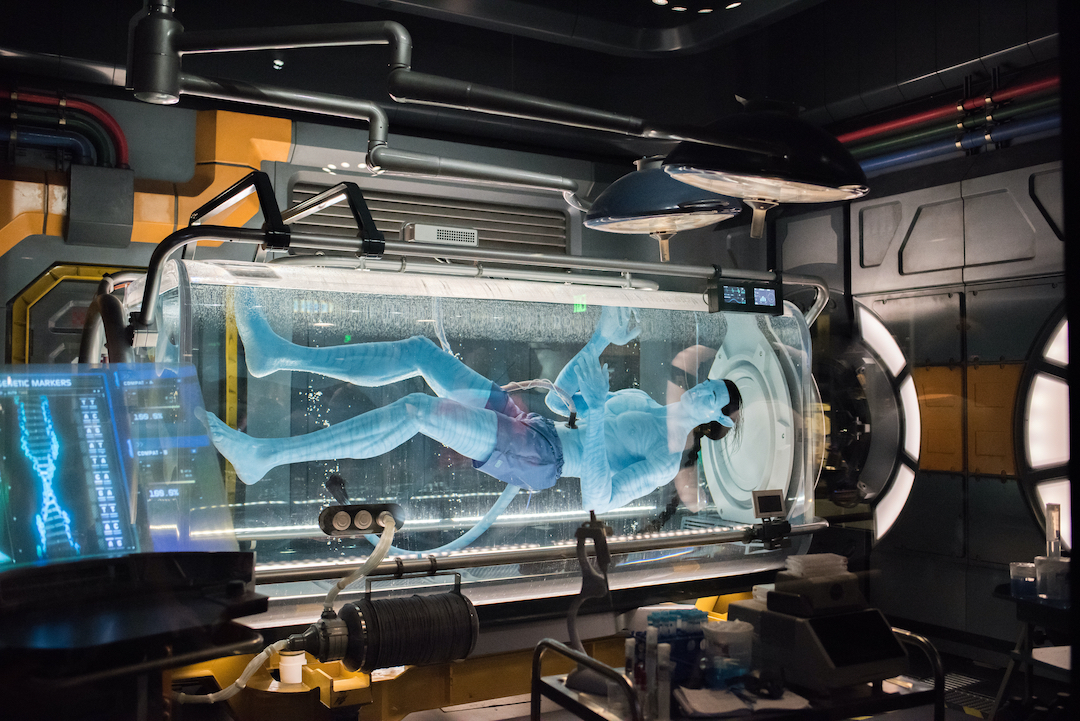
James Cameron’s Avatar series has struck a chord not only in the film industry but with viewers alike for its ultra-realistic visuals and sweeping landscapes that have brought the fictional planet of Pandora to life. One of the main reasons why Pandora and the Na’vi people seem so real is thanks to motion capture technology.
Scientists, in turn, have realized that motion capture isn’t only a boon to Cameron’s films but could also be a helpful resource to the medical field. In a report from BBC, researchers are now looking at using motion capture to diagnose diseases in humans almost twice as fast as a doctor can.
From the moment âž¡ï¸ magic
— Avatar (@officialavatar) December 22, 2022
Go behind the making of #AvatarTheWayOfWater in this featurette and experience it in 3D now playing in theaters. Get tickets: https://t.co/9NiFEIpZTE pic.twitter.com/WvxQuAbocC
The new method uses AI to scan a person’s movements and determine underlying conditions. Over the last 10 years, the system has been developed and tested on patients suffering from Friedreich’s ataxia (FA) and Duchenne Muscular Dystrophy (DMD).
Imperial College’s Professor Aldo Faisal, who spearheaded the study, noted that the motion capture could pick up on subtle movements that cannot be seen with the naked eye.
Of course, the main benefit of such a development is the ability to diagnose ailments in no time. In addition, many illnesses can be treatable when diagnosed early, saving people from succumbing to them in the future.
The team at Imperial College, who handled testing patients with FA, found that the motion capture system could predict the worsening of the disease over 12 months which is half the time it would typically take.
Gear Ormand Street took over testing patients with DMD and discovered that the system could see how a patient’s mobility range would be affected six months into the future.
Aside from its predictive ability, the new approach could also help scientists develop drugs at a lower cost. In this case, both FA and DMD currently do not have a cure, and early diagnosis is often crucial for patients to live fuller lives.
According to the BBC, the team is also gearing the model up to detect Parkinson’s, Alzheimer’s, and MS (multiple sclerosis).
[via Interesting Engineering and BBC, Photo 110025967 © Michael Gordon | Dreamstime.com]


