
Deserted Mines Hold Potential As ‘Gravity Batteries’ To Power The Entire Planet
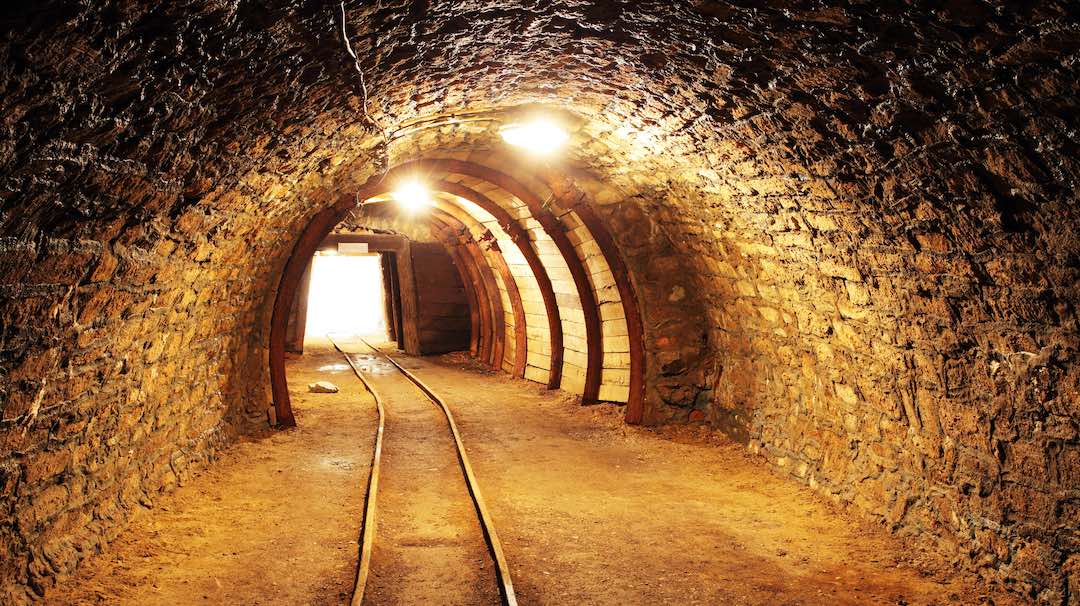
When mines have their resources depleted, they are often abandoned and deemed unsustainable.
At the same time, as the world shifts to a greener future, another issue arises: surplus energy produced by renewable resources such solar panels and wind turbines requires storage for future use.
As such, scientists are now considering novel approaches to tackle both problems with a single solution. According to research by the International Institute for Applied Systems Analysis (IIASA), mines could be converted into “gravity batteries” to store energy.
According to the study, existing elevator shafts may transport massive amounts of sand by employing force to lift the goods. The generated power is retained within the amount of gravity it takes to hold the sand up rather than being stored in a more traditional chemical battery. On the way down, braking is used to produce power, and on the way up, it creates electricity.
The kinetic energy from gravity will be converted back into electricity by a turbine when the power is required again. Hydroelectric plants with pumped storage are one illustration of this. Here, water is discharged from an elevated vantage point and channeled through a turbine that generates force as it flows. The extra amount produced is then returned to the top and stored.
The electricity is meant to supplement power grids when demand rises. Quarries prove to be a great solution to storing the power as it’s relatively cheap to convert, thanks to the fact that most of their infrastructure allows for such uses already.
The research team posits that if all goes well, the mines could produce a total of seven to 70 terawatt-hours of electricity consumption, most of which will be concentrated in China, India, Russia, and the US, where abandoned quarries are abundant. In contrast, in 2021 alone, the total usage of global energy was 25 terawatt-hours.
[via ZME Science and Independent UK, Photo 44519473 © Tomas1111 | Dreamstime.com]


