
US Approves The Use Of Exoskeletons To Help Stroke Patients Walk Again In Rehab
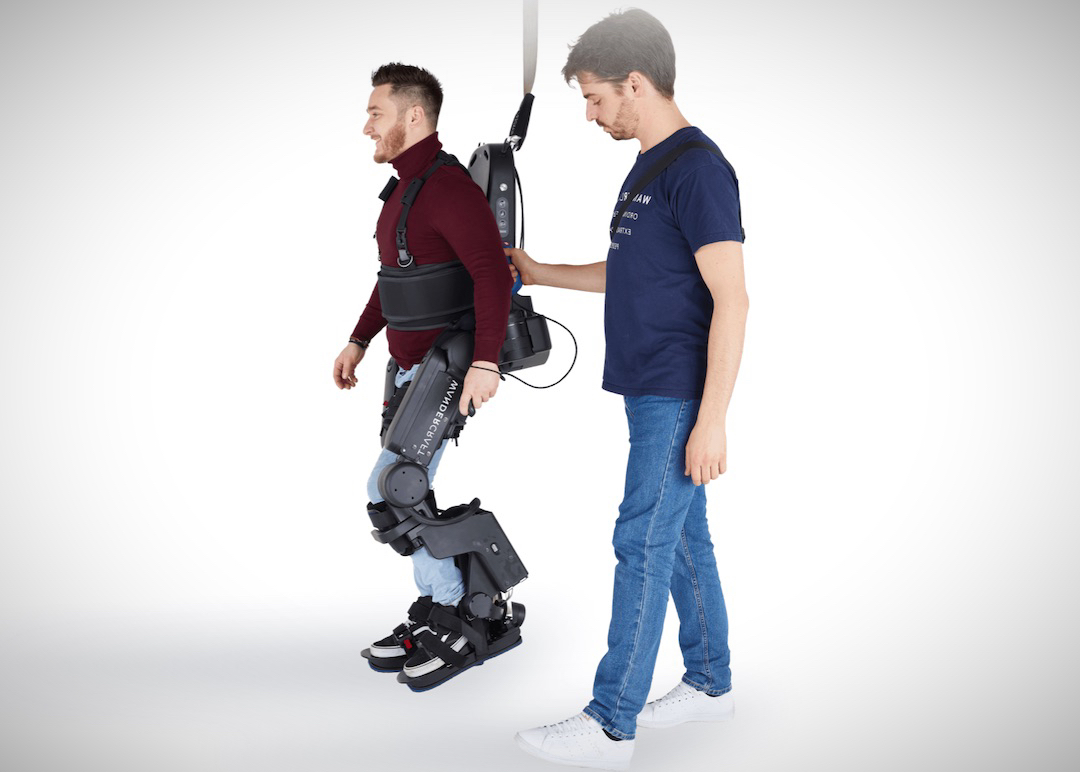
The US Food and Drug Administration (FDA) has just given the all-clear for stroke patients to use an exoskeleton robotic suit to aid them in their therapy sessions. The organization passed out the approval to French-based Wandercraft’s ‘Atalante’ exoskeleton.
The machine looks somewhat like a mecha suit you’d find in a sci-fi film. It is strapped to its user’s shoulders, chest, waist, knees, and feet for security. One of its primary purposes is to help patients who have limited upper body mobility with their gait.
For those suffering from neurological conditions where signals from their brain cannot be sent to the limbs, Atalante then steps in to get those limbs working and moving again.
Atalante has an adjustable gait that patients and their therapists can gradually increase or decrease depending on how well the patient is doing. Even when the wearer is moving around, the suit’s self-balancing technology helps them from falling over. It also gives them freedom of movement as they can naturally turn in multiple directions. Likewise, it enables all users to train their gait even if they are unable to use their arms due to its hands-free operation.
✨ Wandercraft has developed Atalante. An exoskeleton that is helping wheelchair users walk again in clinical centers, especially for re-education purposes.
— Elmo Motion Control (@ElmoLtd) October 4, 2022
🚀 Powered by Elmo Twitter servo drive modules.
Watch the full story here:https://t.co/uvoVAl6CDA@ExoWandercraft pic.twitter.com/klmH5rHAec
While the suits are here to help people gain a sense of freedom and confidence after suffering a stroke, patients will still need supervision from medical professionals.
Exoskeletons do not only help those with ailments. Previously, a German company released a set of what looks like back braces to help factory workers pick up loads without using much strength.
The first of these suits are set to land in the US within the first quarter of this year.
[via Engadget and TVP World, images via Wandercraft]


