
Magnets Could Be The Answer To Pulling ‘Forever Chemicals’ Out Of Water Sources
‘Forever chemicals’ are a prevalent issue that has plagued our waterways, seeping into almost every source on Earth and even contaminating rainfall in some of the most remote locations on our planet. Removing such pollutants has remained an issue that scientists are now trying to crack down on by equipping themselves with a magnet.
That’s right, a magnet might be all it takes to clean out chemicals from water.
Before getting into that, here’s some background on what forever chemicals are. These pollutants comprise of polyfluoroalkyl (PFAS) substances, a mixture of manufactured chemicals that first cropped up in the 1940s. Nothing has since been able to get rid of them, as fire cannot destroy them, and they cannot dissolve in water. As a result, long-term exposure to PFAS can result in high-risk health conditions.
Unfortunately, due to its makeup, it is often difficult to remove from water. Previously, granular activated carbon (GAC) was used as an absorbent to remove PFAS. But it came with a few setbacks, including that it was slow in regeneration and could not stand up against other competitive sorption effects from other co-contaminants.
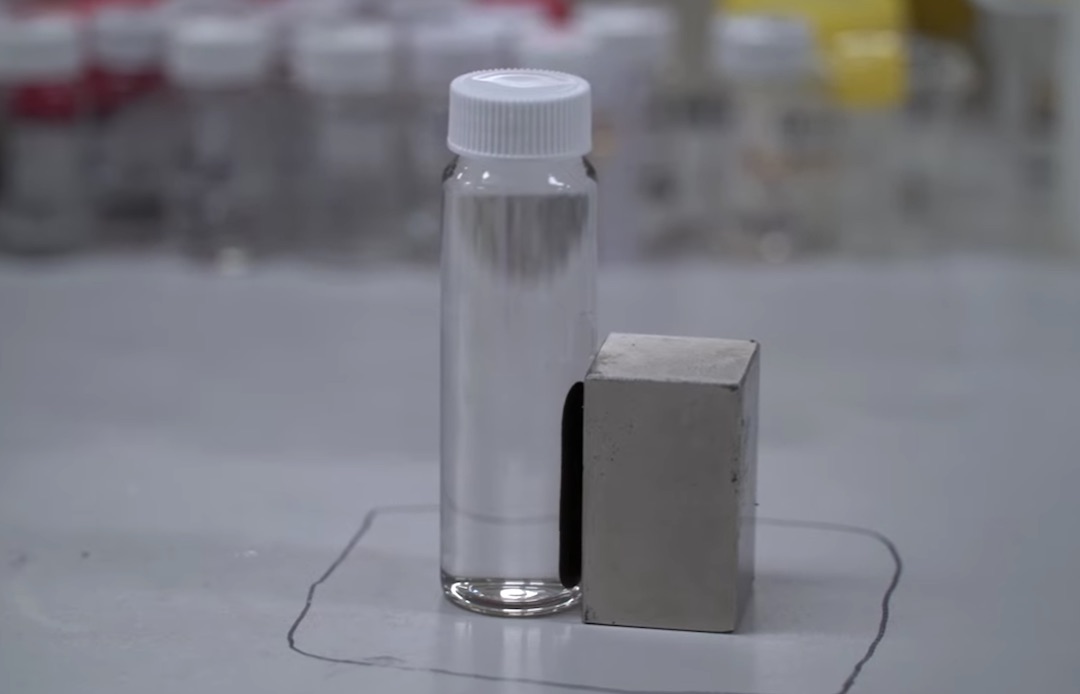
Researchers at The University of Queensland first treated contaminated water with a magnetic fluorinated polymer sorbent and then took a magnet to capture the chemicals. Within a minute, 95% of PFAS had been separated from a small amount of test water.
As the magnet does not require electricity, the team notes that this method can also be taken off the grid.
Moving forward, the team hopes to have the solution become commercially available within the next three years.
[via Tech Explorist and The University of Queensland, screenshot via AIBNatUQ]


