
Long-Lost Raphael Painting Gets Identified By Facial Recognition Technology

A newly-uncovered Raphael artwork may have recently popped up on the market, not because it was just discovered, but because it was finally identified by facial recognition technology as belonging to the famed artist.
Researchers from the University of Nottingham and the University of Bradford have determined that there is a 97% chance the de Brécy Tondo—a mysterious round painting that has baffled art historians for decades—was painted by the Old Master.
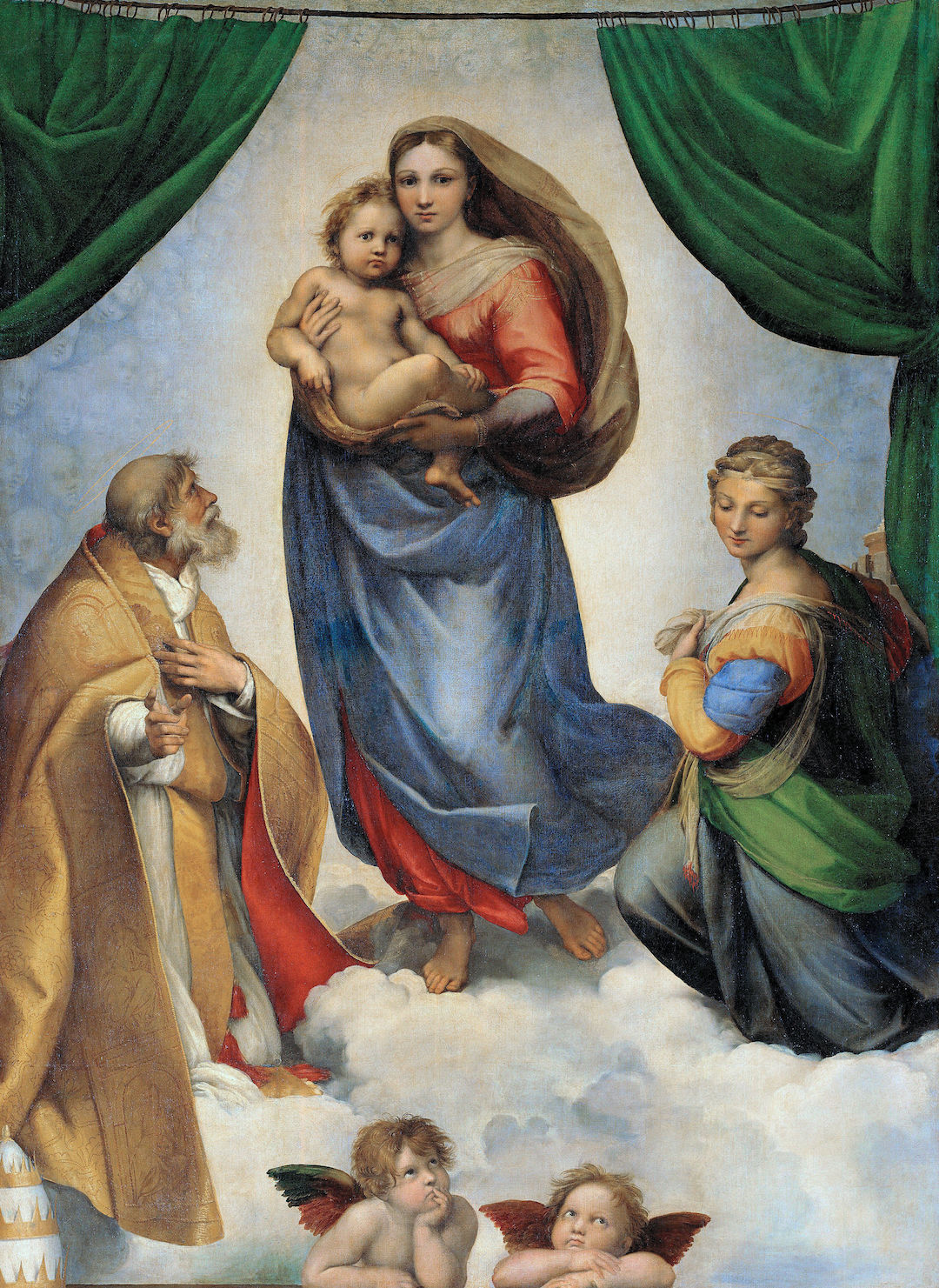
The team compared the piece to Raphael’s well-known Sistine Madonna using an artificial intelligence facial-recognition system, which was developed back in 2002 by the University of Bradford’s Visual Computing Professor, Hassan Ugail.
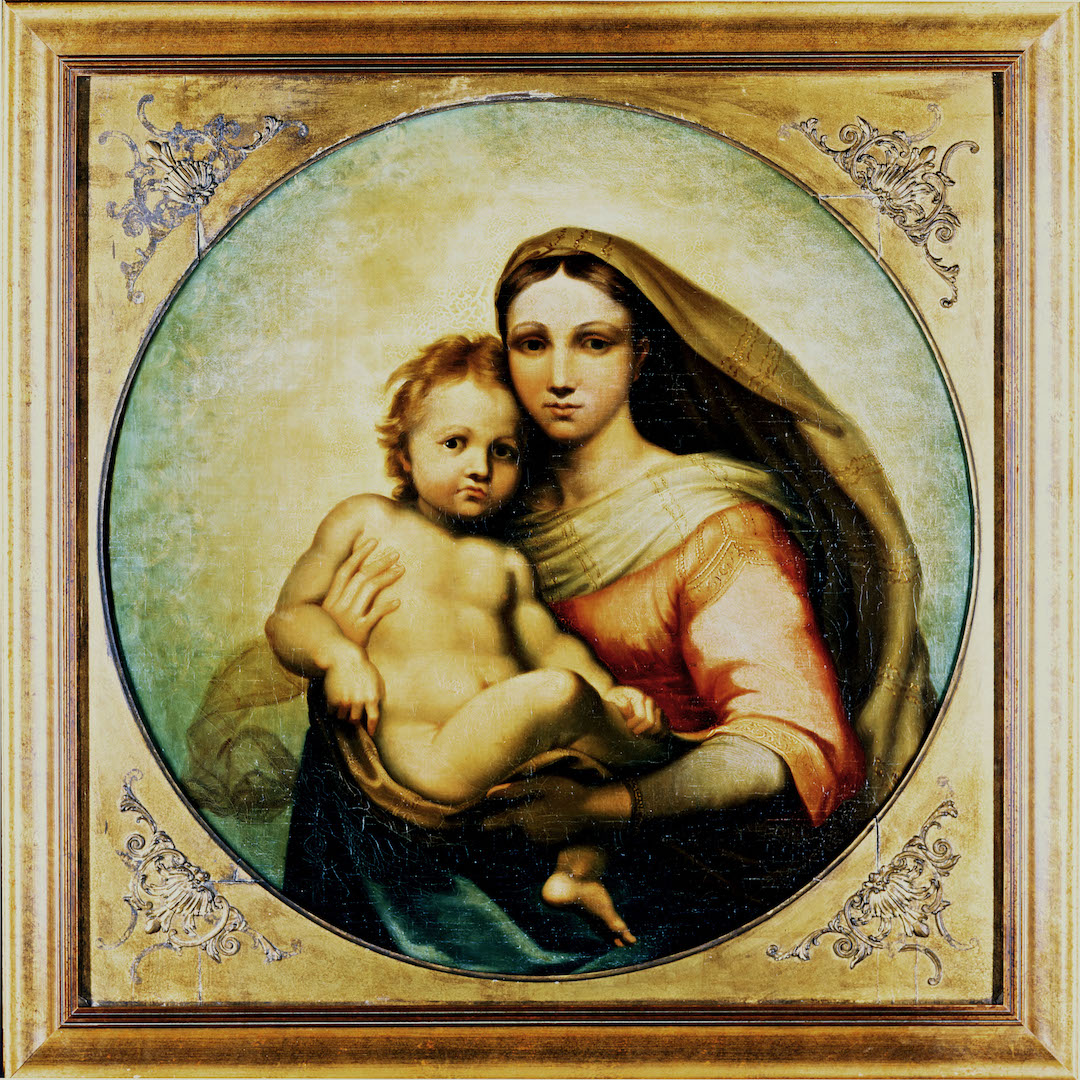
According to the scientists, the “deep-neural network,” which processes data in a layered structure, made a direct facial comparison of the two works, concluding that both Madonnas shared 97% similarity, while the baby Jesuses were 86% alike.
This means it’s nearly guaranteed the two works were painted by the Renaissance artist, as the researchers claim that similarity of 75% or higher essentially means the two images are identical.
Furthermore, an analysis of the pigments employed in the Tondo showed that the painting’s characteristics were “typical of Renaissance practice,” and thus unlikely to have been a forged copy made later on.
“This new scientific evidence confirms the Raphael attribution of the Tondo… It illustrates very forcibly the increasing value of scientific evidence in the attribution of a painting,” says Timothy Benoy, Honorary Secretary of the de Brécy Trust.
The Tondo was first purchased in 1981 by George Lester Winward, a Cheshire businessman who collected art. Before his passing, Winward set up the de Brécy Trust Collection, making his collection available to art scholars for study.
[via Artnet News and University of Nottingham, images via various sources]


