
Archaeologists May Have Unearthed The Oldest-Known Mummy In Egypt
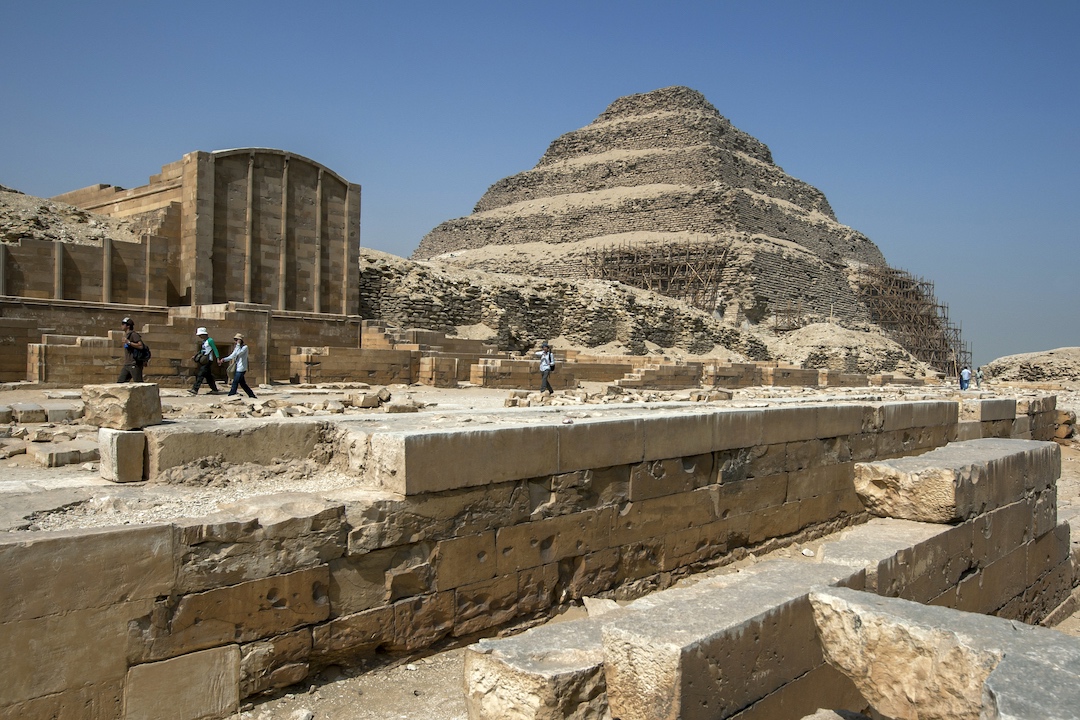
A team of researchers excavating a tomb near the Step Pyramid at Saqqara in Cairo, Egypt, may have uncovered the oldest, most complete mummy ever to have been unearthed in the country.
The mummy, or mummified remains—as museums in Britain now refer to the ancient discoveries out of respect—is believed to be 4,300-years-old, and was dug up from the bottom of a 15-meter (49.2-feet) shaft in a group of fifth and sixth-dynasty tombs.
According to The Guardian, the mummified person—known as Hekashepes—was buried in a limestone sarcophagus that had been sealed in mortar.
Other findings revealed the tomb of Khnumdjedef, a priest and inspector of officials who served during the reign of Unas, the last pharaoh of the fifth dynasty. It was decorated with scenes of art from daily life.
A separate tomb unearthed belonged to Meri, known as the “keeper of secrets and assistant to the great leader of the palace” during that time period.
Among the artifacts gathered were several statues, including one depicting a man, his wife, and several servants.
[via ARTnews and The Guardian, cover image via Thomas Wyness | Dreamstime.com]


