
Nuclear-Powered X-Ray Flashlight To Sweep Beneath The Moon’s Surface For Water
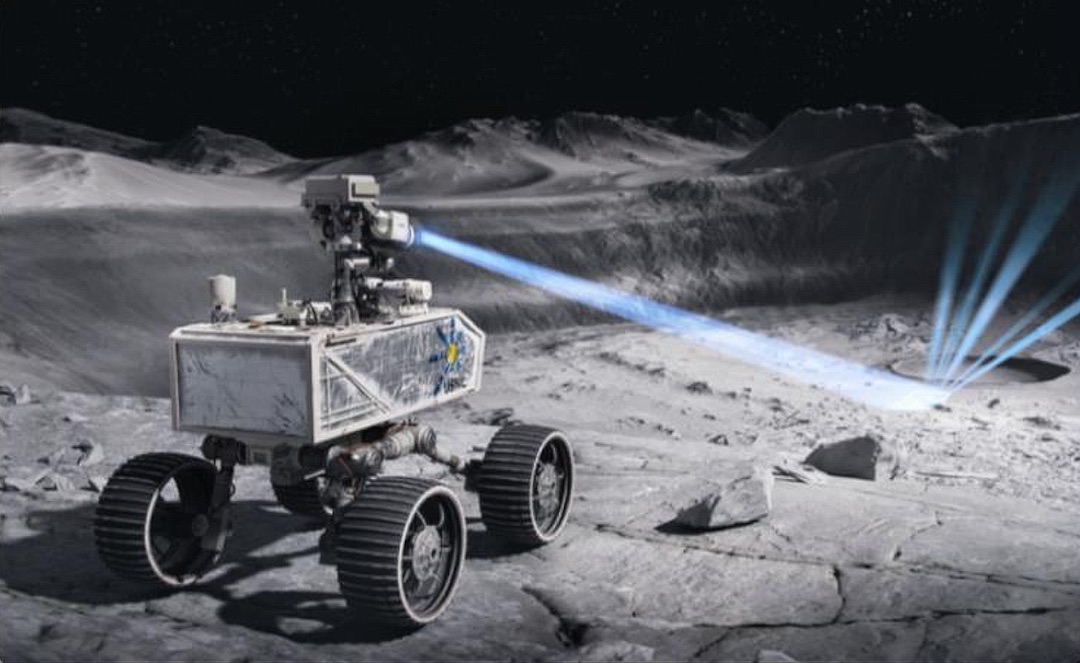
The never-ending journey to colonize the Moon is taking humans one step closer to finding sustainable sources of life. NASA recently announced using an X-ray flashlight to “see” where water is hiding under the surface.
The device called the EmberCore was created by a company called Ultra Safe Nuclear Corporation (USNC). It initially developed products that kept the rovers and landers warm throughout the lunar night.
The company has tweaked such technology to create an X-ray flashlight. The EmberCore can cast a source of light that can travel miles and collect information about the ground and what lies beneath. The light then bounces back into a sensor, which will categorize the data into a “fingerprint.” Whatever has been collated can then be analyzed to determine whether substances, such as water, lie beneath the surface.
Once deployed on the Moon, the device will be sent to Shackleton Crater and Mare Tranquillitatis or the Sea of Tranquility, where Appollo 11 first landed.
Perched over the rim of Shackleton Crater, the device can shine its torchlight in different directions and determine which area contains water composites. Not only that, but it can also survey the surface of other precious materials.
In the Mare Tranquillitatis are several pits that are incredibly hard to travel over. EmberCore can first check out where precisely the materials are before sending a rover down to check it out.
According to NASA, the flashlight is best used on planets with no atmosphere, such as small moons, asteroids, and Mercury.
This project follows a separate finding where a team down at Arizona State University recently discovered that opals previously found on the Moon could contain water and might be a viable source of sustenance for whenever humans make it back to the Moon.
[via Universe Today and NASA, cover image via USNC]


