
NASA Backs Future Food To Nourish Astronauts On The Moon, Mars & Beyond
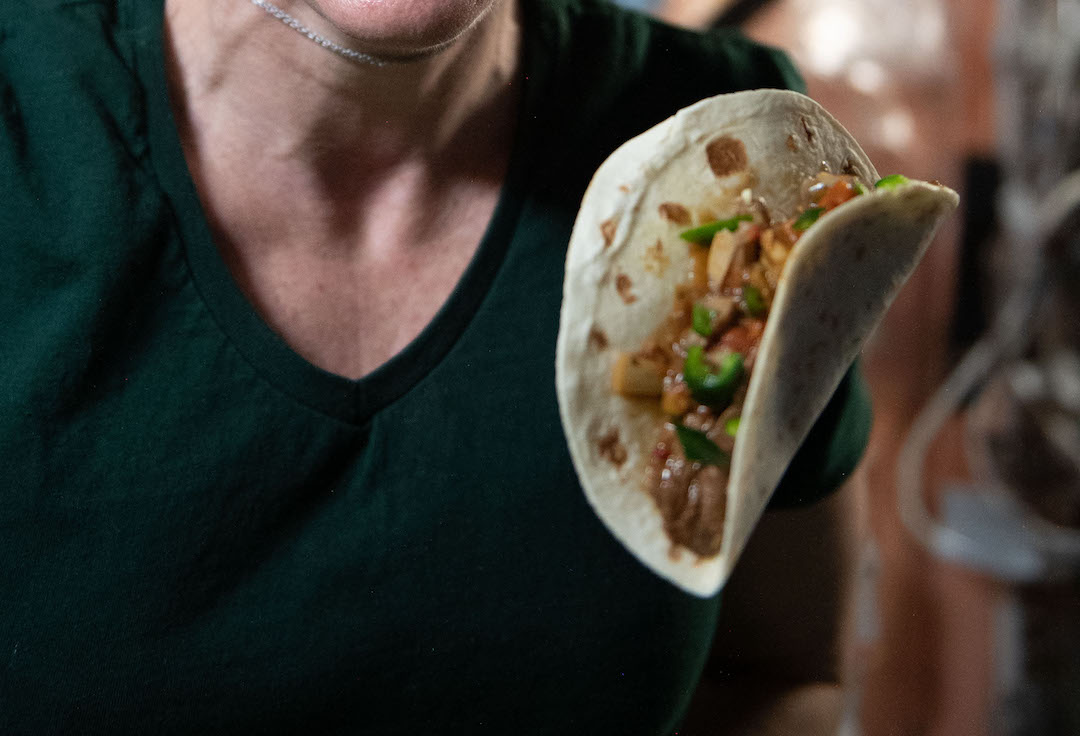
There are, unfortunately, no convenience stores in outer space (though, wouldn’t it be amazing if a 7-Eleven-Heaven existed?). Still, an astronaut’s gotta eat. That’s why NASA is pouring so heavily into R&D to nourish spacewalkers and sustain them during arduous, years-long missions.
Two years ago, NASA banded together with the Canadian Space Agency (CSA) to launch the Deep Space Food Challenge, inviting the public to come up with ways to make food more accessible outside of Earth for months, or even years, at a time. The competition is now in its second phase, and the two space agencies have whittled down the race to just 11 finalists.
Food isn’t just necessary for nutrition, but it can also provide lone space rangers with “familiarity and comfort on long voyages and in isolated environments,” explains Jim Reuter, associate administrator for NASA’s Space Technology Mission Directorate, in a press release. “Drawing on the creativity of innovators is allowing us to tackle this important yet complex challenge in new and interesting ways.”
NASA also detailed earlier that food inventions for space could even be scaled for Earth, and they might even alleviate the scarcity problem.
The 11 selected teams, awarded US$20,000 each for their concepts this round, offered up ideas that used up minimal resources and delivered safe, healthy, and appetizing options, all while producing as little waste as possible.
Among them are experiments to turn plants and fungi protein into scrumptious meals, as well as harvest fresh micro greens, vegetables, insects, and mushrooms in space for long-term expeditions.
In addition, Brooklyn-based Air Company has developed a system that converts carbon dioxide exhaled by astronauts and combines it with hydrogen to form alcohol. When fed to an edible yeast, this alcohol can help develop proteins, fats, and carbohydrates.
SATED—short for Safe Appliance, Tidy, Efficient, & Delicious—in Boulder, Colorado, endeavors to lean into the familiar by cooking well-known foods using ingredients with a long shelf life.
From Melbourne, Australia, Enigma of the Cosmos has invented a food production system that can increase the growth of produce by at least 40%. Mycorena in Gothenburg, Sweden, has created circular production technology that develops a microprotein from fungi and microalgae, and very minimal resources, while generating low waste.
In the next step of this multi-phase challenge, NASA’s panel of judges will now visit the facilities of the individual participants to evaluate the feasibility of their processes.
[via NASA]


