
Self-Driving Era Sparks Recommendation For A Fourth Traffic Light Color
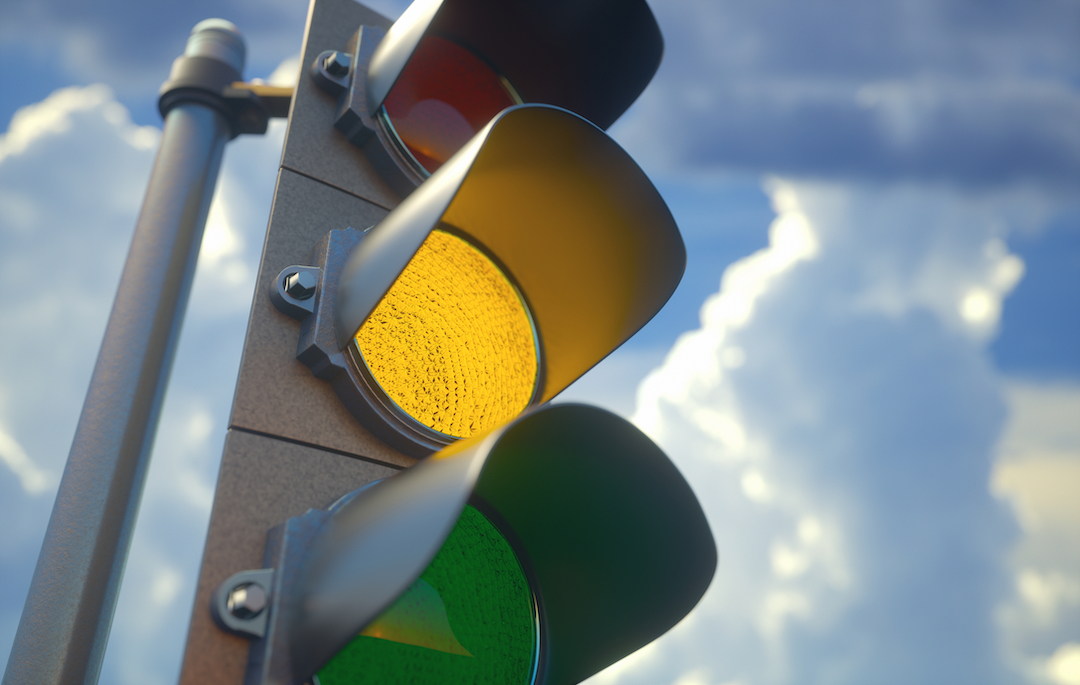
For decades, traffic lights have remained the same in a constantly changing world. Red, amber, green—day after day, you’ll see the same signs while driving, knowing instinctively what each of the colors represents. But what if there were a fourth hue?
That’s what scientists at North Carolina State University are recommending. They claim that adding a white light to certain traffic junctions could help optimize traffic flow as self-driving vehicles become more common on the road.
According to the researchers, who are pitching a ‘white phase’ concept—when a group of autonomous vehicles (AVs) stop at an intersection, they communicate with one another and the system behind the traffic lights in order to coordinate their movements and devise the most efficient way of getting through.
This allows one section of the cars to pass in one direction, while the remaining vehicles wait. As such, the team proposes that during this phase of traffic, the hue on traffic lights should change to white, so non-autonomous drivers are aware that right-of-way belongs to the AVs.
If it happens that a majority of the cars stopping at the juncture aren’t self-driving, the traffic lights will turn back to the regular green, amber, and red colors, with the white light not showing. Incredibly, based on computer simulations, this new method could reduce delays by over 90%.
The simulations showed that, regardless of the presence of a white phase, AVs help improve traffic flow. When these self-driving cars are present, having a fourth traffic light helps ease congestion, thereby reducing fuel consumption from stop-and-go traffic.
Furthermore, the higher the percentage of AVs at a white phase intersection, the faster the traffic moves and the more efficient fuel consumption becomes. In short, the greater the number of AVs at these junctures, the greater the benefits.
As the scientists point out, the color of this fourth light need not necessarily be white; it just has to be a universal symbol that is easily identified by drivers approaching the intersection, so they know which course of action to take.
The technology could first be deployed at specific locations with high volumes of commercial vehicle traffic, such as ports or factories. As commercial vehicles are more likely to be autonomous, a pilot project could take place to test out the system on such transportation.
[via New Atlas and North Carolina State University, cover image via Kts | Dreamstime.com]


