
Fish Have Shown To Recognize Themselves In Photographs
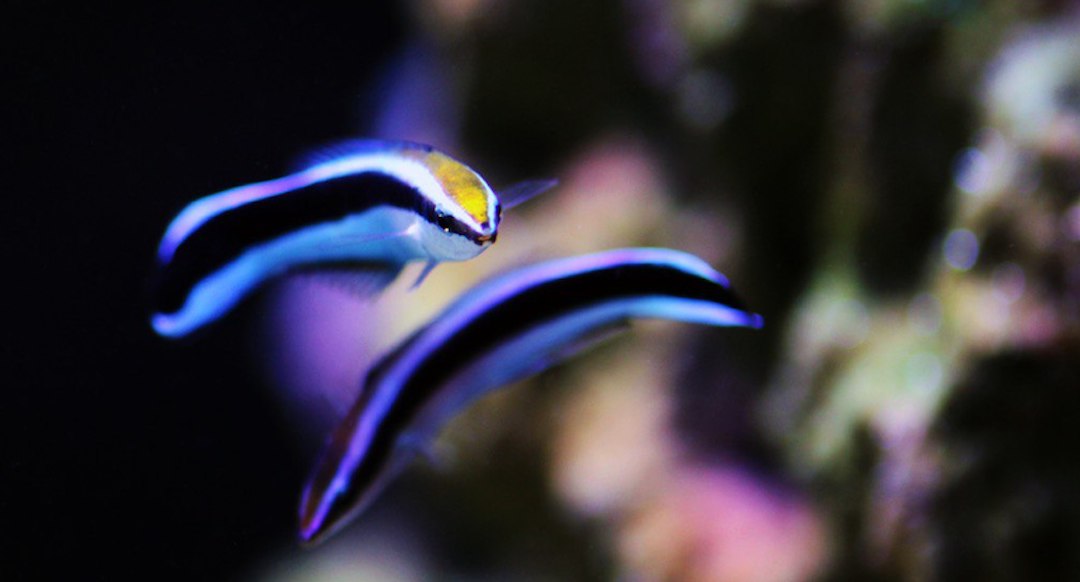
Recognizing oneself in a photo might seem something inherently human, with most animals not being able to do so thanks to limited cognitive ability.
Over the years, different studies have proven that recognition abilities lie in several other species, including Asian elephants, dolphins, great apes, horses, and magpies. A new study is tacking one more animal onto that list: the Bluestreak cleaner fish.
The Osaka Metropolitan University and the University of Neuchâtel, Switzerland, conducted an experiment to prove that, when presented with a picture, Bluestreak cleaners could tell it was themselves they were looking at.
The researchers gave the fish four different images. One was a photo of itself, the second was a completely different sea creature, and the last two were renders of the case study’s head on a separate body and a different species’ head on its body.
When shown these photographs, the Bluestreak cleaner showed aggression toward the image of the different fish but no contention towards its picture. It was also mildly hostile to the other two shots of its body and head merged with other fish.
This behavior consists of rushing toward the image and bumping into and biting it.
In another experiment, the scientists added a brown mark to the throats of the fish in specific pictures to see if they could still recognize themselves. Again, the results showed that they could not discern it was themselves and displayed throat-scraping behavior.
This contrasts with non-manipulated photos where the Bluestreak cleaner did not exhibit such tendencies.
The study posits that there is mounting evidence that the Bluestreak cleaner displays true individual recognition, or the capacity to identify via facial characteristics, in social groups.
[via DIY Photography and PetaPixel, Photo 174806325 © Voislav Kolevski | Dreamstime.com]


