
Nestlé Hones In On Its Past To Bring Reusable, Returnable Packaging To Shelves

Plastic alternatives are typically products of inventors thinking out of the box and discovering novel materials that perform the job of fossil-fuel-based components without damaging the earth. However, Nestlé seems to be taking a leaf out of the book of its history to reduce environmental impact.
As brought up by Dieline, back in the day, Nesquik was packaged in metal tins, but it has since transitioned to plastic tubs. One big reason for the switch is that plastic is economical. The drawback, of course, is that the planet suffers in the long term. Nestlé, one of the largest food companies, is combining the best of both worlds with stainless-steel cans that are recycled between consumers, enabling the brand to use this preferred material while also cutting emissions in a cost-effective way.
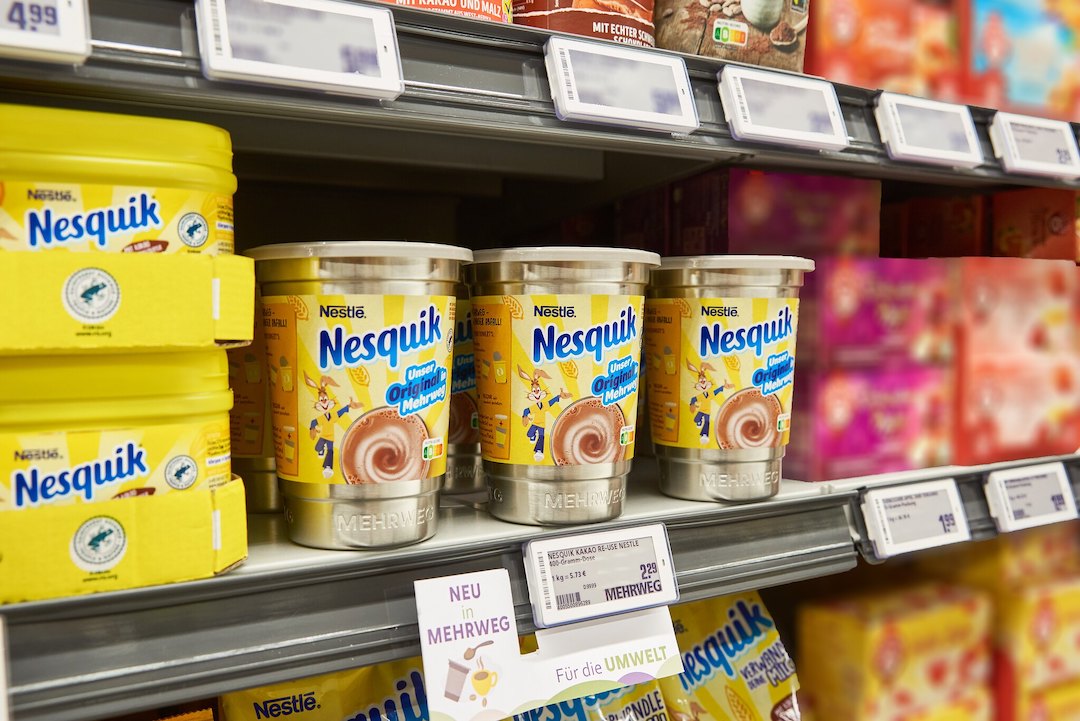
To help it hit all the right notes, Nestlé has partnered Circolution, a startup in Frankfurt that manufactures packaging in line with Germany’s Deposit Return Scheme (DRS) scheme. The pair are trialing Nesquik tins made out of Circolution’s reusable ‘Anita in Steel’ packaging, which is sealed “gas-tight” to ensure long shelf lives for pantry staples.
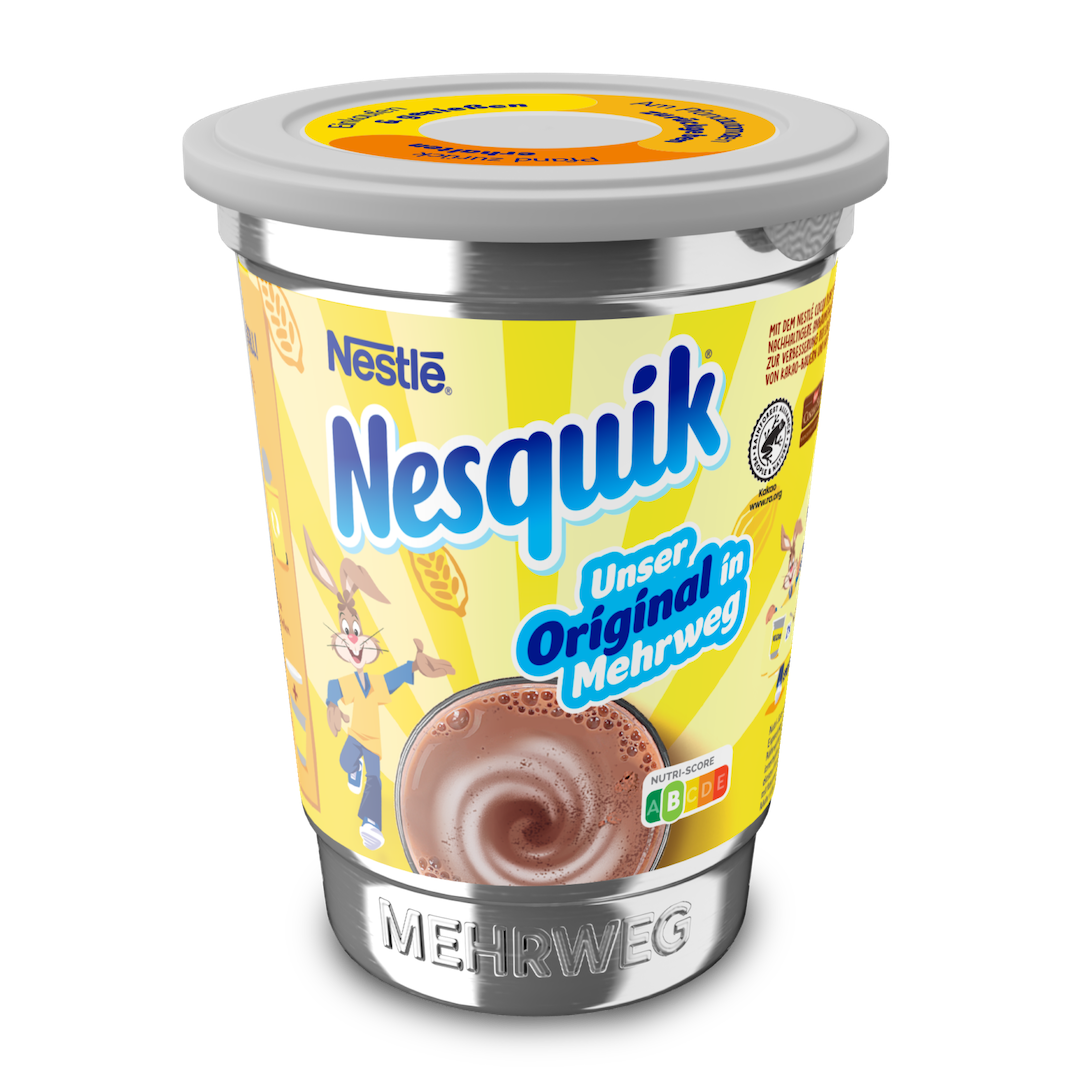
Besides coming up with the design for ‘Anita in Steel’, Circolution handles the logistics—from leasing the packaging out to Nestlé, to inspecting, cleaning, and transporting the tins on the behalf of the company. Circolution proclaims that each unit can survive 80 product cycles—as opposed to just one cycle for single-use materials—and that it also provides partners with data to help them assess ecological impact.
Customers who pick up the chocolate milk powder in reusable tins can bring the packaging back to the store for it to be processed for the next consumer.

The only component that isn’t returnable is the tin’s seal, which can be recycled via curbside service.
Image via Circolution
All this leaves Nestlé with little to worry about when it comes to seeing the upcycling process through. Plus, Circolution’s packaging falls in line with Germany’s ‘Pfandsystem’ initiative, in which all stores retailing goods with returnable packaging will have to give back a deposit to shoppers who purchase products with reusable containers. As per Food Navigator, for beverage items, customers get refunded €0.25 for single-use bottles and between €0.08 and €0.15 for reusable packaging. Germany has also simplified the process by installing automated kiosks that collect the used packaging across stores.
Nestlé is the first client of Circolution to test its refillable packaging. The latter is currently also trialing reusable coffee tins with Frankfurt-based coffee roaster Hoppenworth & Ploch, and it hopes this small pilot program can help it resolve some growing pains.
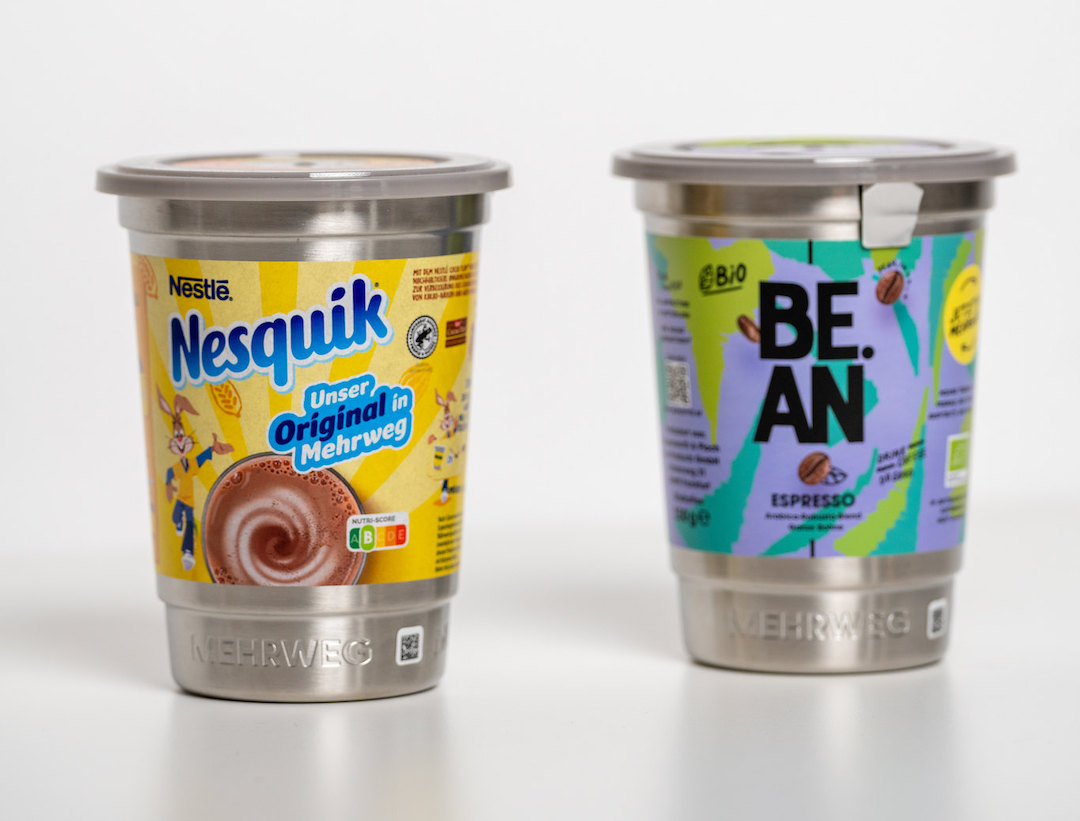
Following this, Circolution intends to roll out solutions for other products in the coffee and cocoa categories by the third quarter of 2023, before expanding nationwide in Germany.
[via Dieline and Food Navigator, images via various sources]


