
E-Seed Burrows Its Way Through The Soil, Aids Mass Plant Growth

In areas where people cannot easily access forests and jungles, aerial seeding is a handy method of distribution that can help spread seeds and regrow forests.
One downside to the solution is that seeds can often fly away when dispersed over soil and invade other areas. On the flip side, ‘E-seed’ is a bio-carrier that can tunnel through the earth.

The project’s lead professor, Assistant Professor Lining Yao from Carnegie Mellon University, was inspired by the Erodium genus of plant. Seeds from this species are sometimes stored with a thin stalk tightly wound to its top. When the branch falls from the plant onto moistened soil, it will unravel and burrow into the earth.
Taking a leaf out of the book of nature, the E-seed tightly winds moisture-sensitive oak veneer around the seeds. This manufactured iteration has three tails instead of one to help it into an upright position on flat soil.
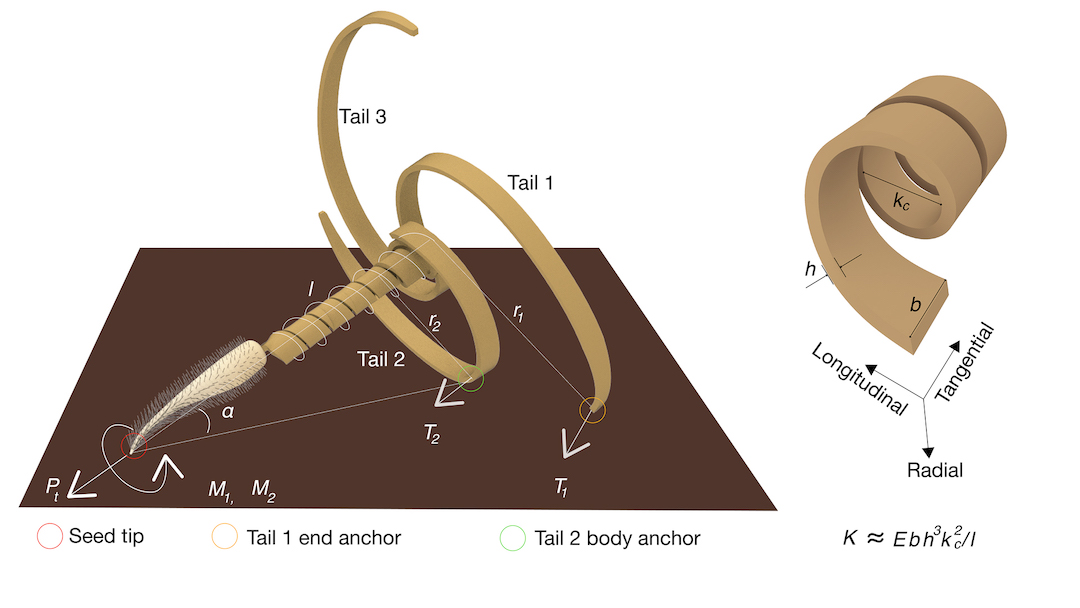
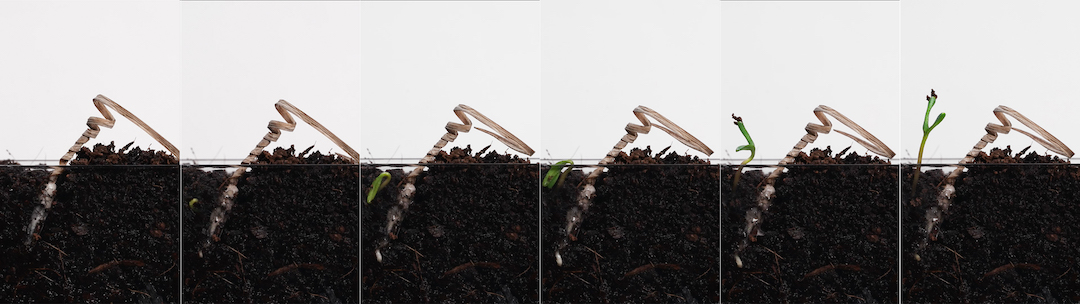
Once it unravels, the stalk’s tip penetrates the earth and “drills” its way down. The bio-carrier can also deliver fertilizers and sensors to collect data.
The stalks can then be distributed via drones over areas that have suffered deforestation or other places that have experienced natural disasters.
The production method is small-scale and includes chemical washing and mechanical molding. The team is working on bringing it to a larger industrial scale for different communities.
[via New Atlas and Carnegie Mellon University, images via Morphing Matter Lab]


