
Roads Stop Getting Frozen Over By Snow With New Salt Additive To Asphalt
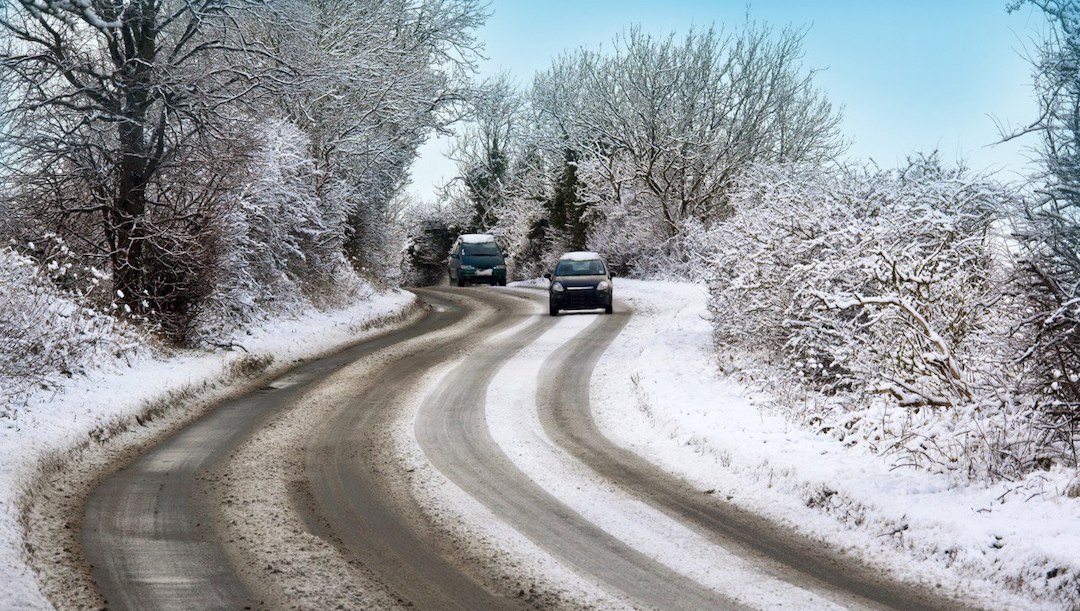
Snowy roads are often combatted with chemical salts that help break down the ice and melt it off the asphalt. While this method has been efficient, it has a few issues.
One is that it is harmful to the environment. As these salts are often chloride-based, when they run off into the surroundings, they can cause damage to land and waterways.
The salts also break down the roads and can rust vehicles that drive over them. On top of that, they only work once when initially deployed. So once the ice returns, they have to be reapplied repeatedly through the winter months.
As an alternative to this, researchers at China’s Heibei University have been working on a greener solution. Instead of layering a salt solution over the roads, the team proposes introducing an additive straight into asphalt during production. This would consist of salt with a surfactant, silicon dioxide, sodium bicarbonate, and blast furnace slag, producing a fine powder. Particles from the powder are coated in a polymer solution to produce microcapsules. These then replace some mineral filler in the asphalt solution.
While experimenting with the new solution, whose contents are published in ACS Omega, the researchers found that it could continuously melt snow. It also lowered the freezing points in water from 32°F to −6°F.
The study also concluded that it could continuously release its microcapsules for seven to eight years, meaning that snow days will not be an issue for a long time.
[via New Atlas and Science Daily, Photo 22975143 © Steve Allen | Dreamstime.com]


