
Opioid Addiction Could Finally Be Combated With AI-Created Drug
An opioid is a chemical mainly used to reduce pain and enhance euphoric states in a user. Such drugs include heroin, fentanyl, oxycodone, and morphine. According to a release from News Wise, around three million people in just the US alone suffer from opioid addiction, and 80,000 of them die from an overdose each year.
Often, trying to give up the drugs can be a herculean task to take on as the chemical is known to alter the brain such that it becomes dependent, resulting in withdrawal symptoms. The cure to this established history of opioid abuse, it seems, is artificial intelligence.
Leslie Salas Estrada from the Marta Filizola lab in the Icahn School of Medicine at Mount Sinai hospital believes that AI systems can aid researchers in coming up with the right drug to mitigate opioid use and help users get through withdrawal symptoms.
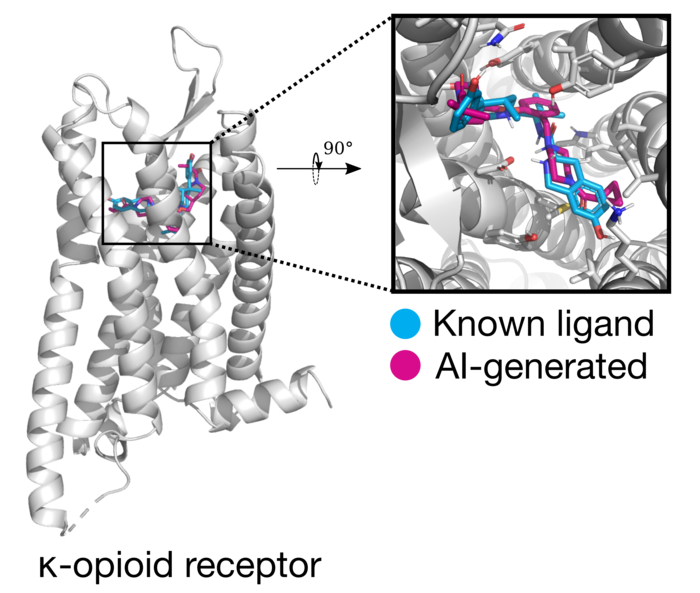
As stated in the study, it’s been previously known that blocking kappa-opioid receptors has helped people reduce their need and cravings for the drug. Salas Estrada hopes that discovering a cure that can do this might aid those trying to recover from their addiction.
Finding this cure is long and arduous, as producing the right medication from scratch to block protein activity is complicated and expensive. However, this could be cut down with an AI on hand. The system is being fed billions of chemical compounds to analyze different patterns within them and sort out which combinations would work best in a human.
So far, the team has identified several compounds that might work. Next, they aim to work with other collaborators to attune the chemical compounds and test their ability to block kappa-opioid receptors in cells before trying them in animal trials.
[via TechTimes and SciTech Daily, images via various sources]


