
3D-Printed Hearts Are Personalized To Find Best Therapies For Patients
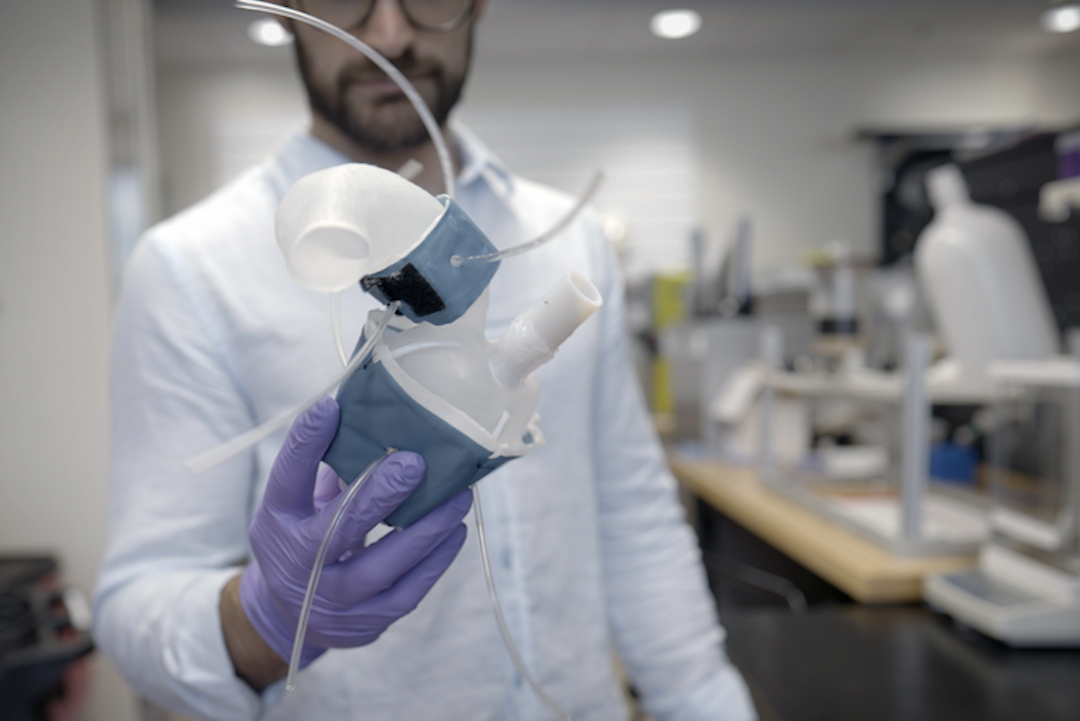
Researchers at the Massachusetts Institute of Technology have developed a robotic heart that could aid cardiologists in matching implants and therapies to patients based on their heart structures and functions.
The 3D-printed hearts, which are personalized based on the individual’s measurements, can help control and mimic how a real heart pumps blood to organs within the body.
To create the structure, a patient’s heart is first turned into a 3D computer model through medical images, before the sample is printed in a polymer-based ink as a precise replica with a soft, flexible shell.
Other than just recreating the unique structures of an individual’s organ, the team can use the same method to print the aorta, the main artery that carries blood away from the heart.
Once both components have been printed, the researchers then use sleeves similar to that of blood pressure cuffs to wrap over the heart and aorta, allowing them to simulate the pumping motion that occurs in our bodies each second.
According to the team, the underside of each sleeve resembles “precisely patterned bubble wrap,” which when connected to a pneumatic system, can rhythmically inflate and contract in a way that mimics a heart pumping blood.
Scientists suggest that the heart replicas could be used by research laboratories as tests for new remedies for heart disease as they provide realistic platforms that could provide useful feedback.
In addition, a separate sleeve can be inflated and affixed to the aorta, so that the blood vessel is constricted to stimulate aortic stenosis—a medical condition in which the valve narrows and the heart has to work harder to force blood through.
At the moment, surgeons treat the ailment by implanting a synthetic value to widen the passageway. In the future, however, the new innovation could allow for a variety of valves to be tested on the 3D-printed heart before selecting the best option.
“Once it’s up and running, clinicians could test different valve types and sizes and see which works best, then use that implant,” explained one of the study’s co-authors, Christopher T Nguyen.
[via Interesting Engineering and Massachusetts Institute of Technology / EurekAlert, cover image via Melanie Gonick, MIT (CC BY-NC-ND 4.0)]


