
Friendly Classroom Robot Helps Children With Learning Disabilities Stay On Task
While school tends to be a challenge for most children, it can be an even harder obstacle for students with learning disabilities, who often require additional, individualized support to absorb the material or stay on task.
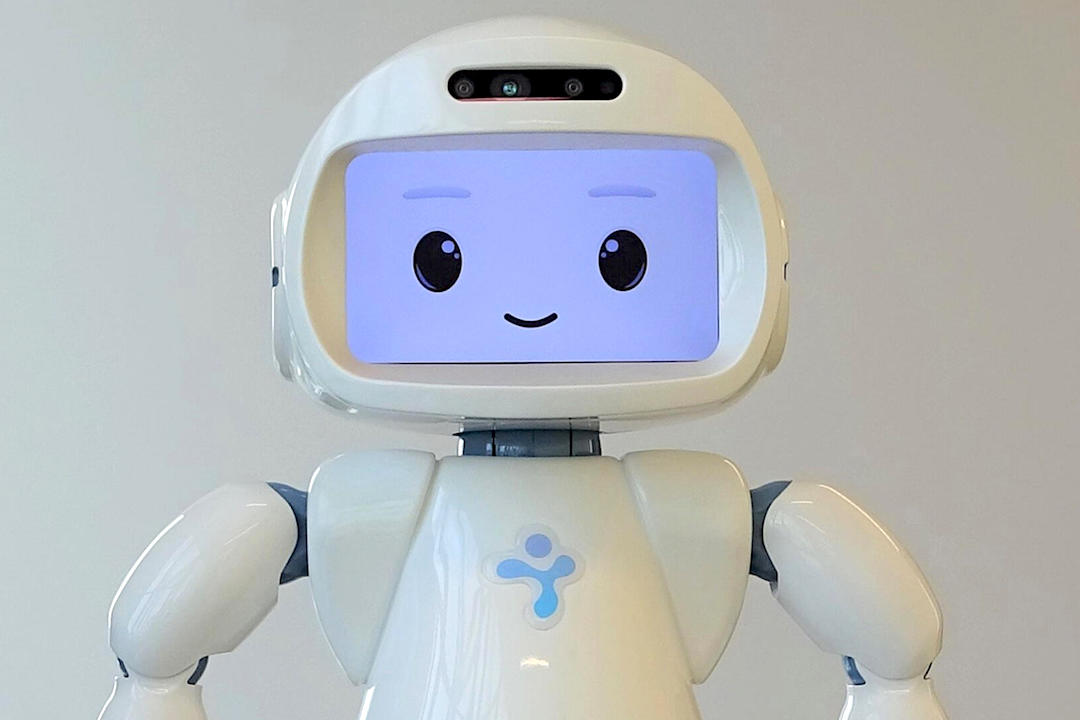
As such, researchers from the University of Waterloo have devised the perfect helper that could aid these kids in staying focused—an adorable robot whose ability to gesture using its head and hands, complete with speech and facial features, makes it suited to communicate with children.
“There is definitely a great potential for using robots in the public education system. Overall, the findings imply that the robot has a positive effect on students,” explained Dr Kerstin Dautenhahn, Professor of Electrical and Computer Engineering.
According to the university, robots have been roped in to help children learn better, but most of the research has focused on students with Autism Spectrum Disorder (ASD), with not many studies on how socially assistive robots could aid those with learning disabilities.
Professor Dautenhahn started by introducing a small human-like robot—called ‘QT’—into the classroom. One group of students worked only with a one-on-one instructor, while the other group interacted with an instructor and a QT robot, which was controlled using a tablet.
The instructors controlled most of the sessions but would sometimes trigger the robot to lead the students. QT helped to set goals and provide self-regulating strategies, or used games, riddles, jokes, or breathing exercises to redirect children back to the task at hand.
By the end of the experiment, students who had worked with the friendly robot “were generally more engaged with their tasks and could complete their tasks at a higher rate” compared to those who were only assigned a one-on-one instructor.
As per New Atlas, QT was first developed in 2016 by scientists Dr Pouyan Ziafati and Dr Aida Nazarikhorram to aid students with ASD. The pair then founded LuxAI, funded by the University of Luxembourg, which continues the work on social robots.
Going forward, the team plans on conducting further studies using the QT robots, hoping that these helpful androids could soon become a part of the public education system to aid children who need more help.
[via New Atlas and University of Waterloo, image by University of Waterloo and featured with permission]


