
New Moai Statue Emerges From Evaporated Lake On Easter Island
A pair of formidable eyes stared back at archaeologists as they dug up an unusual find from a dried-up lake bed on Rapa Nui, otherwise known as Easter Island, in Polynesia.
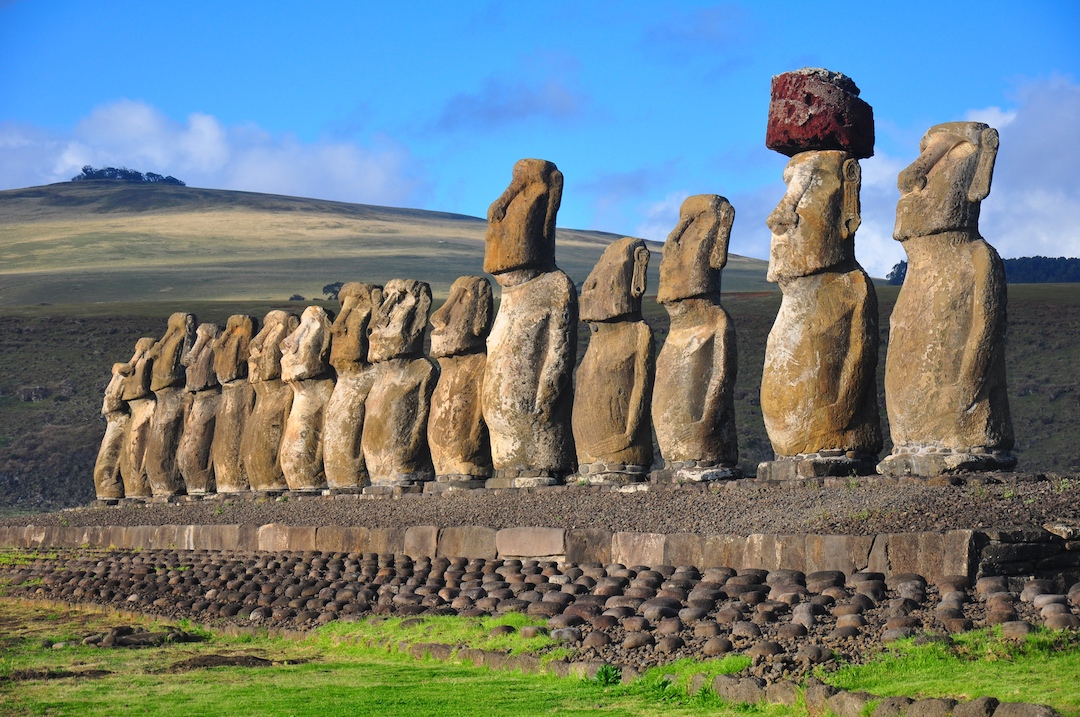
The unfamiliar moai statue was smaller than many of the 1,000 such ancient sculptures living on the remote land. Moai can stand up to 33 feet tall and typically weigh between three to five tons, but there are some that weigh as much as 80 tons, Dr Terry Hunt, professor of archaeology at the University of Arizona, tells Good Morning America (GMA), which was the first to report on the unearthing.
The people of Rapa Nui carved moai out of solidified volcanic ash, revering them as deified ancestors. The statues’ heads are above the ground, while their torsos are buried underneath. Some have red stones on their heads to depict a topknot or hat.
The structures date back to between 1300 and 1600 CE. Researchers want to conduct a radiocarbon analysis to put an age to the newly-found statue.
View this post on Instagram
The relics fascinated European explorers as far back as 1774, when Captain James Cook quipped his amazement at how the islanders, “wholly unacquainted with any mechanical power, could raise such stupendous figures,” cites the Smithsonian Magazine. Locals, on the other hand, believe the powerful moai “walked” into their places on their own.
No other moai statues have been pulled up from this lake bed before, making this discovery a rare one. The water body from which the artifact emerged had fully evaporated in the last two years, and it also had been wiped in a recent fire.
Climate change is largely to blame for these phenomena, though it has also given archaeologists “a little opportunity” to comb the former lake, Hunt tells GMA.
As such, researchers foresee that they may find more moai in these conditions. They also hope to pick up tools that were used to create the historical sculptures.
“When there’s one moai in the lake, there’s probably more,” ponders Hunt.
A new Moai stone statue has been uncovered on Easter Island. @reevewill has more on the rare archaeological discovery and its importance. pic.twitter.com/E0Y9QQjxQe
— Good Morning America (@GMA) February 27, 2023
[via Smithsonian Magazine and Good Morning America, images via various sources]


