
Medieval Woman Put Herself Up For Skull Surgery And Did It More Than Once
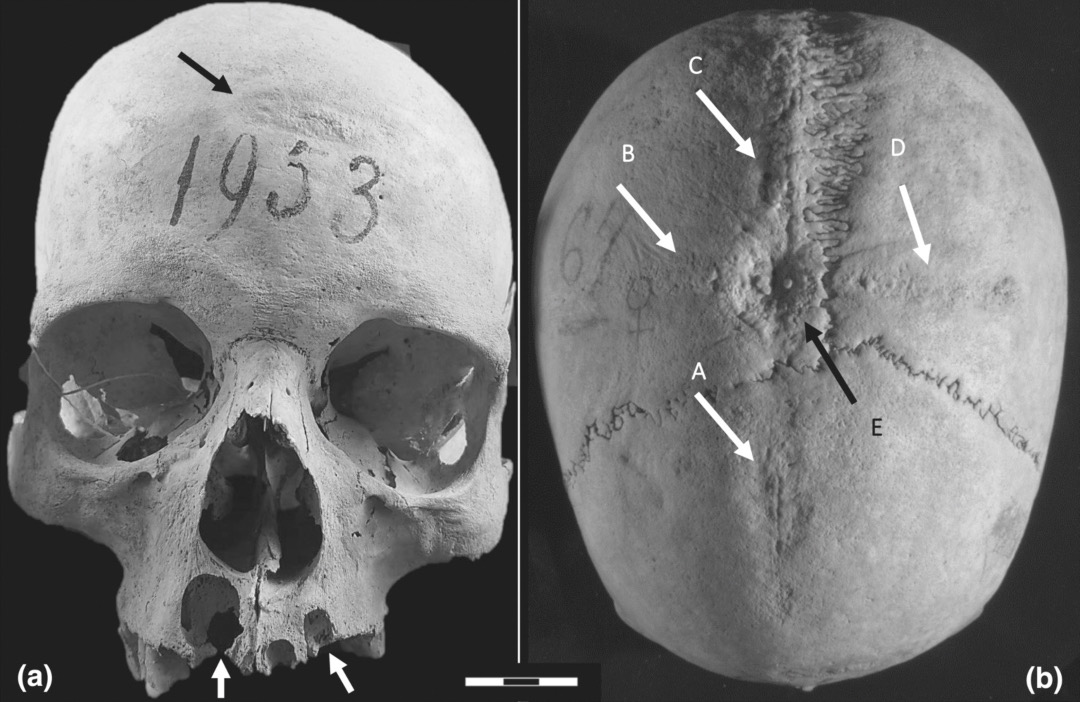
Image via Micarelli et al / International Journal of Osteoarchaeology (CC BY 4.0)
It wasn’t until 1846 that anesthesia was used for surgeries. Be that as it may, the thought of having a hole drilled into your head—with drugs or otherwise—would terrify anyone. So imagine researchers’ surprise when they learned that one Italian woman from the Middle Ages had offered herself up for cranial surgery a few times.
The woman’s skull was one of only 19 excavated from the Longobard cemetery of Castel Trosino in central Italy that were available for study. She appeared to have lived between the sixth and eighth centuries. As it was well-preserved, experts could determine the skull belonged to a female around the age of 50.
While inspecting the remains, a team of international researchers from the UK, US, Spain, France, and Italy found a hole that had been scraped into the top of the head. The procedure was, remarkably, a success, which was evident to experts because the woman went ahead and had another surgery done.
Although cuts were visible on the bone, the team delved further with microscopic and CT scans, which confirmed that there were at least two sets of lacerations carved from metal tools.
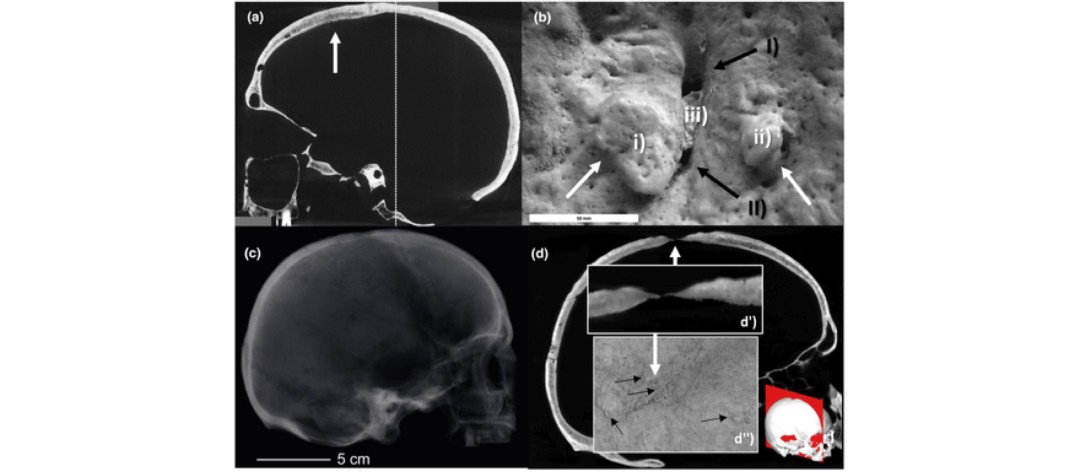
Image via Micarelli et al / International Journal of Osteoarchaeology (CC BY 4.0)
One area showed signs of recovery, telling researchers that the procedure was a success, or that the subject had held on for at least six months and returned to health.
On another, they spotted unhealed defects on the woman’s head, which meant the second round of skull modification didn’t pan out as well, and likely took place around her death.
The team, who published its findings in the International Journal of Osteoarchaeology, doesn’t know why the woman had cranial surgery, or why she did it voluntarily. Researchers couldn’t prove if the procedure was a one-off or customary, as they only had 19 skulls from the site to evaluate, and hers was the only one with the marks.
Her grave gave them a few hints about her life in medieval Italy, however. She was buried with a male, presumed to be her husband, alongside a bronze brooch, gold filament, and a comb.
Her princely possessions, coupled with the fact that she was found in a cemetery for the elites, suggest she was well-to-do. For these reasons, researchers believe she had the procedures done on her own volition, instead of being tortured.
[via Phys.org and International Journal of Osteoarchaeology, images via Micarelli et al / International Journal of Osteoarchaeology (CC BY 4.0)]


