
Vintage-Looking Bridge In London Rotates 180 Degrees To Let Boats Pass Through
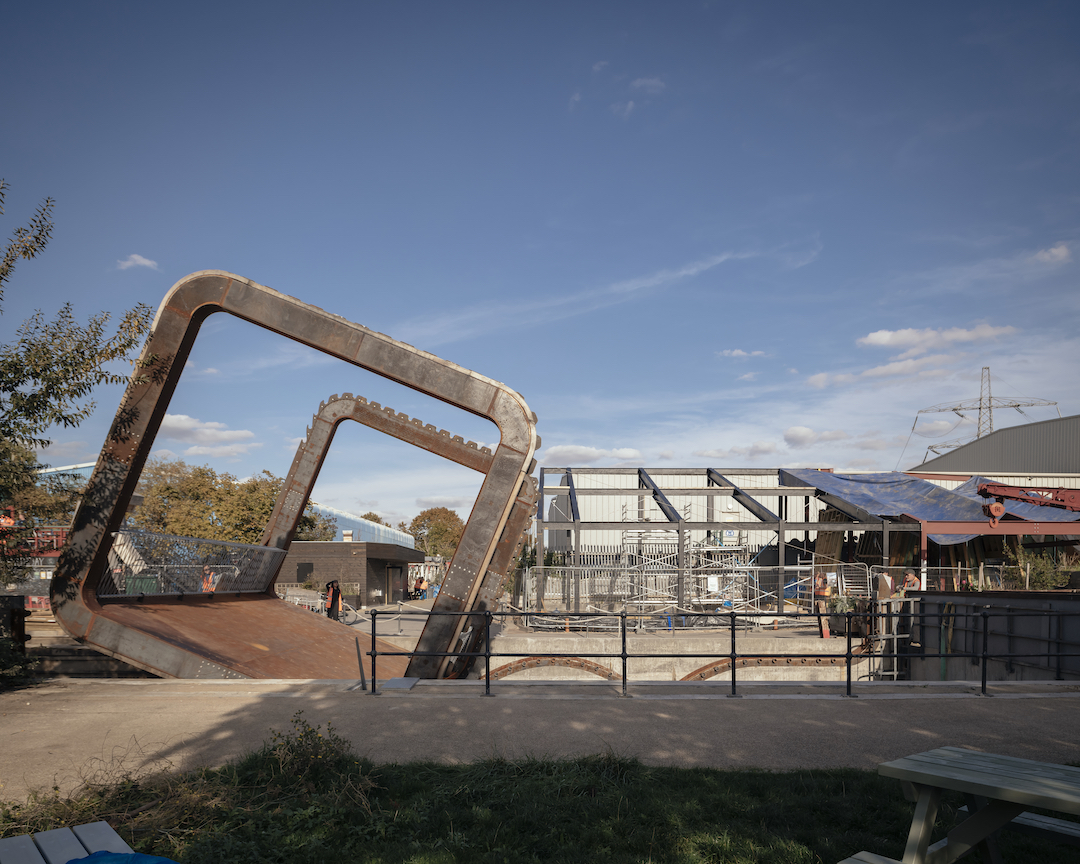
At first glance, the new footbridge in London designed by Thomas Randall-Page may look just like any other, with its weathered steel and oak exterior making it appear to be a fixture that’s stood the test of time for decades.
However, reality is that the Cody Dock Rolling Bridge, as part of a masterplan by London design studio PUP Architects, is brand-new. The most interesting part? The bridge rotates and moves to allow boats to pass through.
This intricate crossing took over seven years to develop and runs along a small channel in the reflooded area. Of course, the fact that it moves makes it the “first of its kind,” drawing inspiration from mechanisms of Victorian industrial design and applying it to the 21st century.

Engineers Simon Myers and Tim Lucas approached the Gasworks Dock Partnership with an idea to revamp its traditional bascule bridge. Instead of the going down the usual route, the latter convinced the former to take try an “unproven concept for a totally new typology of birdge.”
The result? The Cody Dock Rolling Bridge that has teeth embedded in the side of the channel so it can seamlessly roll on undulating rails cast in order to let passages of boats go travel back and forth between the river and the dock.
According to the architecture firm, the key to getting this right all came to equilibrium, culminaing in a finely-tuned system that requires no motors or electricy for the 12-tonne bridge to roll 180 degrees from one side to the other.

“The bridge design aims to be understated in its rest position but celebratory and playful in its movement creating a spectacular and memorable event when operated… we hope this revolutionary bridge will become an important landmark and symbol,” the company said.
Randall-Page told Dezeen the idea of a balanced system came to him when he was considering early industrial infrastructure, using systems that are counterweighted or rely on gravity to make things work instead of relying on external power sources.
As the designer explained, by ensuring the bridge doesn’t require power to operate, it allows for the structure to be easily repaired and will allow for opertators to keep their eyes peeled for any problems without having to use “complex sensors or cut-offs.”

In order for the bridge to remain stable while it rolls, scrap steel and concrete ballast were added in the “hoops” that frame it, weighing 13 tonnes in total. The center of gravity of the entire structure then moves along as it’s brought to life via a series of hand cranks.
“The idea for an opening bridge with a single moving part—the bridge itself—sounds simple but as you can propbably guess, was really hard to do,” remarked structural engineer Tim Lucas.
“This was an extremely complex and challenging project, with a tight budget, and tight tolerances as well as untested form. It was a treat to relize this with an exceptional and collaborative team,” conurred contractor David Knight.


[via Dezeen and Thomas Randall-Page, images via Thomas Randall-Page / Jim Stephenson]


