
US Army Introduces Air Bag System That Helps Protect Cargo In Emergency Drops

First used during World War II, airdrops have become a common way to resupply troops during battle or provide humanitarian aid to victims of disasters before paramedics arrive on the scene. However, it’s challenging to protect the cargo from damage when dropping it out of an airplane.
As such, the US Army Yuma Proving Ground has been developing and testing new airdrop capabilities over the years to help deliver packages into a drop zone or extricate soldiers from a dangerous situation as quickly as possible.
Currently, conventional cargo payloads are protected with a honeycomb-like cardboard between the item and the steel palette that brings it from the aircraft onto the ground.
Over the years, the Army noted that even when covered with multiple layers of packaging and a perfect landing, the honeycomb often collapses upon reaching the ground. Now, it’s developed a solution—the Rapid Rigging De-Rigging Airdrop System (RRDAS)—to deliver goods more safely.
According to a statement, RRDAS helps to reduce the impact when a payload touches down dramatically. This works by attaching self-inflating reusable airbag modules to the cargo, which can be used as low as 750 feet above the ground and carry weights of up to 22,000 pounds.
When in the air, the ambient air pressure helps inflate the fabric-based airbags. Upon hitting the ground, the same modules cushion the cargo’s impact, so fewer layers of honeycomb packaging are needed to protect the goods.
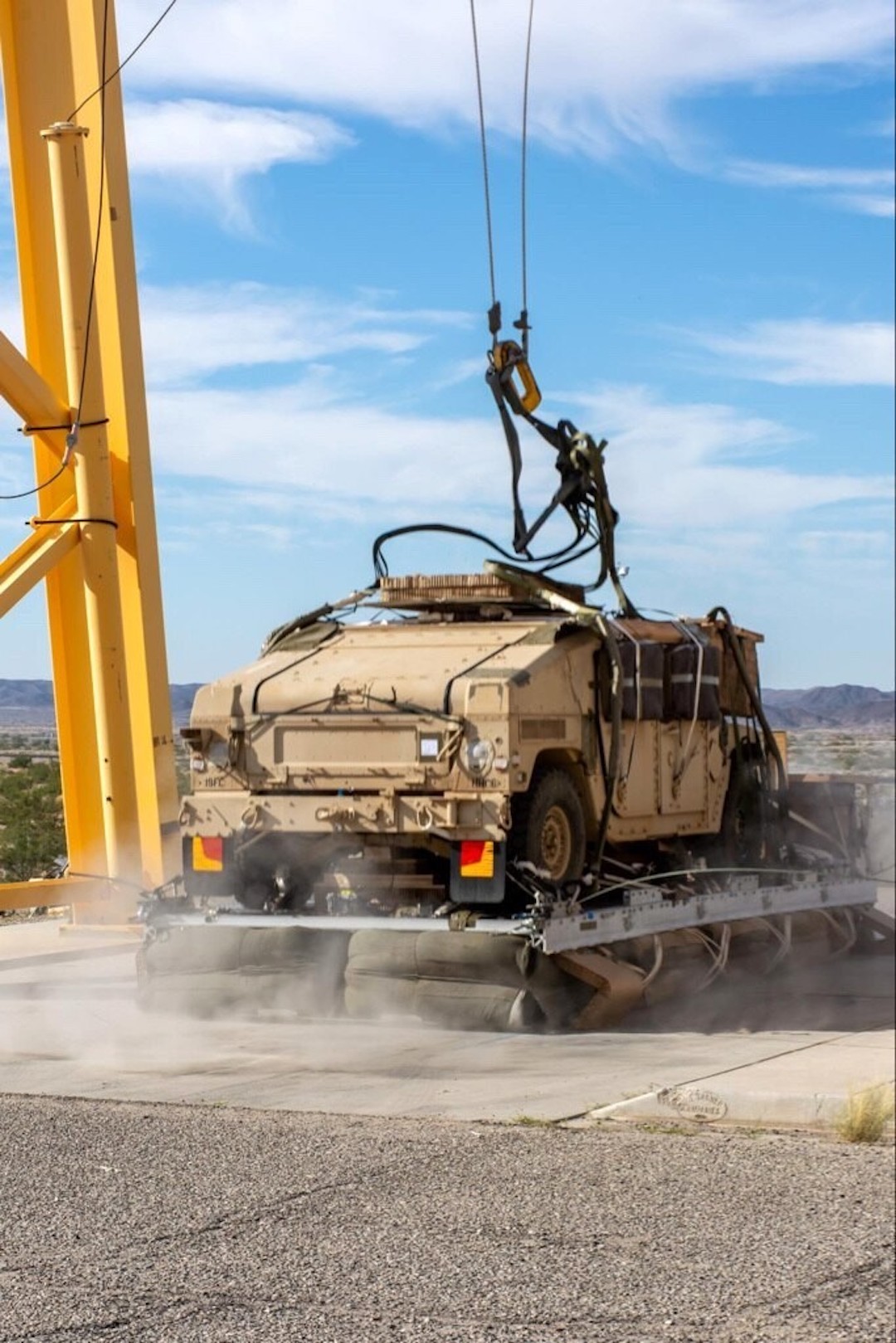
This also means that rigging time can be lowered by 25%, and de-rigging time reduced by a whopping 40%, which helps get soldiers out of harm’s way more quickly in dangerous situations.
“The end state is that it will reduce the de-rigging time by about two and a half hours primarily through the reduction of the use of honeycomb so soldiers on the drop zone won’t have to use axes, shovels, and picks,” explained Operations Manager David Emond.
YPG has long been on the cutting edge testing new airdrop capabilities, including the Rapid Rigging De-Rigging Airdrop System, which promises to get Soldiers out of a drop zone and into the fight with the equipment they need faster than ever. Read more at: https://t.co/d88TU4fKfn pic.twitter.com/vI4vB8Hy17
— Yuma Proving Ground (@ypg_az) February 26, 2023
Even more impressively, the system can help ensure that an airdropped vehicle remains upright upon landing through deployable outriggers, which will kick out and stop a tank from flipping over if they sense a possibility of it happening with a high center of gravity load.
The Army plans to complete the testing of RRDAS later this year and roll out the entire system to troops in 2025. Intermittent testing will occur based on soldiers’ feedback that will conduct operational testing at Fort Bragg, North Carolina, for the next two years.
“We will be able to increase the load of the payload and the length of the platform so we can drop heavier and longer items. We’ll be testing on and off at Yuma for several years to come,” concluded Major Matthew Rohe.


