
Remnants Of The First Recorded Supernova Reveal Themselves In New Images
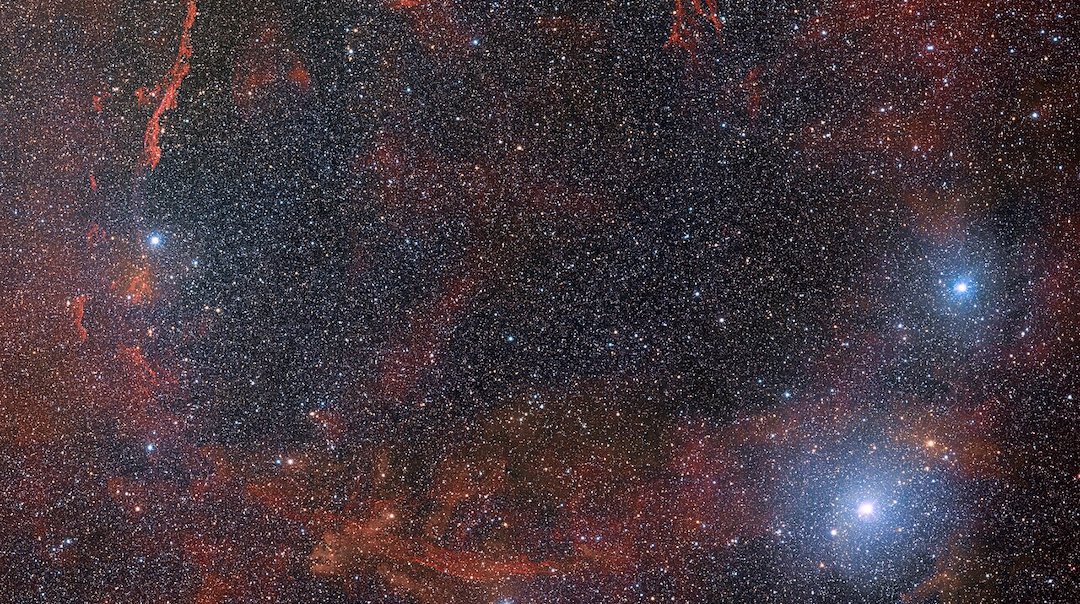
In the year 185, Chinese astronomers looked up to the night sky to discover an unusual glowing light. The sighting was recorded and eventually found to be a star exploding 8,000 light years away between the Circinus and Centaurus constellations. The event was so powerful that it stayed in the night sky, visible to the naked eye, for eight months before disappearing.
Details of the star were published in the Book of Later Han, according to Ars Technica, which described the explosion as the “size of a bamboo mat” and had “displayed various colors, both pleasing and otherwise.” The supernova was eventually named SN185, and the remnants it left behind were called RCW 86. However, for a long time, scientists did not think that both had come from the same event as the debris left behind turned into a ring-like structure, and for this to occur, it would take 10,000 years for a circular form to take shape.
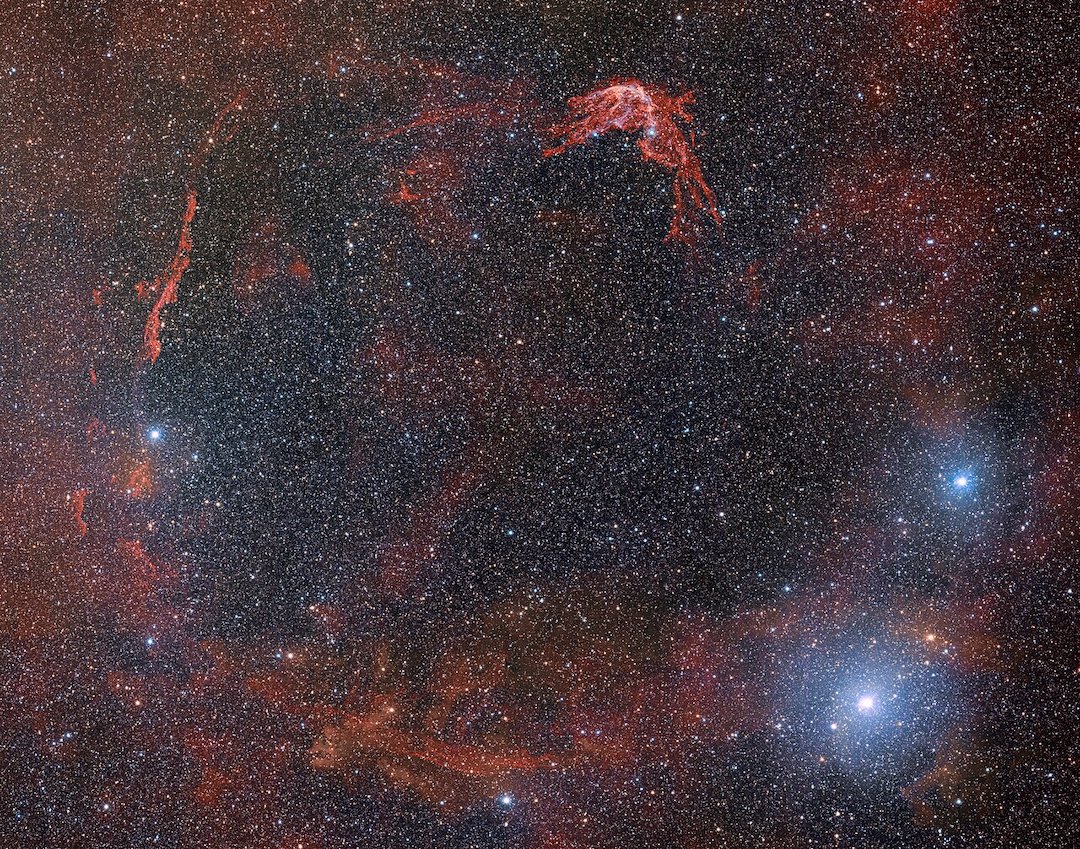
However, new data suggests otherwise. The image taken with the Dark Energy Camera from the Cerro Tololo Inter-American Observatory in northern Chile presented a whimsical display of radiant strands expanding from the ancient eruption. Thousands of other stars make up the rest of the photo.
From this, astronomers now suspect that SN185 experienced a high-velocity expansion, allowing the ring of matter to form in just 2,000 years. X-ray data also unveiled iron present surrounding RCW 86, which pointed to the possibility that it was a binary star system. This type of explosion classified it as a ‘Type Ia’ supernova.
This means that such stars gradually cooled down until they turn into cores of ash known as white dwarves. And since they are in binary systems, they often extract energy from their partners until their temperature reaches a point high enough for carbon fusion. As a result, these supernovae are the brightest.
In SN185’s case, it pulled matter from its partner until it could no longer support the rush of energy, and it burst. High-velocity winds eventually spread the remains out, and so came about its ring seen in the new image.
[via Ars Technica and CNN, images via CTIO/NOIRLab/DOE/NSF/AURA, T.A. Rector (University of Alaska Anchorage/NSF’s NOIRLab), J. Miller (Gemini Observatory/NSF’s NOIRLab), M. Zamani & D. de Martin (NSF’s NOIRLab)]


