
NSFW: Robot Arm Enters The Rectum To 3D-Print Repairs In The Body NSFW
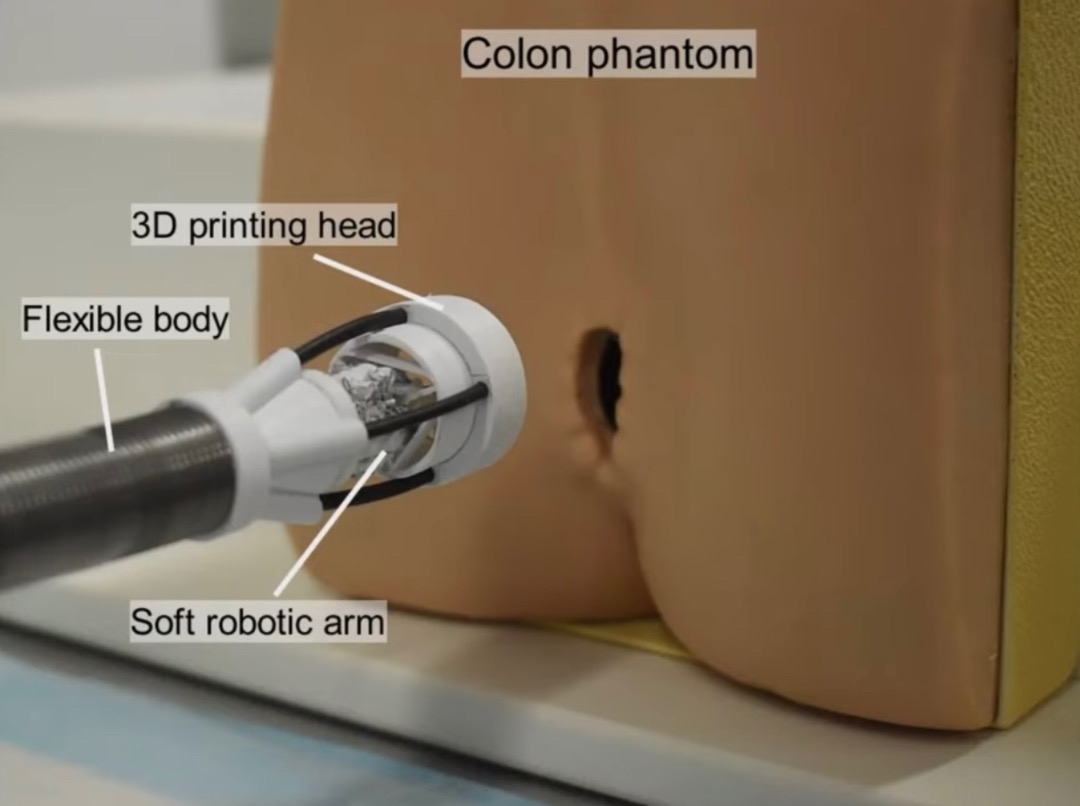
Video screenshot via Thai et al / Advanced Science (CC BY 4.0)
Robotics have started from the bottom, and now they’re here. But this one, this one takes the cake.
Engineers from the Medical Robotics Lab at the University of New South Wales in Sydney, Australia, have designed a flexible, soft robotic arm that can enter a person’s body to 3D-print healing materials and distribute them to affected parts.
The equipment, dubbed ‘F3DB’, is attached to a bioprinter head that churns out useful bioink—made up of safe components like gelatin, collagen, and human cells—and sends it to the surface of internal organs and tissues. The printer can be adjusted to customize repairs in a variety of shapes. A new study published in the Advanced Science journal by Dr Thanh Nho Do and team demonstrates that the bot can print gels in the shape of a peace symbol, a crescent, and the first-aid symbol, on top of the simpler square and circle, to match the relevant wound.
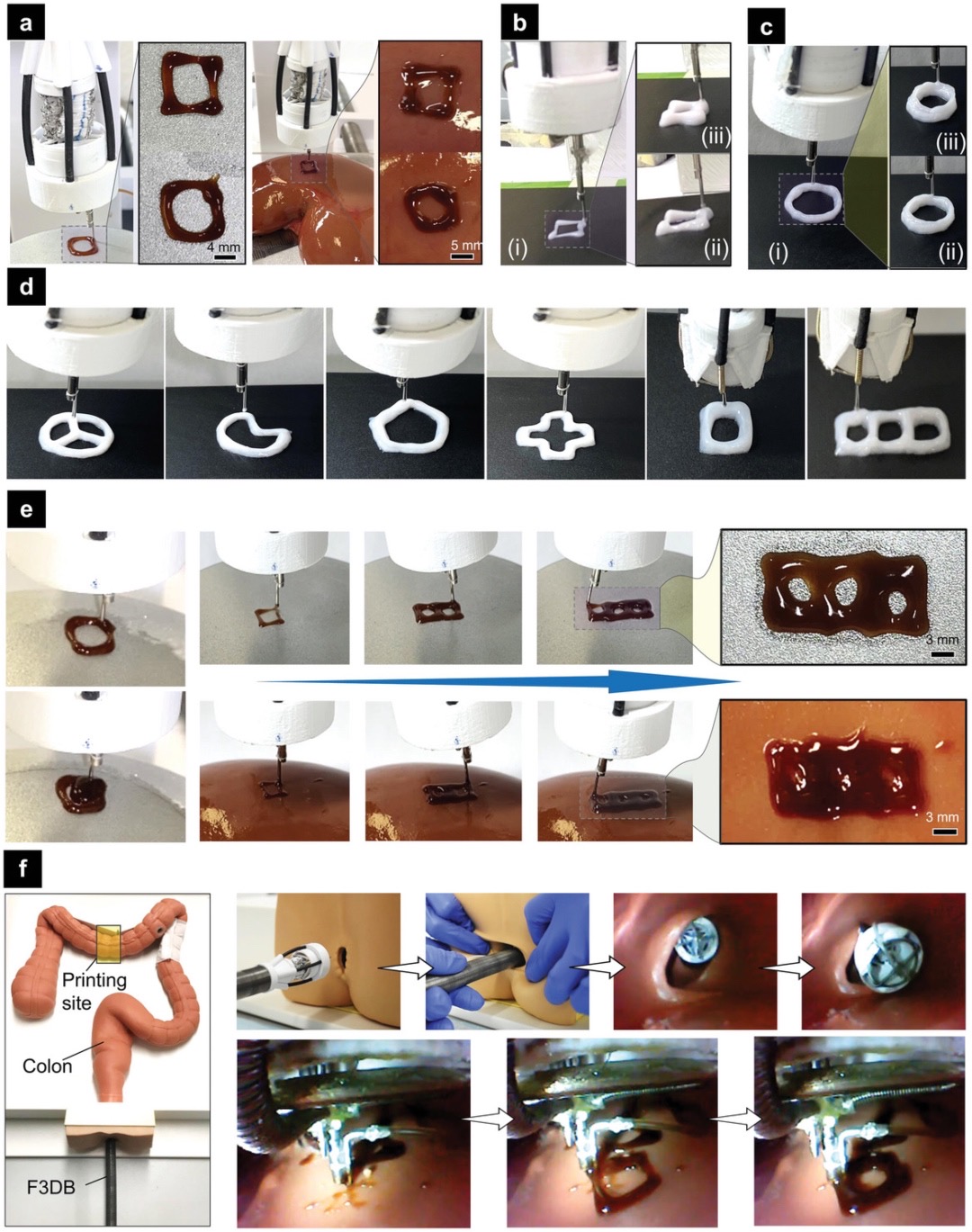
Don’t worry, the substance shown above is liquid chocolate, as stated by the engineers in the paper.
The robot and its other parts can be maneuvered via an external controller. Its arm’s length and rigidity can also be adapted to accommodate the intended procedure.
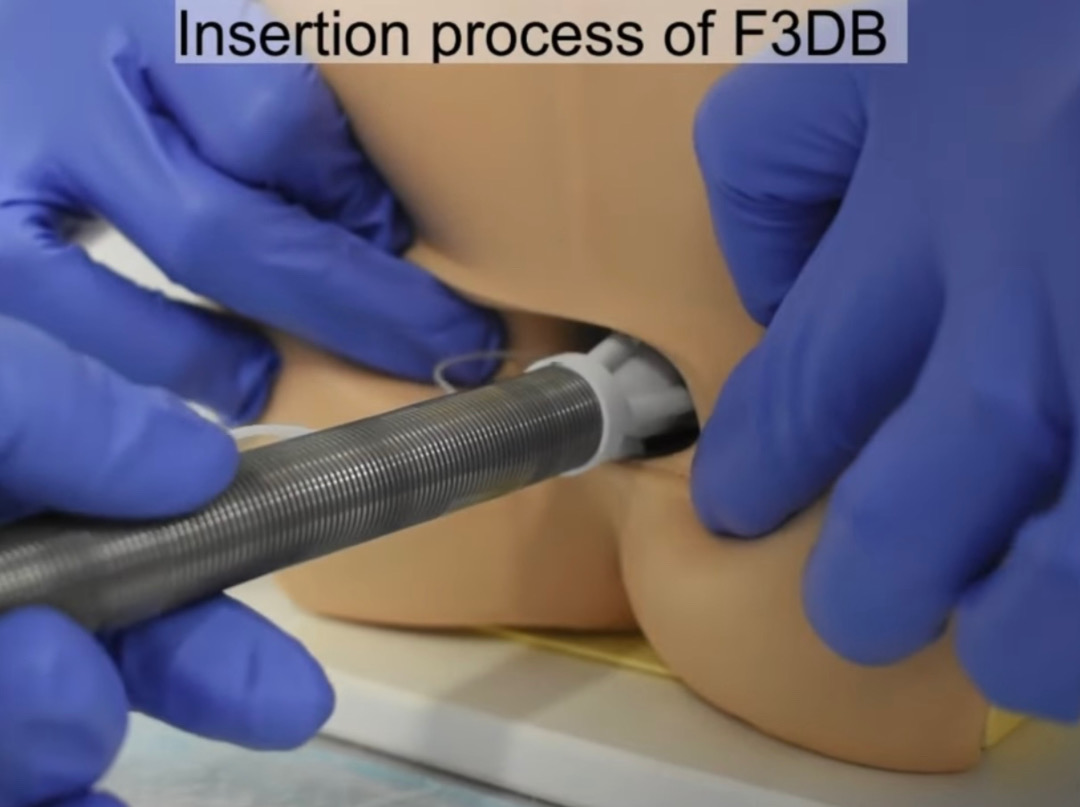
Open surgery can be a pain in the ass, and it could give rise to infection risks. F3DB, on the other hand, is a “minimally-invasive” alternative that may remove the need to operate on damaged organs, its creators explain.
In a test, the biomaterial was found to still be alive a week later. Not only that, but the amount of living cells also quadrupled seven days after they were printed. The team also applied the sample to a pig’s intestine, and the 3D-bioprinted material proved to be “a promising candidate.”
While the robot arm remains a proof-of-concept, the team expects that, within five to seven years, it could be used by medical professionals to repair hard-to-reach parts of the body with just a small incision in the skin.
F3DB’s inventors anticipate it being useful for the reconstruction of complex wounds, such as gastric wall damage. Most notably, it could be especially capable of removing colorectal cancers.
Already, the team has received a provisional patent for the project. Next up, they hope to improve the tool with things like an integrated camera and real-time scanning.
[via Neatorama, Advanced Science, Daily Mail, videos and images via Thai et al / Advanced Science (CC BY 4.0)]


