
Swatch Turns Its Watches Into Wearable Artwork From Famous Museums

Ever want to wear your favorite painting on your wrist? Now you can get Swatch’s ‘Art Journey’ collection, which takes famous paintings and plasters them onto its timepieces.
Swatch has been no stranger to incorporating famous artworks into its products, and this ongoing collection continues to expand the brand’s reach into the art world. For the watches to become a reality, the company worked alongside famous museums, including the Museum of Modern Art (MoMA), Magritte, La Gallerie Degli Uffizi, and Louvre Abu Dhabi, to transform these iconic and historical pieces into something wearable.

Kicking off the collection, we have Roy Lichtenstein’s Reverie and Girl from MoMA, which has the piece’s subject gracing the watch’s face. Its underside holds a little surprise in the shape of the artist’s iconic dots and comic-book aesthetics frequently seen in his work.
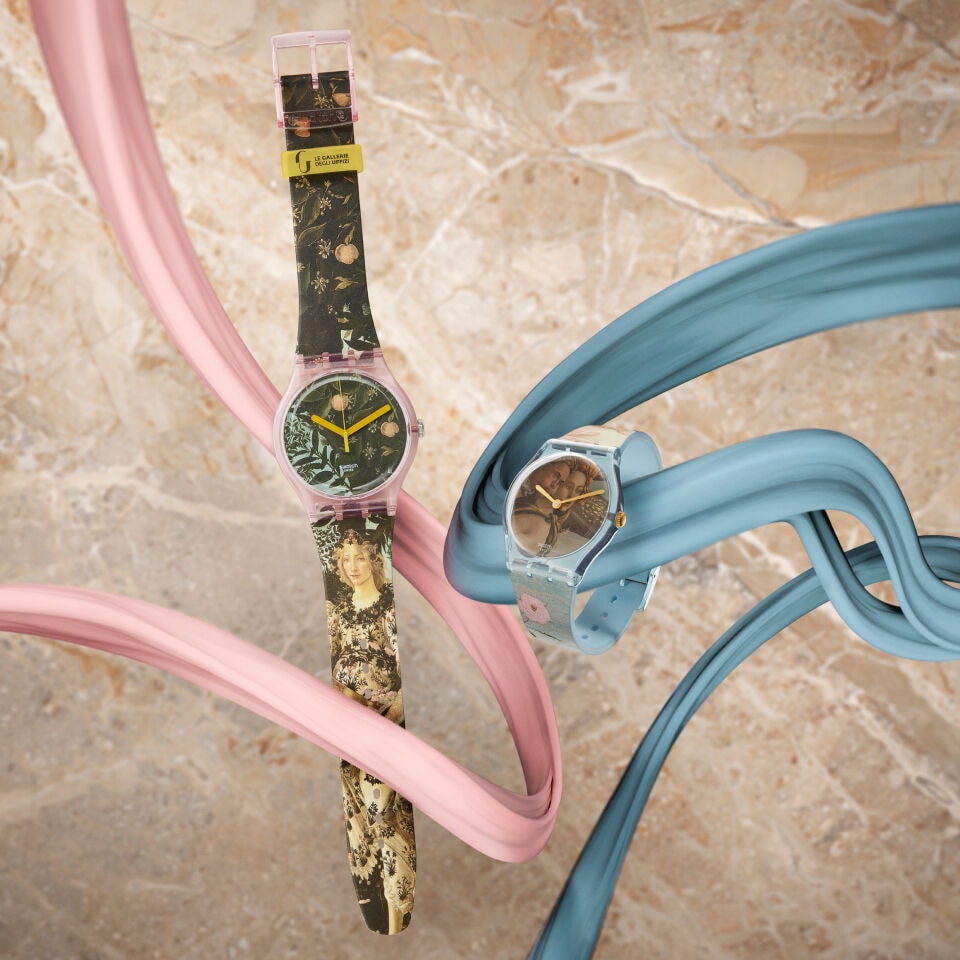
Following this is Botticelli’s enchanting The Birth of Venus and the Allegory of Spring, which add a whimsical and almost ethereal touch to the collection. On the one hand, we have Venus, taking her first steps out of the foamy seawater and onto the wrist strap with the gods of wind Zephyr and Breeze, taking center stage on the face of the watch. On the other, we have the lush scenes of mythological characters found in a garden just as spring touches down around them.
The artwork sparked speculation as no one could figure out who these figures were supposed to represent. Either way, its mystery, and beauty still make for a stunning timepiece.

Next is Swatch’s rendition of The Son of Man by René Magritte and his provocative painting of a pipe with the words “Ceci n’est pas une pipe,” which translates to “this is not a pipe,” evoking onlookers to rethink the concept of reality and step into a more abstract form of thinking. Now all of this could be something you match with your tie or bag.
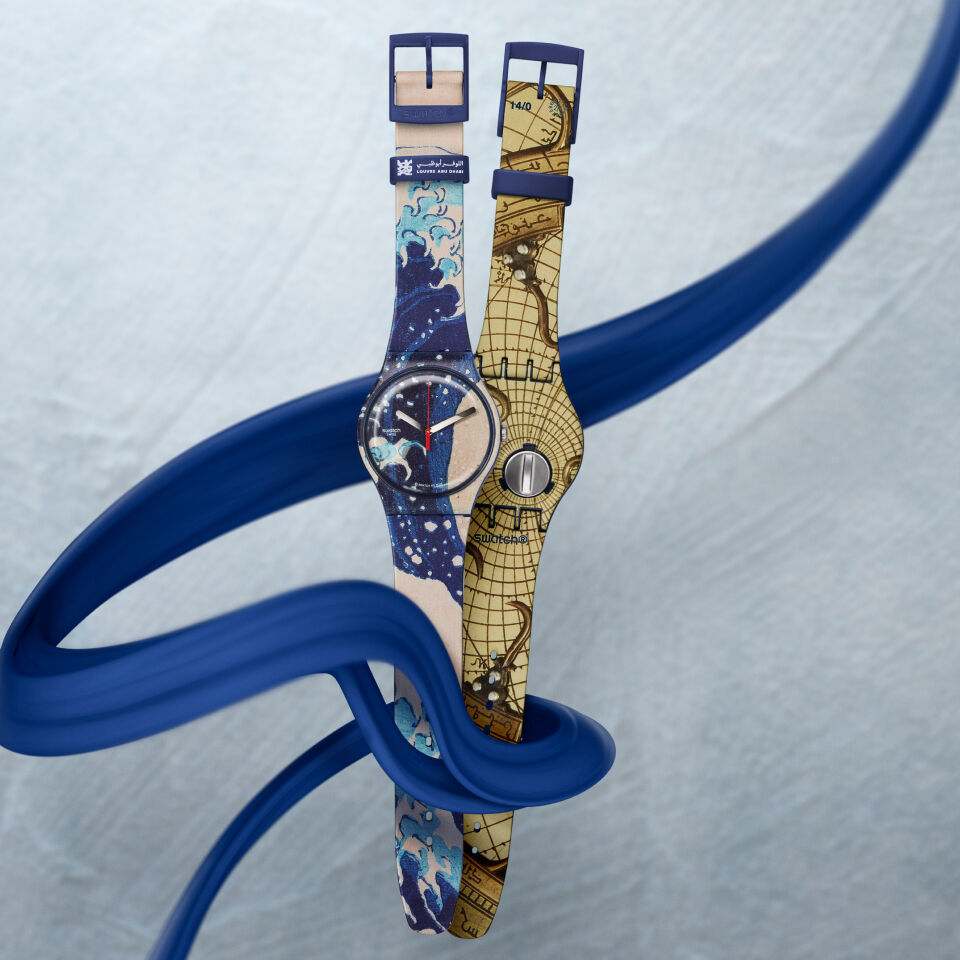
Lastly, the brand is making a stop at the Louvre Abu Dhabi. The brand rides Hokusai’s Great Wave off Kanagawa with the iconic tide crashing over the front of the watch and Muhammad ibn Ahmad Al-Battûtî’s astrolabe on its back.
The collection will be available online on March 16.
[via Highsnobiety and Swatch, images via Swatch]


