
Grasshopper-Like Material Leaps At Up To 200 Times Its Own Thickness
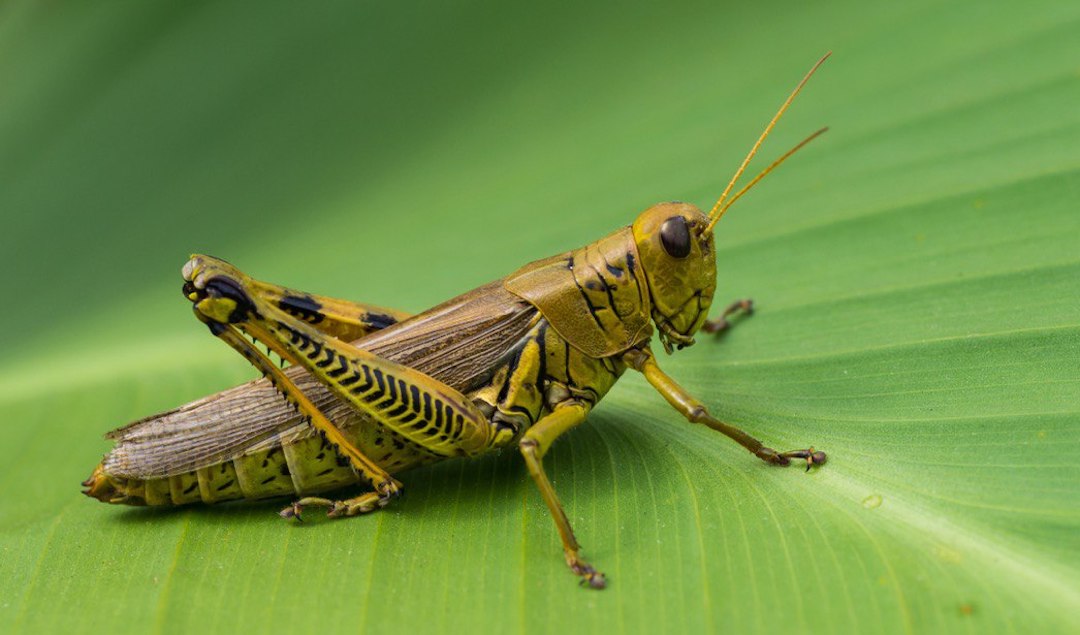
A material in development for a soft robot was found to be able to jump over 200 times its thickness entirely by happenstance.
The University of Colorado Boulder had begun a study on a new material for soft robots using liquid crystal elastomers (LCEs) and had no intention of creating something that could bounce. However, LCEs—a solid and stretchy polymer version of the liquid crystals found in laptop and television displays—are a network of liquid crystals that can react to external stimuli.
In this case, the subject was being heated on a hot plate as the researchers initially tried to get it to change its shape. Then, suddenly, it jumped at such an incredible height straight out of its dish and onto the countertop.
After realizing that LCEs respond in such a way to heat, the team set about further developing this grasshopper-like material. For reference, the insect can only hop 20 times its body length, which puts this synthetic matter leaps and bounds ahead of the thing that inspired it.
Its ability to jump isn’t the only part that inspired the scientist. Like the bug, the new material also stores energy and uses it all at once.
It is originally made up of three layers. When heated, the top two shrink faster than the one on the bottom, forming a concentric cone. During the experiment, the matter was placed between the legs of a test robot. Energy was stored in the cone, and the hotter it got, the faster the cone inverted itself before bursting and kicking off from where it was standing.
Phys.org has uploaded a video of the component in action.
The team posits that they could change the material to respond to cooling, instead of heating, and that they can control its direction by altering the alignment of its legs.
Furthermore, its potential future use includes aiding soft robots in walking, crawling, and moving over uneven terrains.
The original study was published in Science Advances.
[via Ars Technica and Phys.org, Photo 60031348 © Suchen1967 | Dreamstime.com]


