
Leonardo Da Vinci Was The Son Of Trafficked Slave, New Evidence Suggests
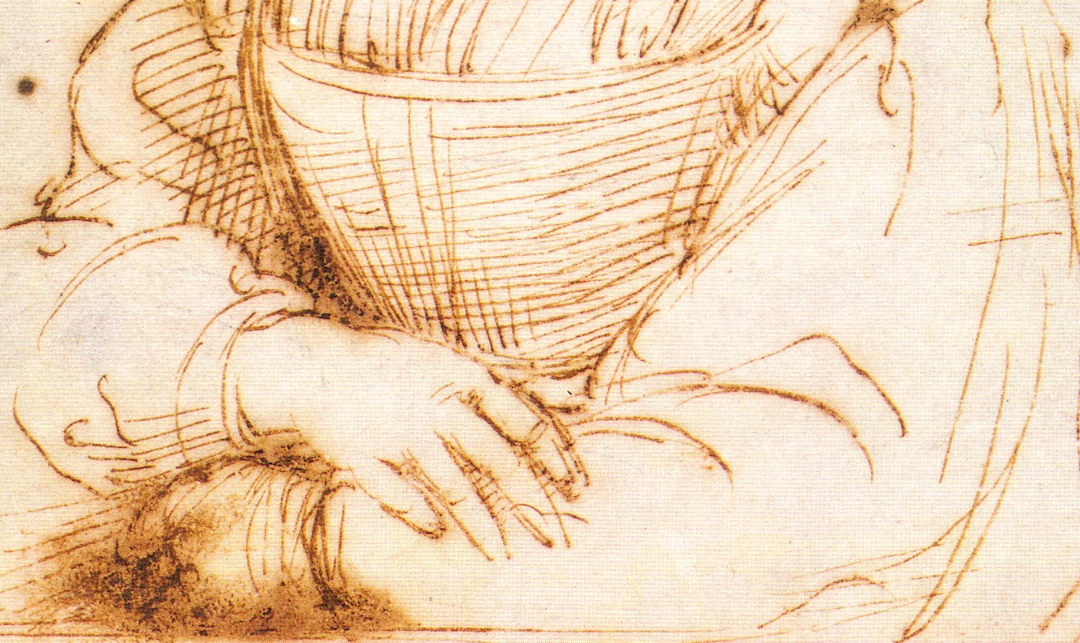
Apart from the Mona Lisa, the identity of a woman linked to Leonardo da Vinci has eluded scholars for years.
Experts have known that da Vinci’s mother was named Caterina, but it was long presumed that she was Italian—Tuscan, more specifically—and a peasant.
Records from Florence city archives now suggest that Caterina was a slave, captured and brought over to Italy. That could mean her son, an Italian legend, was only half-Italian.
University of Naples professor Carlo Vecce, an expert on all things Leonardo who has studied the polymath for decades, shared these findings with AFP ahead of the launch of his novel, The Smile of Caterina, the mother of Leonardo.
He believes Caterina was a teenager trafficked from her home in the Caucasus Mountains, located in a country then known as Circassia. She was taken across the Black Sea, sold and resold to owners in Constantinople, Venice, and finally Florence, where she was acquired by a family to work as a wet nurse.
It was in this city that she met a young notary named Piero (Peter) da Vinci, and in the summer of 1451 they had a son named Leonardo.
Vecce managed to obtain legal papers signed by Leonardo’s father himself to emancipate Caterina—to “recover her freedom and recover her human dignity.” The document liberating her as a slave was dated November 2, 1452, seven months after Leonardo’s birth.
The paperwork was filled out by “the man who loved Caterina when she was still a slave, who gave her this child named Leonardo, and [was] also the person who helped to free her,” Vecce proclaimed.
However, Caterina was married off to a local smallholder, with a generous dowry, soon after her son was born. The couple had five children.
Vecce deduces that it was the difficult background of his “migrant” mother that spurred da Vinci’s incredible body of work, which spanned not only the realm of art but also science, engineering, anatomy, architecture, and more.
He said da Vinci inherited Caterina’s “spirit of freedom” and channeled it into his craft.
Paolo Galluzzi, another da Vinci historian, said the theories presented were well-founded—though he also cautioned to retain “a minimum of doubt,” since there’s no way to conduct a DNA test.
[via France24 / AFP and The Telegraph, cover photo 229982452 © Gustavo Rosa | Dreamstime.com]


