
Samsung Addresses Allegations That It Fakes Moon Photos In Galaxy Phone Cameras
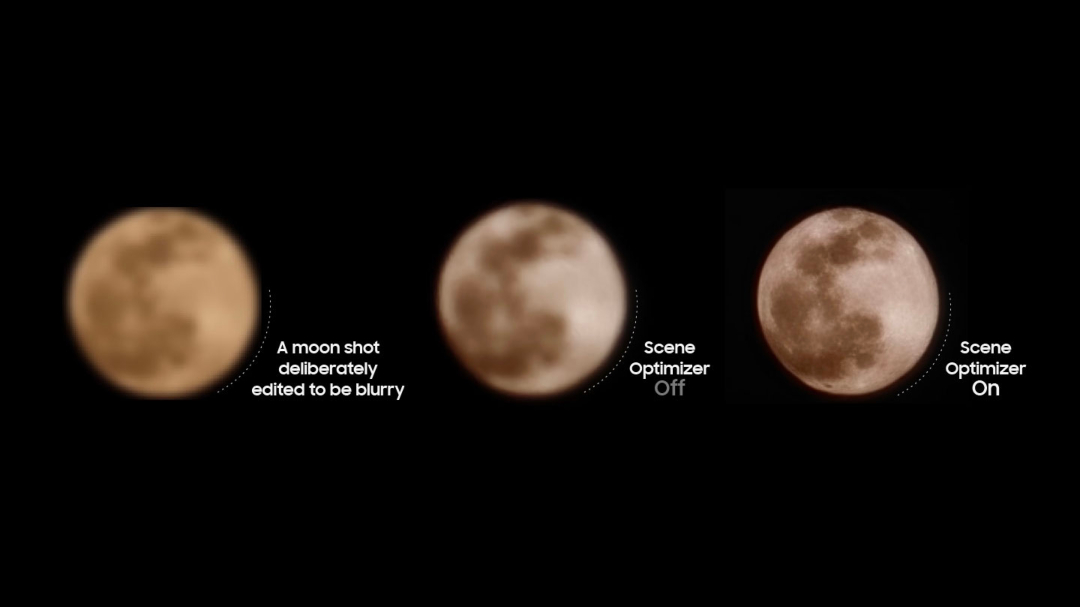
One of the star features of the Samsung Galaxy smartphone camera is ‘Space Zoom’, which, if you’re using the S23 Ultra, boasts a super-resolution zoom in the night sky of up to 100 times, enabling everyone to take up space photography as a pastime. Alas, the tool is currently being eclipsed, as the South Korean tech giant is being accused of using artificial intelligence to “fake moon photos” instead of actually capturing sharp celestial imagery.
Last week, one user recounted putting the feature to the ultimate test by downloading an image of the moon online, and then making it really small so that the lunar surface’s details couldn’t be identified. Then, the user, known as ibreakphotos on Reddit, further blurred the ultra-low-res picture using Gaussian blur and used their Galaxy smartphone to snap a photo of the result.
To their astonishment, the Samsung AI reproduced the bogus moon shot with elements that weren’t visible, causing users to suspect that Samsung was simply superimposing the photo with existing images and textures that could give it more detail.
“Samsung is leveraging an AI model to put craters and other details on places which were just a blurry mess,” ibreakphotos deduced. They asserted that this digital manipulation was unlike the computational photography technology seen in phones today, where your camera takes several photos at once and combines them to form the sharpest, clearest image.
View post on imgur.com
“Since the moon is tidally locked to the Earth, it’s very easy to train your model on other moon images and just slap that texture when a moon-like thing is detected,” the user added.
The experiment has caused quite a stir, leading Samsung to justify the feature via a new blog post—although this clarification appears to just be an English translation of a Korean explainer that the company published last year. In a statement to PetaPixel, Samsung also denies touching up moon photos with details extracted from other moon images.
“Samsung is committed to delivering best-in-class photo experiences in any condition,” the company starts off. Rather than overlaying moon photos with other images of the moon, it says it relies on the ‘Scene Optimizer’ feature, “which uses advanced AI to recognize objects and thus deliver the best results to users.”


“When you’re taking a photo of the moon, your Galaxy device’s camera system will harness this deep learning-based AI technology, as well as multi-frame processing in order to further enhance details,” the consumer electronics brand elaborates.

“When Scene Optimizer is turned on and the moon has been recognized as an object, the camera will deliver users a bright and clear image through the detail enhancement engine of Scene Optimizer on top of the Super Resolution technology.”
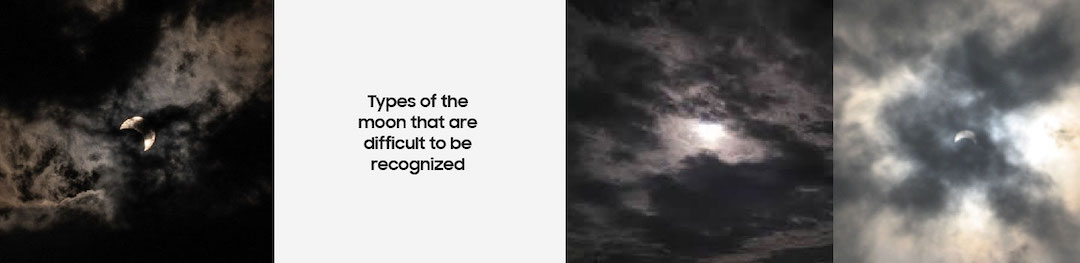
In addition, the company points out that the camera cannot recognize the moon when it is obscured by clouds, “or if the moon object itself is the side that is not visible from the Earth.”
Samsung says users can opt out of Scene Optimize, which works with deep-learning AI to eliminate noise and bring clarity to images, by heading to Camera Settings > Scene Optimizer > Off on their camera app.
[via PetaPixel and DIY Photography, images via Samsung]


