
Notre Dame Fire Unwittingly Proved Famed Landmark Was Ahead Of Its Time
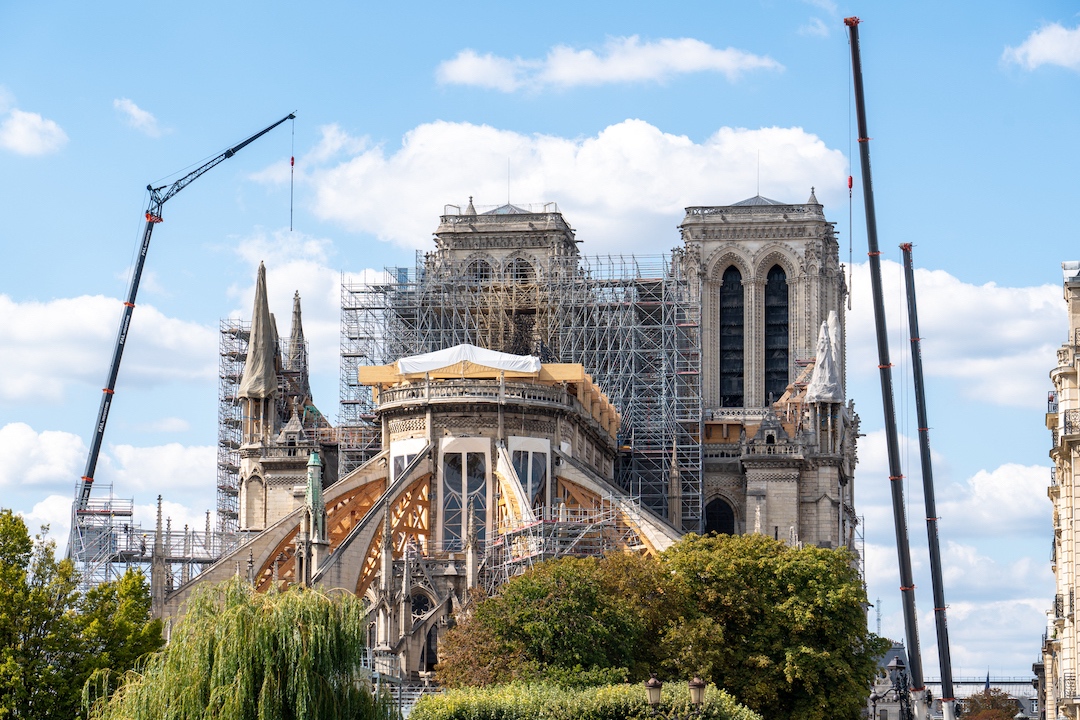
As Notre Dame slowly rebuilds itself ahead of its scheduled reopening in late 2024, it appears the fire that devastated the cathedral may have helped reveal a hidden secret of the landmark that dates all the way back to when it was constructed in the 12th century.
Turns out, new analysis has found that the building may have been the first Gothic cathedral to use iron reinforcements throughout its structure—uncovered in the large iron staples holding heavy blocks of stone together which were spotted after its façade burned down.
When construction first began in Paris during the 1160s, the cathedral was a daunting task. After all, it would be the tallest building ever constructed in that time period. To ensure it would stay upright, it seems builders used thousands of staples from the floors to the upper walls.
According to Maxime L’Héritier from the Paris 8 University Vincennes-Saint-Denis, it was only after the framework vanished in the fire that the staples were visible to historians, each weighing between two and four kilograms (4.4 lbs to 8.8 lbs) and spanning 50 cm (19.6 inches).
Upon closer inspection via radiocarbon dating, researchers realized that these components were most likely used in the earliest stages of the construction project and that this reinforcement was key in creating the Gothic style of architecture the landmark is so known for.
As per New Scientist, a key difference in this style compared to the earlier Roman times was the use of iron to create lighter, more detailed, and more elegant structures, as opposed to the blockier buildings of old.
Going forward, the research team will be looking further into the samples of iron from Notre Dame and learning more about historical iron producers in the region to further confirm and expand on how the material was used in the medieval Parisian market.
[via New Scientist and Interesting Engineering, cover image via Espiegle | Dreamstime.com]


