
Artificial Leaves Electrify Homes By Gaining Power From Rainwater
Wind, solar, and hydropower are good alternative energy sources that create sustainable options against fossil fuels. However, scientists at the Italian Institute of Technology (IIT) in Genoa, Italy, have discovered a stormy new power source: raindrops.
Essentially, rain is trapped by artificial leaves and churned into electricity. A report from IEEE Spectrum details how this process works. The fake versions are first added to actual plants to collect water and harness wind simultaneously. Firstly, wind power is harvested as they blow in the wind and rub against each other. The static movement charges the leaf cuticle of the manufactured flora.
The charges are stored in the inner cellular tissue of the plant, where a current can be made. In order to extract this, the team uses an electrode placed into the tissue of the greenery.
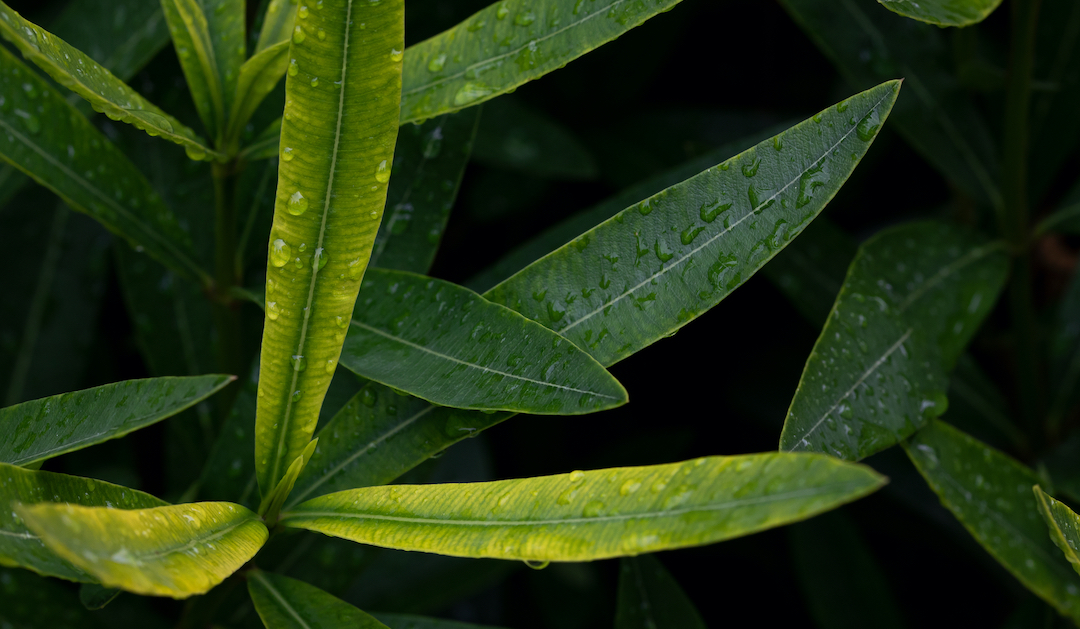
When harvesting energy from the rain, water droplets collected on the artificial leaf system, which had been introduced into an oleander plant, could create voltage and currents of over 40 volts and 15 microamperes and power up 11 LED lights.
Per the study, artificial leaves used to generate currents have previously existed. But the process of turning rainwater into electricity is new. This could prove useful as during storms, plants get too damp to harness wind power. This way, it can produce energy through rain or shine.
The report highlights uses such as powering up devices for remote environmental monitoring, agricultural applications, and even helping observe flora and study climate conditions.
While more analysis needs to be done on the leaves, the team has filed a patent for the technology and is trying to branch into potential markets.
[via Interesting Engineering and IEEE Spectrum, Photo 268614359 © Özgür Åženergin | Dreamstime.com]


