
Hyundai Pledges To Stick To Physical Buttons Amid The Trend Of Touchscreens
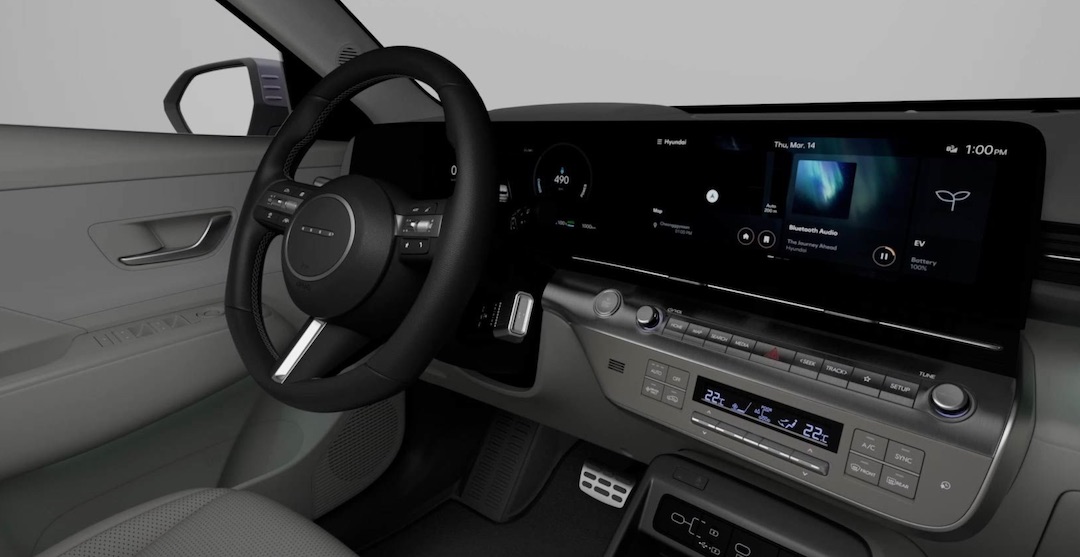
In a world where infotainment systems are about as critical as the chassis, Hyundai is sticking true to its roots and keeping tactile buttons.
The news first broke via CarsGuide, who had spoken to Sang Yup Lee, Head of Hyundai Design, at the launch of the Hyundai ‘Kona’. As it stands, the decision to keep the buttons remains practical.
Lee noted that fully digital interiors could prove dangerous as they would require more of a driver’s attention and multiple steps to operate. This is in contrast to physical buttons that are easier to press and locate and only serve one purpose instead of doubling up as different things on a screen.
Lee posits that when your attention is kept on the road, it is hard to feel around for the right thing to tap, and sometimes having a tactile button could protect a driver’s safety when they’re fiddling around in the car.
According to PC Mag, an experiment held by Swedish magazine Vi Bilägare and reported by Jalopnik tasked some drivers to handle different tasks in 11 different cars. The 17-year-old Volvo came out on top as the easiest to operate compared to the Tesla Model 3.
Though it is a commendable decision considering many other brands have decided to jump onto the infotainment bandwagon, Lee did state that as cars reach Level 4 autonomous, keeping such buttons might be out of his control.
[via CarsGuide and PC Mag, cover image via Hyundai]


