
BMW Taps On Nvidia’s AI To Virtually Produce Cars Years In Advance

What if automakers could work out the entire manufacturing process of a vehicle before building the real thing? That’s what BMW Group is trying to do at its forthcoming Debrecen plant, powered by Nvidia’s Omniverse artificial intelligence (AI) system.
While construction has just begun at the plant, which is scheduled to open in 2025, vehicle manufacturing has already started—virtually. This is the brand’s first facility to be planned and validated entirely digitally.
The site, tasked to produce the automaker’s next-generation electric vehicles dubbed the Neue Klasse (new class), has already started initiating the production of the cars using the computing platform, allowing engineers to work on the project two years before it’s actually manufactured.
To put it simply, the technology enables engineers to create accurate, large-scale demonstrations of the vehicles as “digital twins,” bringing the concept to life and allowing it to be worked on even before it gets produced in the real world.
In a joint demonstration, Head of Production Milan Nedeljković showed how BMW employees were collaborating in real-time on the upcoming body shop, allowing for ideas to be exchanged across sites and time zones.
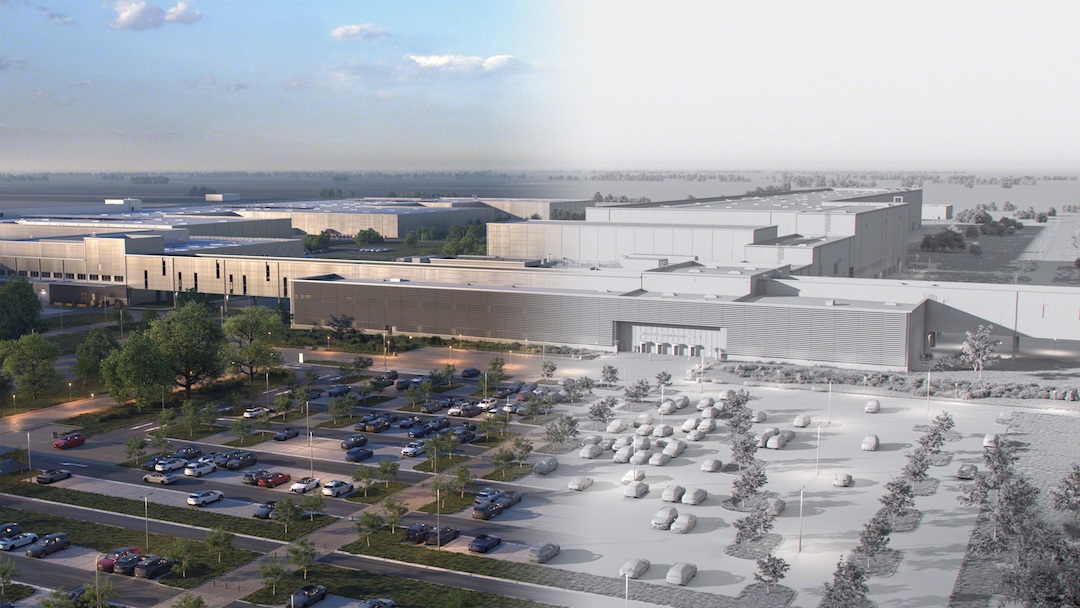
“Virtualization and artificial intelligence are accelerating and refining our planning. With the various planning systems consolidated within a digital twin, our teams around the world can now work together in real time and make decisions faster and on a more solid foundation,” he added.
The Omniverse system works by allowing production experts to communicate with suppliers on detailed planning and optimization of processes, including the ability to retrieve equipment and assembly line data on the go.
In the future, Nvidia plans to make items and part numbers for production materials available within the software, as well as activate layout options so robots can be controlled through photorealistic simulations.
Work on the new factory begin back in 2020 when all of BMW’s vehicle and engine plants were 3D-scanned. To date, more than 7,000,000 sq m (1,730 acres) of indoor space and 15,000,000 sq m (3,705 acres) of outdoor production space have been completed.
“Over time, all the relevant product, process, quality, and cost data will also gradually be available in Omniverse alongside the development, planning, and production processes. There will also be further developments to the platform, which are expected to include ‘invisible’ processes such as the consumption of energy and resources,” the company concluded.
[via Interesting Engineering and Electrek, images via BMW Group]


