
Mathematicians Uncover 13-Sided Shape Called ‘The Hat’ That Never Repeats Itself
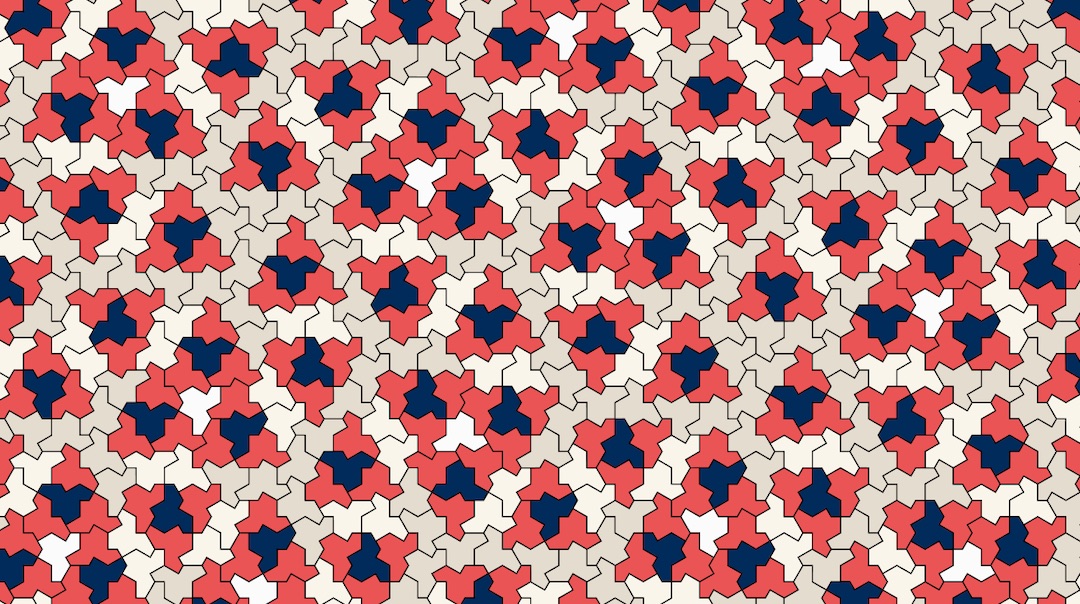
Squares, triangles, and other simple geometric shapes might have been the top choice for homeowners looking to add a little pizzazz to their bathroom floors and kitchens. However, a new 13-sided tile is unfolding to turn these rooms into optical illusions with a pattern that never repeats itself.
With this discovery, mathematicians from the University of Waterloo have solved a problem that has long since been just a theoretical notion in the math world. The shape is called ‘The Hat’, after the fact that it resembles a fedora. It is a polykite with eight kites connected at their edges. When multiplied over a surface, it turns into an aperiodic monotile.
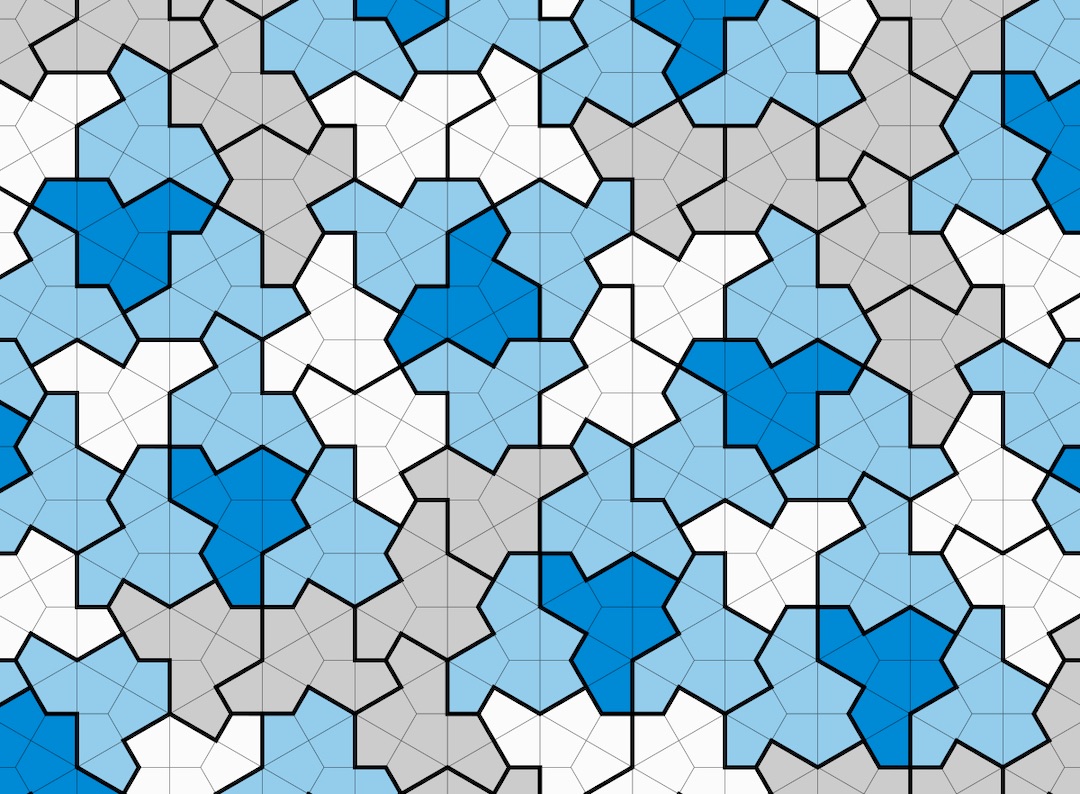
A famous aperiodic tiling called the ‘Penrose tilings’ had previously used two different shapes to create its pattern. In this case, the hat only uses one, also known as an “einstein” or “one stone” in German.
The study was presented in a preprint paper online. There are also links to 3D print or laser-cut your version of the tile.
[via Gizmodo and New Scientist, images via David Smith et al., University of Waterloo (CC BY 4.0)]


