
Beating NASA, Students Will Send First American Lunar Rover To Moon

On May 4, 2023, a compact, lightweight rover will make its way to the Moon. But this time, it won’t be launched by a large space agency. Instead, students from Carnegie Mellon University (CMU) will be the first to send an American lunar rover to La Luna before NASA or SpaceX.
Till now, NASA has sent five robotic rovers to explore the terrain on Mars, but it has yet to launch one onto the Moon, though the organization has unveiled plans to send its first lunar rover—dubbed VIPER—into orbit next year.
According to Bloomberg, China’s Yutu-2 robot is the only gadget currently roaming the Moon, with Greece, Japan, and the United Arab Emirates hot on its heel as they continue to develop their lunar rover programs.

It turns out that all of these nations will be beaten to the chase by the aforementioned 300 students, who will send their rover, Iris, aboard the Peregrine lunar lander on United Launch Alliance’s Vulcan Centaur rocket.
The rover will head to space alongside MoonArk, a collaborative sculpture created by faculty, students, and alumni comprising four small chambers full of images, poems, music, and samples that will act as “the first museum on the Moon.”
Upon reaching the surface of the Moon, Iris will begin a 60-hour mission as the first American, student-developed, smallest, and lightest rover, in which it will be tasked to capture photographs and transmit them back to Earth as it travels along the unfamiliar terrain.
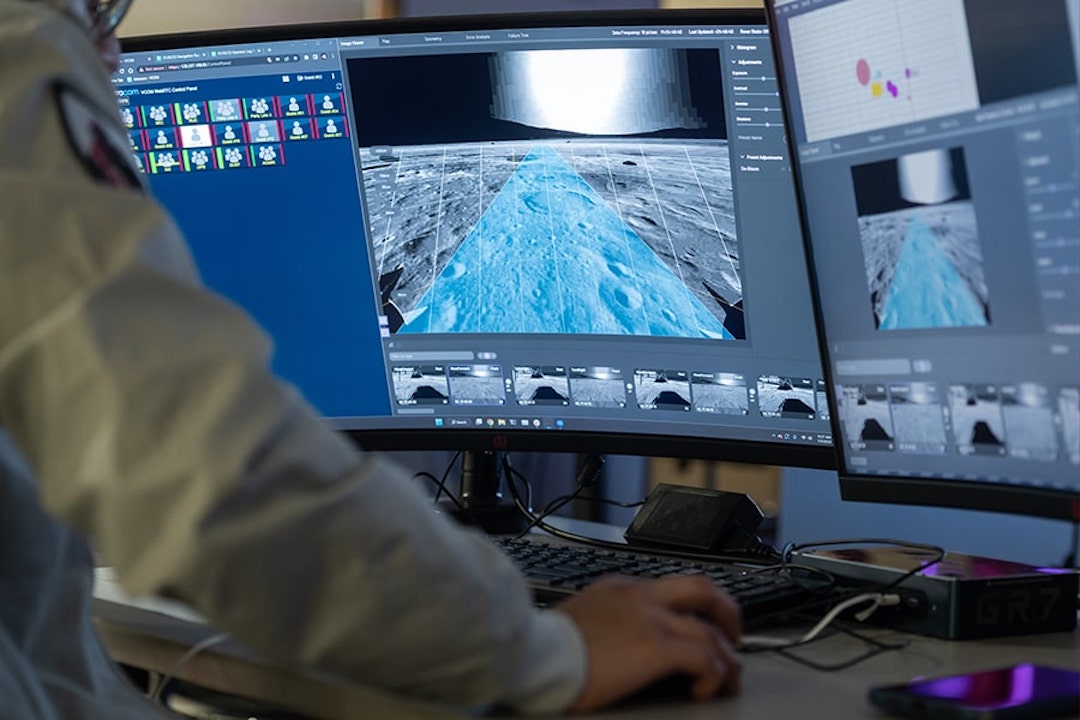
As per the university, students will be able to control and monitor Iris’ progress from the Mission Control room at the Pittsburgh campus, working in shifts to stay in constant contact with the rover throughout the entire duration of its mission.
“Hundreds of students have poured thousands of hours into Iris. We’ve worked for years toward this mission, and to have a launch date on the calendar is an exciting step,” explained Raewyn Duvall, commander of the Iris Mission.
“Iris will open up lunar and space exploration by proving that a tiny, lightweight rover built by students can succeed on the Moon.”
[via Interesting Engineering and Carnegie Mellon University, images via various sources]


