
Thread-Like ‘Fiber Pumps’ Can Be Woven Into Clothes To Keep Wearers Cool Or Warm

While garments that can cool down or warm up wearers aren’t entirely new, as with this “entropy vest” that evolves its state of matter using a chemical gel, many of them involve using fluid-based technology or large pumps that are often impractical.
As such, researchers at the Soft Transducers Laboratory (LMTS) in the School of Engineering at Ecole Polytechnique Fédérale de Lausanne decided to tackle the issue of wearable devices being attached to un-wearable pumps.
The scientists came up with a simple, elegant solution: the world’s first pump in the form of a fiber. With this innovation, these “fiber pumps” can be directly sewn into textiles and clothing, entirely removing the need for bulky, conventional pumps.
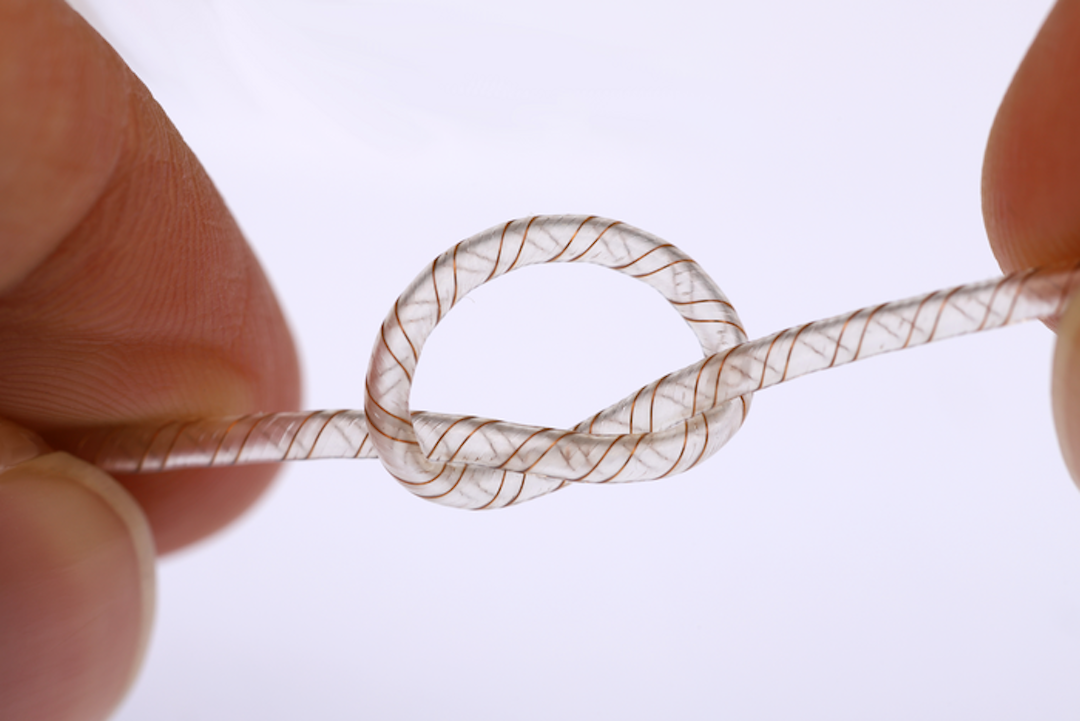
“This work builds on our previous generation of soft pump. The fiber format allows us to make lighter, more powerful pumps that are inherently more compatible with wearable technology,” explained Michael Smith, an LMTS post-doctoral researcher and lead author of the study.
In short, the fiber pumps work by using the charge injection electrohydrodynamics (EHD) principle, which allows a liquid to flow without any moving parts. To achieve this, two helical electrodes embedded in the pump wall ionize and accelerate modules of the special fluid.
This ion movement and electrode shape in question is what causes a net forward flow of the liquid, enabling a silent, vibrant-free process that requires just a palm-sized power supply and battery to operate.
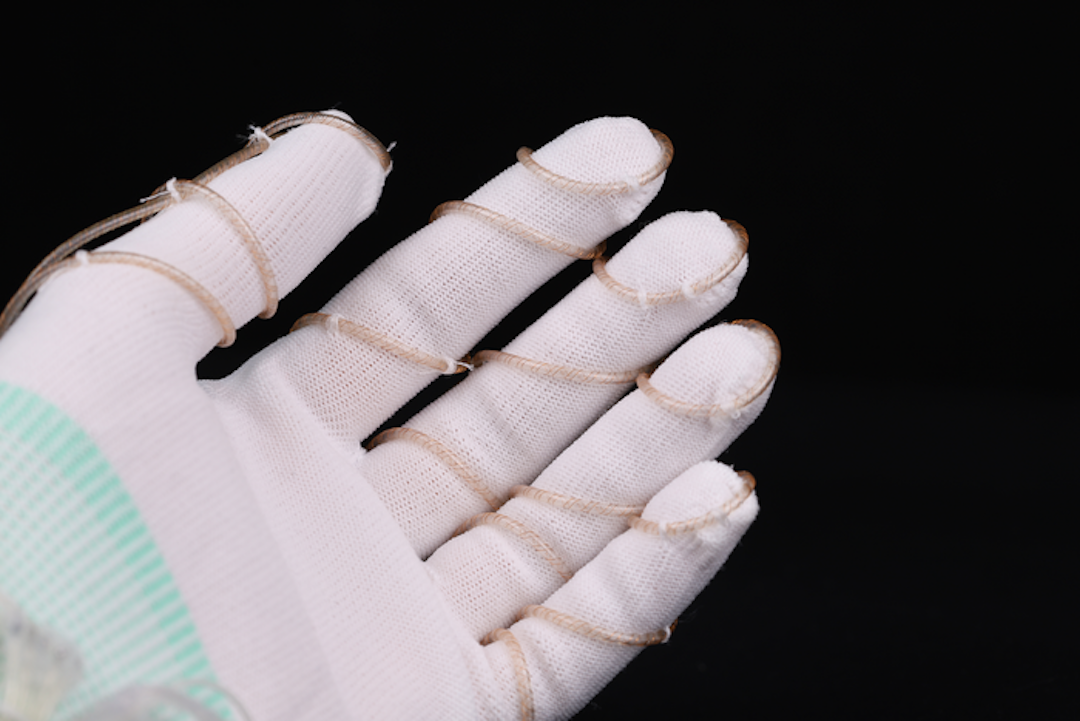
According to the team, the pump’s unique structure required the creation of a novel fabrication technique, which involved twisting copper wires and polyurethane threads together around a steel rod, before fusing them together with heat.
Once completed, the rod is then removed, with the 2 mm fibers joined together in a way that can be easily sewn into textiles using standard weaving techniques. Plus, the materials used for the pumps are affordable and accessible, allowing for the process to be scaled up easily if needed.
Another important factor that makes these fiber pumps a viable solution is the fact that the materials they’re embedded in can be washed with conventional detergents, saving consumers the trouble of having to opt for expensive dry cleaning methods.

So far, scientists have succeeded in using the component to circulate hot and cold fluid through garments for those working in extreme temperatures, or for therapeutic remedies to treat inflammation or athletic recovery.
Going forward, they hope to improve the pumps’ efficiency and lifetime, with plans to attempt to integrate them into more complex wearable devices in the future, calling the innovation “a game-changer for wearable technology.”
[via New Atlas and LMTS EPFL / EurekAlert, images © LMTS EPFL / EurekAlert]


